PoK crackdown exposes Pakistan's structural repression, 50+ killed

Synopsis
A US-based analysis says the killings in Pakistan-occupied Kashmir are not a failure of governance — they are governance. With 50+ reportedly dead since protests began on 5 June and an internet blackout still in place, the Jacobin report frames PoK's crisis as the logical outcome of a system built on denying Kashmiris democratic and economic agency.
Key Takeaways
Protests in Pakistan-occupied Kashmir (PoK) reportedly began on 5 June and have continued to intensify, marking the most extensive unrest in decades.
More than 50 people have reportedly been killed and hundreds injured; protesters allege the actual toll is higher than officially reported.
An internet shutdown and suspension of cellular services have been in force across PoK since 5 June .
A Jacobin analysis argues PoK's promised autonomy is 'a sham,' with Islamabad rigging elections and installing puppet governments.
The immediate trigger was economic hardship — rising electricity tariffs, fuel prices, and inflation — but the report traces deeper structural grievances.
The Joint Awami Action Committee (JAAC) has led core demands that local authorities, under Islamabad's direction, have failed to address.
The ongoing killings in Pakistan-occupied Kashmir (PoK) are not a sign of administrative breakdown but a deliberate expression of a political system designed to deny residents meaningful control over their own future, according to an analysis published by US-based outlet Jacobin. The report, cited in coverage dated 2 August, argues that Islamabad's promised autonomy for the occupied region has 'long been a sham.'
What the Analysis Found
The Jacobin report contends that despite PoK being officially projected as politically autonomous and not formally integrated into the Pakistani state, the ground reality is starkly different. According to the report, Islamabad responds to public demands for genuine democracy with repression and coercive measures. 'In practice, the ongoing dispute involves election manipulation, especially through so-called reserve seats. Islamabad rigs and manipulates elections to install a puppet government in PoK,' the report stated.
The analysis further argues that although the administration in the occupied territory appears local in structure, 'it governs through institutions whose ultimate authority lies elsewhere' — namely, Islamabad. Economic exploitation and political subordination, the report argues, are not separate processes but 'different expressions of the same structure of domination.'
Scale of the Unrest
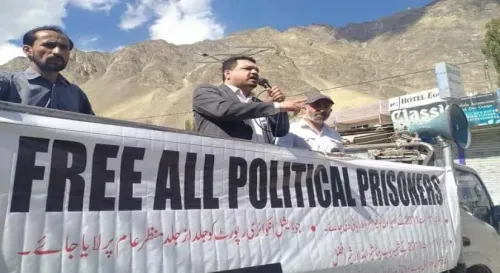
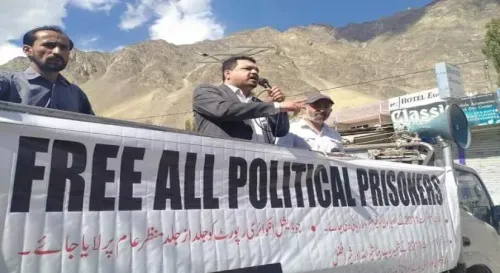
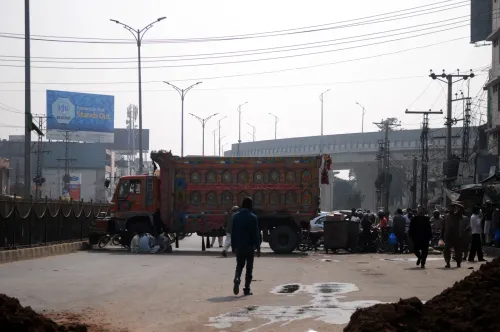
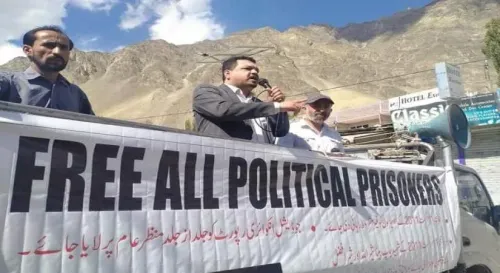
Pakistan-occupied Kashmir is currently witnessing what observers describe as the most extensive confrontation between the local population and the Pakistani state in decades. Protests reportedly began on 5 June and have continued to intensify. An internet shutdown has remained in force across the territory since that date, with cellular communication services also suspended.
Protesters allege that Pakistani security forces launched a severe crackdown as unrest spread, with more than 50 people reportedly killed and hundreds injured over several weeks. Protesters further claim the actual death toll could be significantly higher than officially acknowledged figures.
Root Causes: Beyond the Economic Trigger
While the immediate trigger for the protests was a worsening economic situation — marked by rising electricity tariffs, soaring fuel prices, inflation, and declining living standards — the report argues the unrest is rooted in deeper structural grievances. Residents of PoK, according to the analysis, bear the consequences of decisions over which they exercise little or no democratic control.
'The extraction of resources, the imposition of austerity, and the transfer of decision-making power to Islamabad are not separate processes but different expressions of the same structure of domination,' the report read. The failure of local authorities — operating under the direction of Pakistan's federal government and military — to address the core demands of the Joint Awami Action Committee (JAAC) has further fuelled mounting public discontent.
Pakistan's Narrative Under Scrutiny
The crackdown has exposed a sharp contradiction in Islamabad's longstanding narrative of championing the cause of Kashmiri Muslims. Despite projecting itself as a defender of Kashmiri interests on international forums, Pakistani security forces have reportedly killed several civilians in the occupied territory amid the escalating unrest. Critics argue that the Pakistani ruling class is not merely defending a government or an institution but, as the Jacobin report puts it, 'an entire structure of domination whose stability depends upon preventing the people of Jammu Kashmir from exercising effective control over their political and economic future.'
As the situation in PoK remains volatile with communications restricted, independent verification of casualty figures and ground conditions continues to be severely limited.
Point of View
Not the exception. What mainstream coverage often treats as a law-and-order crisis is, on this reading, the system working as designed. The internet blackout since 5 June is particularly telling: it is not a response to violence but a pre-emptive tool to prevent accountability. Pakistan's dual posture — international champion of Kashmiri rights, domestic enforcer against Kashmiri dissent — is a contradiction that has survived for decades because it has rarely been stress-tested this visibly. The JAAC's persistence suggests that stress test is now underway.
NationPress
2 Aug 2026
Frequently Asked Questions
What triggered the protests in Pakistan-occupied Kashmir?
The immediate trigger was economic distress — rising electricity tariffs, soaring fuel prices, and declining living standards. However, a Jacobin analysis argues the unrest is rooted in deeper structural grievances, including the absence of genuine democratic control over political and economic decisions in PoK.
How many people have been killed in the PoK crackdown?
Protesters allege that more than 50 people have been killed and hundreds injured since the crackdown began following protests on 5 June. They also claim the actual death toll could be significantly higher than officially reported figures, though independent verification remains difficult due to a communications blackout.
Why is there an internet shutdown in PoK?
An internet shutdown and suspension of cellular communication services have been in force across Pakistan-occupied Kashmir since 5 June, when the protests began. The blackout has severely restricted independent reporting and verification of events on the ground.
What is the Joint Awami Action Committee (JAAC)?
The Joint Awami Action Committee (JAAC) is the primary body articulating the core demands of protesters in Pakistan-occupied Kashmir. The failure of local authorities — operating under the direction of Pakistan's federal government and military — to address JAAC's demands has been cited as a key driver of escalating public discontent.
How does the Jacobin report characterise Pakistan's role in PoK?
The Jacobin report argues that PoK's promised political autonomy is 'a sham,' with Islamabad manipulating elections to install compliant governments and governing through institutions whose ultimate authority rests with Pakistan's federal government and military. It frames economic exploitation and political subordination as 'different expressions of the same structure of domination.'