PoK unrest exposes Pakistan's governance crisis, rights crackdown: Report
Synopsis
Pakistan's security crackdown on JAAC protesters in PoK — 14,000 troops, internet blackouts, mass arrests, and the killing of a senior activist — has drawn sharp international condemnation and exposed a fundamental contradiction: Islamabad champions Kashmiri rights on the world stage while suppressing them in territory it controls.
Key Takeaways
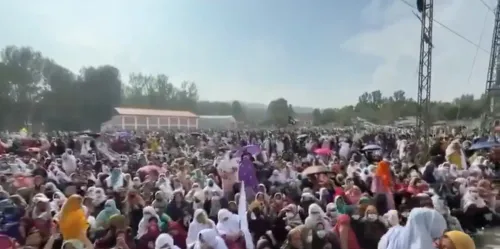
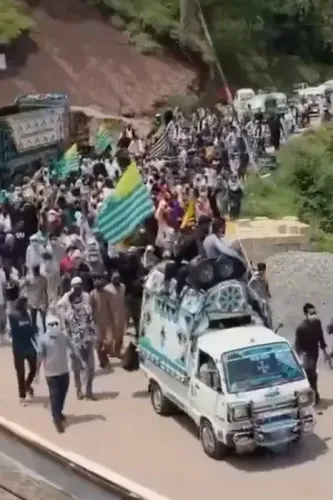
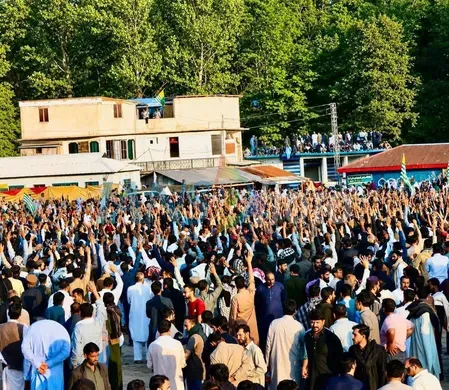
Protests by the Joint Awami Action Committee (JAAC) in Pakistan-occupied Kashmir erupted on 9 June , demanding reduced electricity tariffs, subsidised wheat flour, and abolition of 12 reserved assembly seats .
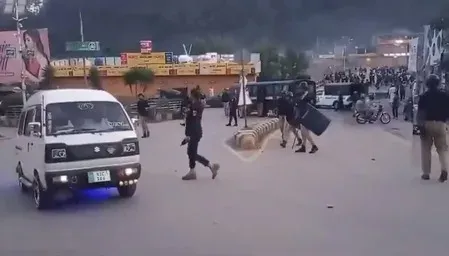
Pakistani authorities deployed 14,000 additional security personnel , suspended internet and mobile services, and proscribed JAAC as a terrorist organisation.
A senior JAAC figure was killed in Rawalakot ; protesters allege he was ambushed by security forces, with eyewitnesses reporting casualties higher than official counts.
The International Human Rights Foundation (IHRF) condemned the crackdown on 16 June , citing over 100 arbitrary arrests and the detention of journalist Sohrab Barkat under Pakistan's cybercrime law.
The IHRF documented a recurring pattern of deadly crackdowns, including violence in May 2024 and October 2025 , and called for an independent probe into the alleged extrajudicial killing of activist Shahzeb Habib .
Geopolitical analyst A Jathindra of the Trinco Centre for Strategic Studies argues the crisis exposes Pakistan's foreign policy contradiction — championing Kashmiri rights globally while suppressing them in PoK.
The ongoing unrest in Pakistan-occupied Kashmir (PoK) has laid bare the deep contradictions in Pakistan's governance model — one that relies on coercion rather than consent — while simultaneously exposing the hollowness of Islamabad's self-proclaimed role as a champion of Kashmiri rights, according to a detailed analysis published in Eurasia Review. The report, authored by A Jathindra, geopolitical analyst and founding director of the Trinco Centre for Strategic Studies, an independent think tank based in Sri Lanka, argues that the crisis is no longer a local flashpoint but a test of international resolve.
What Is Driving the Protests
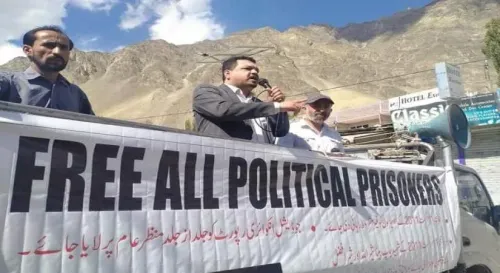
The Joint Awami Action Committee (JAAC) — a broad-based civil society coalition uniting traders, transporters, lawyers, students, and activists — has spearheaded the unrest with a 38-point charter of demands. These include reducing electricity tariffs, subsidised pricing for wheat flour, ending perks for lawmakers, and abolishing 12 reserved assembly seats that critics say are instruments of military dominance in PoK's legislature.
The latest wave of protests, which erupted on 9 June, zeroed in on those 12 refugee seats in the Legislative Assembly. According to critics, these seats allow Pakistan to manipulate government formation and suppress genuine local representation. Slogans heard across PoK — 'Pakistani Forces Out', 'Kashmir Under Attack', and 'We Want Basic Rights' — reflect the depth of popular frustration.
Islamabad's Response: Repression and Militarisation
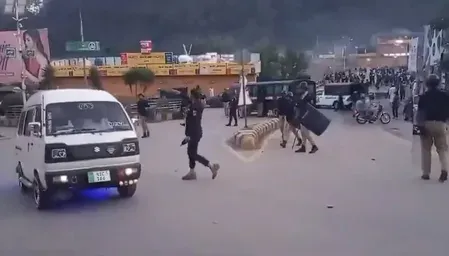
As clashes escalated in Rawalakot, authorities moved swiftly to contain the movement. Mobile networks and internet services were suspended across the region. The government formally proscribed JAAC, accusing it of inciting terrorism and disturbing public order — a charge the organisation and its supporters have rejected as politically motivated.
The crackdown intensified with mass arrests, raids, and the deployment of 14,000 additional security personnel. Jathindra wrote: 'The bloodshed during the JAAC protests has stripped away Pakistan's democratic facade, exposing a regime that responds to bread and butter grievances with repression and militarisation. What began as a campaign for affordable food and fair representation has swelled into a broadbased mobilisation… Instead of dialogue, Islamabad has chosen to criminalise dissent, turning a grassroots movement into a manufactured security threat.'
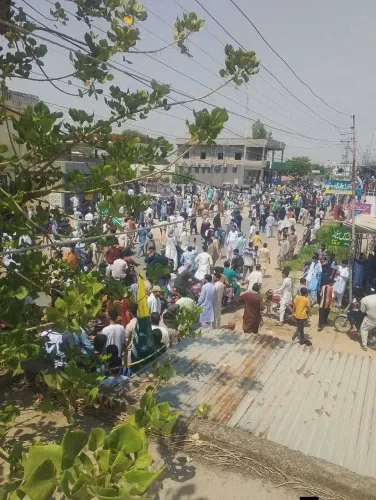
A decisive turning point came with the killing of a senior JAAC figure in Rawalakot, whom protesters claim was ambushed by security forces. Violent clashes subsequently spread across Poonch district, with eyewitnesses reportedly stating that casualties were higher than official figures acknowledged.
International Rights Bodies Sound the Alarm
On 16 June, the International Human Rights Foundation (IHRF) strongly condemned the crackdown, documenting the suspension of internet and mobile networks, the deployment of federal paramilitary troops, and the mass arbitrary arrest of over 100 activists and leaders. The IHRF also cited travel restrictions barring outsiders from entering PoK and the arrest of journalist Sohrab Barkat under Pakistan's Prevention of Electronic Crimes Act.
The IHRF stated: 'Branding a civil society body as terrorist on vague grounds, while simultaneously sealing the region from outside scrutiny, constitutes a disproportionate and unlawful violation of the right to freedom of association.'
The rights body further documented a recurring pattern of deadly crackdowns on JAAC protests, including violence in May 2024 and October 2025 that claimed multiple lives. It called on Pakistani authorities to immediately halt the use of deadly force, lift the internet shutdown, release all arbitrarily detained individuals, and revoke the ban on JAAC. It also urged an independent investigation into all civilian deaths — including the alleged extrajudicial killing of activist Shahzeb Habib — with full access for international observers.
The Broader Implications for South Asia
Jathindra argues the PoK crisis carries consequences well beyond the region: 'It underscores the fragility of Pakistan's governance model, which relies on coercion rather than consent, and exposes contradictions in its foreign policy: while projecting itself as a champion of Kashmiri rights internationally, Pakistan suppresses those very rights in territories under its control.'
The analyst added that the crisis highlights an urgent need to address governance deficits and human rights violations in conflict-affected regions, and raises pressing questions about the role of international actors in holding states accountable under international law. With the IHRF's call for independent oversight still unanswered, the situation in PoK is likely to remain a focal point for human rights advocates and regional analysts in the months ahead.
Point of View
Cut communications, flood the zone with troops, and wait for international attention to move on. What is different this time is the scale of documentation — the IHRF's formal condemnation and the Eurasia Review analysis create a paper trail that is harder to dismiss. The deeper contradiction, however, is structural: Pakistan cannot credibly lead international discourse on Kashmiri self-determination while deploying 14,000 troops against residents demanding subsidised flour and fair representation. That contradiction will outlast any single protest cycle, and it increasingly registers with the very multilateral forums Islamabad relies on for diplomatic cover.
NationPress
28 Sept 2026
Frequently Asked Questions
What are the JAAC protests in Pakistan-occupied Kashmir about?
The Joint Awami Action Committee (JAAC) protests in PoK centre on a 38-point charter of demands, including lower electricity tariffs, subsidised wheat flour, ending lawmaker perks, and abolishing 12 reserved assembly seats critics say enable Pakistani military dominance over PoK's legislature. The latest wave erupted on 9 June, drawing traders, lawyers, students, and civil society groups.
How has Pakistan responded to the PoK unrest?
Pakistani authorities deployed 14,000 additional security personnel, suspended mobile and internet services in the region, conducted mass arrests of over 100 activists, and formally proscribed JAAC as a terrorist organisation. A senior JAAC figure was also killed in Rawalakot, with protesters alleging he was ambushed by security forces.
What did the International Human Rights Foundation say about the PoK crackdown?
On 16 June, the IHRF strongly condemned the crackdown, citing the internet blackout, paramilitary deployment, mass arbitrary arrests, and travel restrictions barring outside observers. It called for an immediate halt to deadly force, the release of detainees, revocation of the JAAC ban, and an independent investigation into civilian deaths including the alleged extrajudicial killing of activist Shahzeb Habib.
Why does the PoK crisis matter for Pakistan's foreign policy?
Pakistan has long positioned itself internationally as a defender of Kashmiri rights, but the crackdown in PoK directly contradicts that stance. Analysts argue it exposes a governance model built on coercion rather than consent, undermining Pakistan's credibility in multilateral forums where it advocates for Kashmiri self-determination.
Is the current PoK unrest part of a longer pattern?
Yes. The IHRF documented recurring deadly crackdowns on JAAC protests, including violence in May 2024 and October 2025 that claimed multiple lives. The organisation has characterised the current crackdown as part of a systemic pattern of human rights violations in PoK, not an isolated incident.