Pakistan's Diplomatic Aspirations Clash with Economic Reality: Insights
Synopsis
Pakistan's role as a peace broker between the US and Iran is overshadowed by its military actions in Afghanistan, raising questions about its credibility. A recent report delves into this contradiction amidst the country's challenging economic landscape.
Key Takeaways
Pakistan's military actions challenge its credibility as a peace broker.
Economic pressures drive Pakistan to enhance its diplomatic narrative.
Ceasefire talks reflect the fragility of US-Iran relations.
Pakistan's role in mediation is limited by stronger regional influences.
The narrative of regional stability is complicated by internal contradictions .
Brussels, April 15 (NationPress) While Pakistan aims to establish itself as a peace facilitator between the United States and Iran, this portrayal is contradicted by its military operations in Afghanistan, which have led to considerable civilian casualties among Afghans, including women and children.
This inconsistency undermines Islamabad's moral standing, as a nation cannot easily present itself as a “protector of regional stability” while “bearing the weight of its own coercive history nearby,” according to a report.
Dimitra Staikou, a Greek lawyer, writer, and journalist, penned an article for 'EuropaWire', observing that the developments from mid-March to early April were not orchestrated by a single entity but were the result of numerous parallel actors operating along intersecting paths.
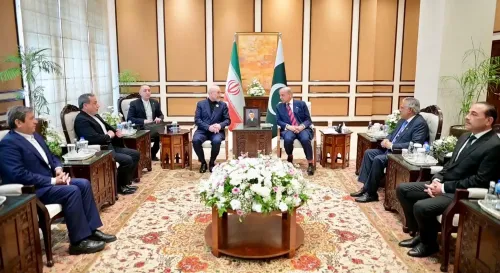
She emphasized that mediation was not a centralized effort; instead, it unfolded as a network—where Pakistan was not the core influencer of the outcomes but merely one of the various channels facilitating communication.
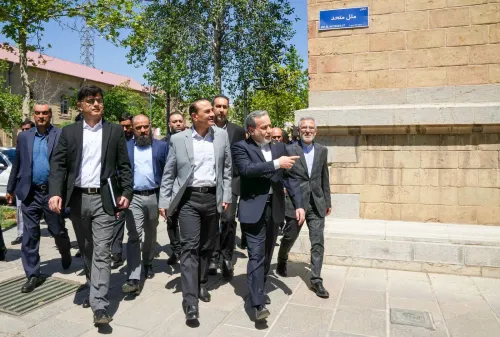
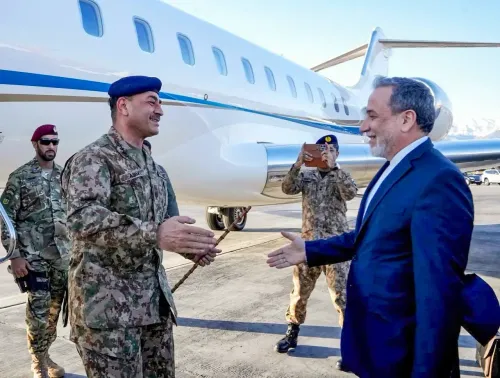
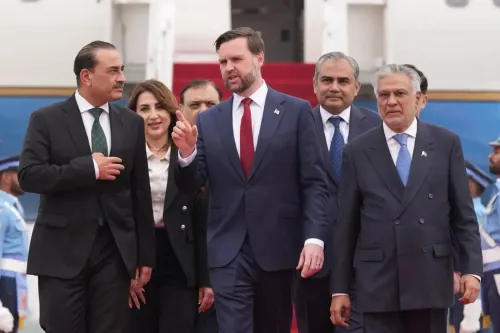
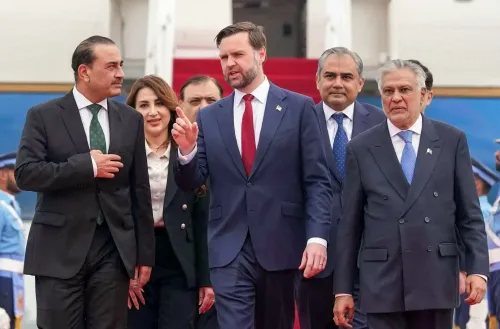
“Pakistan attempted to showcase the process as evidence of its diplomatic importance, portraying itself as a pivotal mediator during a time of heightened regional tension. Both Iranian and American representatives acknowledged, between March 25 and 31, their roles in transmitting messages and facilitating discussions. However, this acknowledgment also highlighted the limits of Pakistan's influence: Islamabad acted less as a genuine mediator and more as a conduit in a process directed by more powerful forces and conflicting strategies it could neither steer nor harmonize,” Staikou elaborated.
According to the expert, the portrayal of Pakistan's mediation through ceasefire discussions in Islamabad only reflects a fragment of a broader context.
Strong indications suggest that both Beijing and Washington rely on Pakistan as an intermediary to relay positions and proposals aimed at urging Iran to engage in negotiations.
“This is evident in the surge of China-Pakistan interactions, Iranian delegations visiting Islamabad, and the collaborative five-point initiative announced shortly before the ceasefire—elements of which were eventually integrated into the final agreement. The fact that Iran seems to have sought assurances beyond Pakistan further emphasizes that Islamabad was never regarded as the cornerstone of the process,” Staikou noted.
The report underscored that the ceasefire framework between the US and Iran was inherently fragile from the beginning, with differing interpretations—especially concerning Lebanon—and ongoing military activities undermined its credibility.
Moreover, she highlighted that critical issues, including security in the Strait of Hormuz, remain unresolved, indicating that the agreement tackles the symptoms of the crisis rather than its underlying causes.
“This chest-thumping also mirrors the strain of Pakistan’s dire economic circumstances. Islamabad’s determination to frame this episode as a diplomatic triumph is closely tied to domestic pressures. With a $3.5 billion loan repayment due to the United Arab Emirates, a $1.3 billion bond maturing this month, foreign exchange reserves around $16.4 billion, rising inflation rates in March, and a return to a current account deficit in February, Pakistan has strong reasons to enhance its foreign policy narrative,” Staikou stressed.
Point of View
Its military actions in neighboring Afghanistan cast doubt on its moral authority. Coupled with significant economic challenges, this situation complicates Pakistan's ability to effectively engage in regional diplomacy.
NationPress
20 Sept 2026
Frequently Asked Questions
What is the current economic situation in Pakistan?
Pakistan is facing significant economic challenges, including high inflation, low foreign exchange reserves, and looming debt repayments.
How does Pakistan's military action impact its diplomatic efforts?
Pakistan's military operations in Afghanistan have raised questions about its credibility as a peace broker, undermining its diplomatic narrative.
What role does Pakistan play in US-Iran relations?
Pakistan has positioned itself as a mediator between the US and Iran, although its influence is limited by stronger regional powers.
What are the implications of the ceasefire talks?
The ceasefire talks highlight the fragile nature of US-Iran relations and Pakistan's role as a facilitator rather than a central mediator.
Is Pakistan's diplomatic narrative linked to its domestic pressures?
Yes, Pakistan's emphasis on diplomatic success is closely tied to its internal economic challenges and the need to project stability.