Karachi ranked 4th least liveable city globally in EIU Index 2026
Synopsis
Karachi has scored a near-floor 43 out of 100 on the EIU's Global Liveability Index 2026, landing 170th among 173 cities. With a stability score of just 20, surging street crime, chronic power and gas failures, and water shortages, the data paints a picture of a megacity of 20 million people in serious structural distress — while Copenhagen, Vienna, and Melbourne occupy the opposite end of the scale.
Key Takeaways
Karachi ranked 170th out of 173 cities on the EIU Global Liveability Index 2026 — the fourth least liveable city globally.
The city's overall score was 43 out of 100 , with a particularly low stability score of 20 .
Only Dhaka , Damascus , and Tripoli ranked below Karachi; Copenhagen topped the global list.
Between January and April 2026 , Karachi recorded 176 murders , 13,346 motorcycle thefts , and 5,567 mobile phone thefts , per the Citizens-Police Liaison Committee.
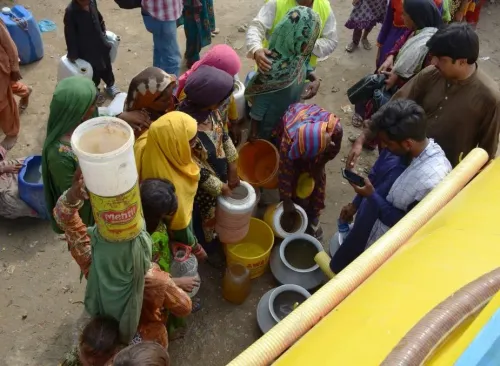
Residents faced prolonged power, gas, and water shortages during Ashura in June 2026 , despite K-Electric 's exemption claims.
Karachi, Pakistan's largest metropolis, has been ranked 170th out of 173 cities on the Economist Intelligence Unit (EIU) Global Liveability Index 2026, making it the fourth least liveable city in the world, according to local media reports on Wednesday, 8 July 2026. The city's overall score of 43 out of 100 places it just above Dhaka, Damascus, and Tripoli — the only three cities ranked lower.
How Karachi Scored Across Key Indicators
The EIU index assesses urban liveability across five parameters: stability, healthcare, culture and environment, education, and infrastructure. Karachi's breakdown reveals acute vulnerabilities: it scored 20 out of 100 on stability — the lowest among all its categories — followed by 36 in culture and environment, 52 in infrastructure, 54 in healthcare, and a comparatively higher 75 in education.
The stability score is particularly stark. The EIU's benchmark measures the risk of civil unrest, crime, and conflict, and Karachi's near-floor rating reflects a city under sustained pressure on multiple fronts.
A City Struggling with Basic Services
The ranking comes against a backdrop of chronic infrastructure failures that residents have long documented. In June 2026, large parts of the city — including Saddar, Burns Road, Lyari, Clifton, Defence Housing Authority, Federal B. Area, North Karachi, Liaquatabad, Malir, Korangi, Shah Faisal Colony, Orangi Town, Keamari, and Baldia Town — faced prolonged power cuts during the religious observance of Ashura.
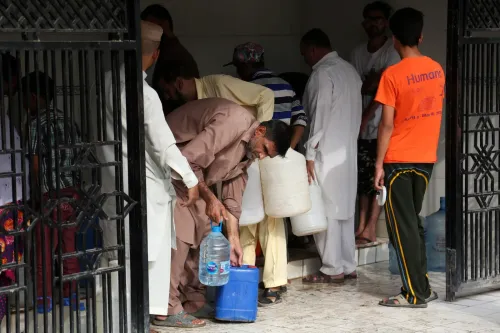
Gas supply, already constrained across many neighbourhoods, reportedly disappeared entirely in several areas during iftar hours, forcing residents to seek alternative means to prepare meals. Water shortages compounded the crisis, as electricity is required to pump water to residential taps. K-Electric had claimed exemptions from scheduled loadshedding through Muharram 11, but residents reported widespread non-compliance on the ground.
One resident, Zafar Hasan, voiced frustration on social media: 'Don't they realise that people should be provided uninterrupted gas and electricity particularly during the observance of religious days when it is needed most?'
Rising Street Crime Adds to Urban Distress
Data released by the Citizens-Police Liaison Committee in May 2026 documented a significant rise in street crime between January and April 2026. During this four-month period, residents were robbed of 611 cars and 13,346 motorcycles, collectively worth millions of rupees. A further 5,567 mobile phones were stolen in street crime incidents, according to Express Tribune.
Violence figures are equally alarming: 176 people were killed in murder incidents, and 61 extortion cases were reported in the same period. In April alone, 22 cars were snatched and 111 stolen, while 469 motorcycles were snatched and 2,723 stolen. That same month saw 1,624 mobile phones snatched and 42 people killed in separate incidents.
Global Context: Who Topped the Index
At the other end of the spectrum, Copenhagen claimed the top position as the world's most liveable city in the EIU Global Liveability Index 2026, followed by Vienna and Melbourne. The contrast underscores the scale of the governance and infrastructure gap that Karachi must bridge to improve its standing.
For a city of roughly 20 million people — one of South Asia's largest urban centres — the persistent slide in liveability metrics signals deepening structural challenges that will require coordinated intervention at both the provincial and federal level.
Point of View
Street crime has industrialised, and basic water access depends on electricity that isn't there. The index is a lagging indicator; the conditions it measures have been deteriorating for years. What is missing from Pakistan's policy conversation is not diagnosis but accountability — who owns Karachi's decline, and what is the measurable turnaround plan?
NationPress
8 Jul 2026
Frequently Asked Questions
What is the EIU Global Liveability Index 2026?
The EIU Global Liveability Index is an annual ranking by the Economist Intelligence Unit that assesses 173 cities worldwide on five indicators: stability, healthcare, culture and environment, education, and infrastructure. It provides a globally recognised benchmark for urban quality of life and the challenges residents face in a given city.
Why did Karachi rank so low on the liveability index?
Karachi scored just 43 out of 100 overall, with a critically low stability score of 20 — reflecting chronic insecurity, rising street crime, and civil unrest risks. Infrastructure (52) and healthcare (54) scores were also weak, consistent with the city's documented power outages, gas shortages, and water supply failures.
Which cities ranked below Karachi in the EIU 2026 index?
Only three cities ranked below Karachi in the EIU Global Liveability Index 2026: Dhaka (Bangladesh), Damascus (Syria), and Tripoli (Libya), placing Karachi 170th out of 173 cities assessed.
How bad is street crime in Karachi in 2026?
According to data from the Citizens-Police Liaison Committee released in May 2026, Karachi recorded 176 murders, 13,346 motorcycle thefts, 611 car thefts, and 5,567 mobile phone snatching incidents between January and April 2026 alone. In April alone, 42 people were killed and 1,624 mobile phones were snatched.
Which city topped the EIU Global Liveability Index 2026?
Copenhagen was ranked the world's most liveable city in the EIU Global Liveability Index 2026, followed by Vienna in second place and Melbourne in third.