Is Pakistan Escalating 'Kill and Dump' Operations Against the BLA?
Synopsis
In Balochistan, reports indicate a troubling resurgence of the 'kill and dump' policy as Pakistan attempts to quell support for the Balochistan Liberation Army (BLA). With heightened violence and significant external pressures, could this lead to unprecedented human rights violations?
Key Takeaways
Escalation of violence in Balochistan Resurgence of the 'kill and dump' policy Innocent civilians at risk External pressures from China and the US Human rights organizations raising alarms
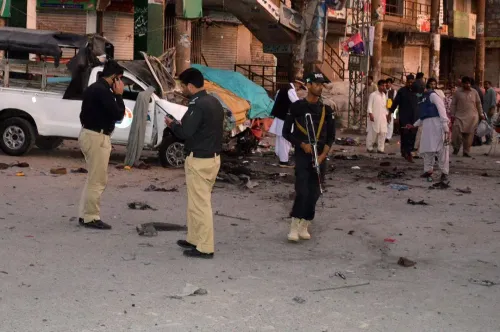
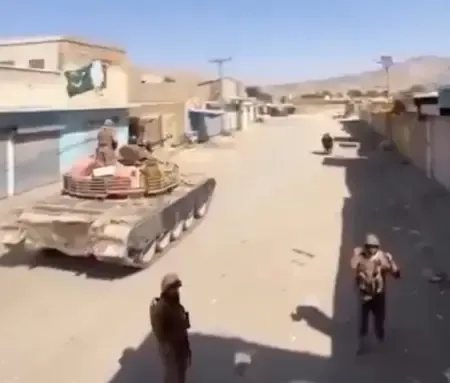
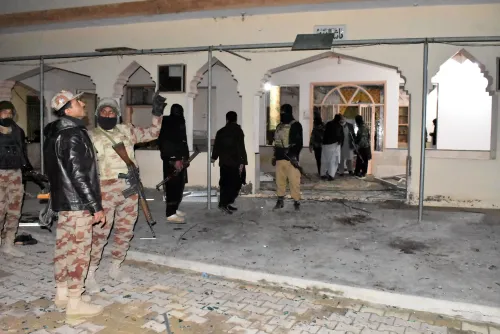
New Delhi, Feb 5 (NationPress) Disturbing reports are surfacing from Balochistan, where intense violence has erupted in recent days. With the Pakistani establishment enduring significant setbacks from the Balochistan Liberation Army (BLA), concerns regarding the resurgence of the 'kill and dump' strategy have once again come to light.
This 'kill and dump' approach has been employed by the Pakistan Army and ISI on numerous occasions in the past. It is designed to silence dissenting voices advocating for Balochistan. An official from the Intelligence Bureau indicated that, following severe losses inflicted by the BLA, security forces might consider a tactical retreat. This retreat is viewed as a necessary pause amid the ongoing struggles against the BLA.
The official further elaborated that during this retreat, the establishment is likely to intensify its 'kill and dump' operations. This deeply concerns the Baloch population, as even ordinary citizens may become targets. Pakistan finds itself under substantial pressure from both China and the United States. The US has entered into a minerals agreement with Pakistan, which heavily involves Balochistan. Similarly, China is applying pressure due to the ongoing threats faced by the China-Pakistan Economic Corridor, valued at $46 billion, from the BLA.
The residents of Balochistan assert that their resource-rich territory primarily benefits the elite in Pakistan and foreign entities. Given Pakistan's dire financial situation, engagements with China and the US are vital for its economy.
An official noted that while Pakistan aims to pursue business with these countries, it simultaneously disregards the concerns of the Baloch populace. Reports of extrajudicial killings executed by the Frontier Corps are not uncommon. This unit, operating with unbridled authority, has been instructed to escalate its extrajudicial killings. Under the guise of eliminating BLA members, whom the government labels as terrorists, countless innocent civilians are also being killed.
Faced with an inability to counter the BLA's ground operations, the Frontier Corps is predicted to unleash violence against innocents, including women and children, according to intelligence reports. The Baloch people previously described such actions as a slow-motion genocide, but there is now a palpable fear that the security forces will embark on a rampage.
Another official suggested that the citizens of Balochistan overwhelmingly support the BLA, believing their cause is just. This backing complicates operations for the security forces, as the populace acts as a buffer between the BLA and the military.
This situation has led to a lack of intelligence, and recent failed military operations are indicative of this. According to Indian intelligence, the planned genocide appears to exceed any previous actions witnessed in Balochistan. The directive to the Frontier Corps emphasizes targeting as many individuals as possible, sparing neither age nor gender.
Human rights organizations assert that these operations, conducted by the Frontier Corps in conjunction with the army and ISI, are alarming. Currently, substantial information is being suppressed in Balochistan. Journalists and rights organizations face prohibitions on entering the region. These restrictions signal a looming catastrophe for the local population, as articulated by an official.
Statistics reveal that from 2003 to 2012, approximately 8,000 enforced disappearances occurred. The methods employed are brutal; individuals are arbitrarily detained, tortured, and later discovered with bullet wounds, strategically displayed to instill fear within the community, compelling them to cease support for groups like the BLA. To maintain dominance in Balochistan, the establishment must either engage in constructive dialogue or exert control through fear.
Another official remarked that negotiations are not an option for Pakistan. The current objective is to assert control over the region, even if it entails committing acts of genocide to instill terror among the populace and eliminate support for the BLA. Moreover, intelligence operations have nearly ceased in the area, and the establishment seeks to reverse this trend by implementing a 'kill and dump' strategy more extensive than ever before, according to officials.
Point of View
Our commitment remains unwavering in reporting on the complexities of the Balochistan crisis. We emphasize the need for transparency and accountability from all parties involved while advocating for the rights of the Baloch people. It is imperative to approach this delicate situation with fairness and a dedication to uncovering the truth.
NationPress
29 Sept 2026
Frequently Asked Questions
What is the 'kill and dump' policy?
The 'kill and dump' policy refers to extrajudicial killings executed by security forces to silence dissent and eliminate opposition groups, particularly in Balochistan.
Who are the Balochistan Liberation Army (BLA)?
The BLA is a separatist militant organization advocating for the rights and autonomy of the Baloch people in Pakistan.
Why is Balochistan significant?
Balochistan is rich in natural resources, which are often exploited by the Pakistani state and foreign entities, leading to local discontent and calls for greater autonomy.
How does international pressure affect Pakistan's actions?
International pressure from countries like the US and China influences Pakistan's policies, particularly regarding its economic dealings and human rights practices.
What are the implications of the ongoing violence?
The ongoing violence could exacerbate human rights violations and lead to a humanitarian crisis in Balochistan, affecting countless innocent civilians.