Quad 2026: Three FM meetings sharpen Indo-Pacific priorities ahead of Manila summit
Synopsis
Without a single leaders' summit in 2026, the Quad still notched three foreign ministers' meetings, operationalised two multilateral exercises, and staked out clearer positioning against economic coercion and alongside ASEAN. All eyes now turn to Manila, where the long-delayed leaders' summit is set to test whether that ministerial momentum can hold at the top.
Key Takeaways
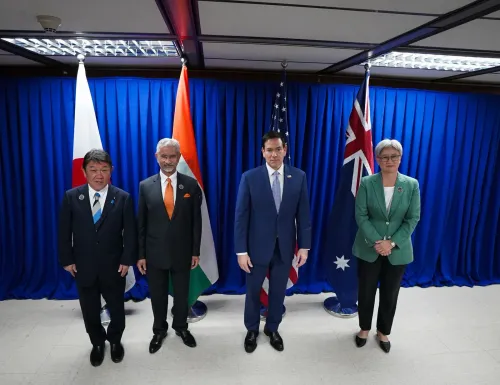
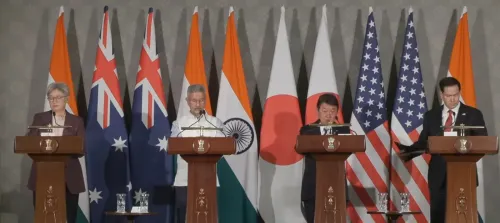
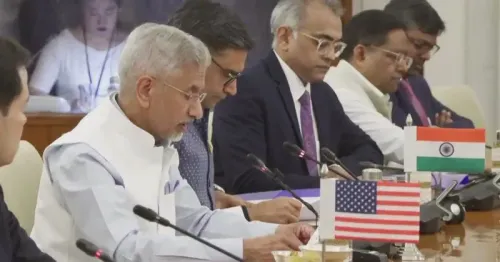
The Quad held three foreign ministers' meetings in 2026 — in New Delhi (May) , Manila (July) , and Atlanta (November) .
The Quad Leaders' Summit , expected in Manila later this month, would be the first since US President Donald Trump returned to office.
The 2025 Quad Leaders' Summit , originally scheduled in New Delhi , fell through — adding pressure on the Manila convening.
Quad nations declared support for the ASEAN Outlook on the Indo-Pacific (AOIP) and described themselves as ASEAN Comprehensive Strategic Partners at the July Manila meeting.
The second Quad-at-Sea Ship Observer Mission and the second Indo-Pacific Logistics Network Tabletop Exercise were both held in September 2026 .
The grouping has sharpened its collective stance against economic coercion in the Indo-Pacific.
The Quad grouping has demonstrated a markedly more substantive approach in 2026, sharpening common priorities and translating commitments into concrete action across three foreign ministers' meetings held in New Delhi, Manila, and Atlanta, according to a report by online magazine The Diplomat. The analysis underscores that even without a leaders' summit, the grouping has made measurable progress on its Indo-Pacific agenda.
Three Ministerial Meetings in a Single Year
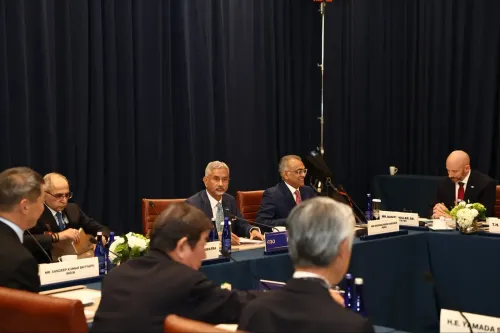
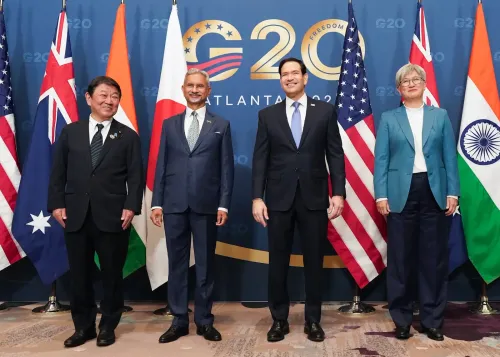
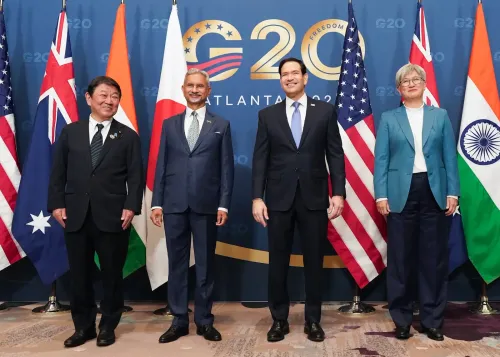
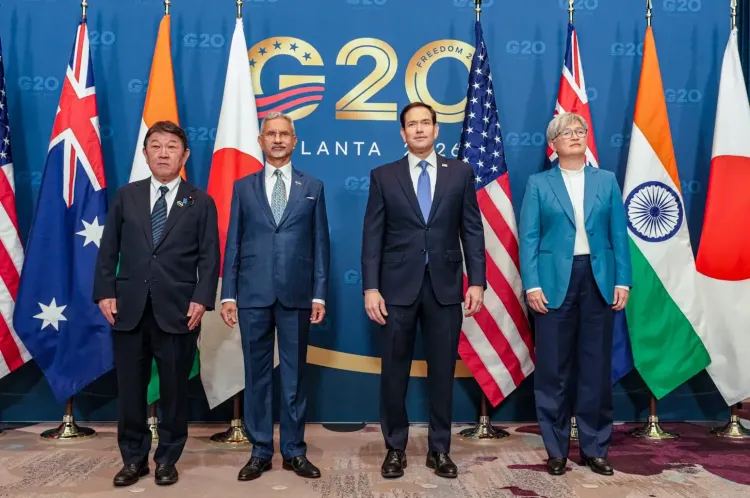
The Quad foreign ministers convened for the third time this year on the sidelines of the G20 Foreign Ministers' Meeting in Atlanta last week, following earlier meetings in New Delhi in May 2026 and Manila in July 2026. The frequency of these engagements signals a shift from periodic coordination to sustained diplomatic rhythm — a notable departure from earlier years when the grouping's interactions were more sporadic.
Notably, the Atlanta joint statement provided concrete updates on initiatives flagged at the May meeting, including the second Quad-at-Sea Ship Observer Mission held in September 2026 and the second Indo-Pacific Logistics Network (IPLN) Tabletop Exercise, hosted by Japan's Ministry of Defence during the same month.
Leaders' Summit Remains the Focal Point
Despite the ministerial momentum, attention has remained fixed on the long-delayed Quad Leaders' Summit, expected to be held in Manila later this month. The summit carries particular weight: it would be the first since US President Donald Trump returned to the White House, and the first since the 2025 Quad Leaders' Summit — originally scheduled to be hosted by New Delhi — fell through.
According to The Diplomat, the summit 'could put to rest some of the ever-growing speculation on the Quad's future amid cascading geopolitical conflicts, energy and tech supply constraints, and conjecture over an emergent G3 model (China, Russia, and the U.S.) of managing spheres of influence.' That framing highlights how the leaders' meeting has taken on symbolic as well as strategic significance.
ASEAN Alignment and Clearer Positioning
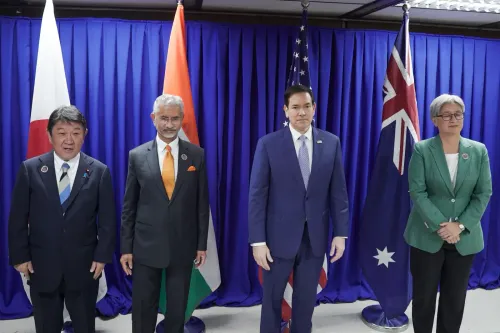
The year has also brought greater definitional clarity to the Quad's role in the Indo-Pacific. At the Manila meeting in July 2026, the four nations — India, the United States, Australia, and Japan — declared support for the practical implementation of the ASEAN Outlook on the Indo-Pacific (AOIP), identifying four shared priority pillars: maritime and transnational security, economic prosperity and security, critical and emerging technologies, and humanitarian assistance and emergency response.
The grouping's decision to describe its members as ASEAN Comprehensive Strategic Partners marks an important institutional development, signalling an intent to deepen rather than parallel ASEAN-led frameworks in the region. Alongside this, the Quad has sharpened its collective stance against 'economic coercion' — widely understood as a reference to Beijing's use of trade and investment leverage over smaller economies in the Indo-Pacific.
What the Progress Means for Regional Architecture
This comes amid a broader debate over whether minilateral groupings like the Quad can deliver durable security architecture or remain largely declaratory. The movement from announcements to exercises — the ship observer mission and logistics network tabletop — suggests an attempt to operationalise commitments rather than accumulate joint statements. The impending Manila leaders' summit, if it materialises, will be the clearest test yet of whether the grouping's ministerial-level momentum can translate into strategic direction at the highest level.
Point of View
Two operationalised exercises, and an explicit anti-coercion stance represent a meaningful shift from the grouping's earlier reputation for high rhetoric and low follow-through. Yet the absence of a leaders' summit still hands sceptics an argument — that without top-level political commitment, the machinery runs without a driver. The Manila summit, if it happens, will be watched less for communiqué language and more for whether Trump's America signals durable Indo-Pacific engagement or treats the Quad as a card to play in its broader US-China calculus. India, meanwhile, has the most to lose from ambiguity: a Quad that hedges is less useful than one that commits, and New Delhi's own strategic autonomy doctrine leaves little room to absorb a weakened grouping.
NationPress
6 Nov 2026
Frequently Asked Questions
What progress has the Quad made in 2026?
In 2026, the Quad held three foreign ministers' meetings — in New Delhi, Manila, and Atlanta — and conducted two multilateral exercises: the Quad-at-Sea Ship Observer Mission and the Indo-Pacific Logistics Network Tabletop Exercise, both in September 2026. The grouping also aligned itself with the ASEAN Outlook on the Indo-Pacific and sharpened its stance against economic coercion.
When is the Quad Leaders' Summit expected to take place?
The Quad Leaders' Summit is expected to be held in Manila later in November 2026. It would be the first leaders-level convening since US President Donald Trump returned to the White House, and the first after the 2025 summit — originally scheduled in New Delhi — fell through.
Why does the Quad Leaders' Summit matter so much in 2026?
The summit is seen as critical because it would be the first under President Trump's second term, lending political direction to the grouping at a time of geopolitical uncertainty. Analysts note it could also address speculation about whether the Quad retains strategic coherence amid talk of an emergent China-Russia-US 'G3' model of great-power management.
What is the ASEAN Outlook on the Indo-Pacific, and why did the Quad endorse it?
The ASEAN Outlook on the Indo-Pacific (AOIP) is ASEAN's framework for a rules-based, inclusive regional order built on cooperation in maritime security, economic connectivity, and sustainable development. By pledging practical support for the AOIP and calling themselves ASEAN Comprehensive Strategic Partners, the Quad is signalling that it intends to complement rather than compete with ASEAN-led frameworks.
What were the Quad-at-Sea Ship Observer Mission and the IPLN Tabletop Exercise?
The Quad-at-Sea Ship Observer Mission was a maritime exercise held in September 2026, now in its second edition, involving naval coordination among Quad members. The Indo-Pacific Logistics Network Tabletop Exercise, also in its second edition and hosted by Japan's Ministry of Defence in September 2026, tested coordinated logistics and emergency response frameworks across the grouping.