Bangladesh-Pakistan ties deepen, but trade imbalance clouds Dhaka's gains
Synopsis
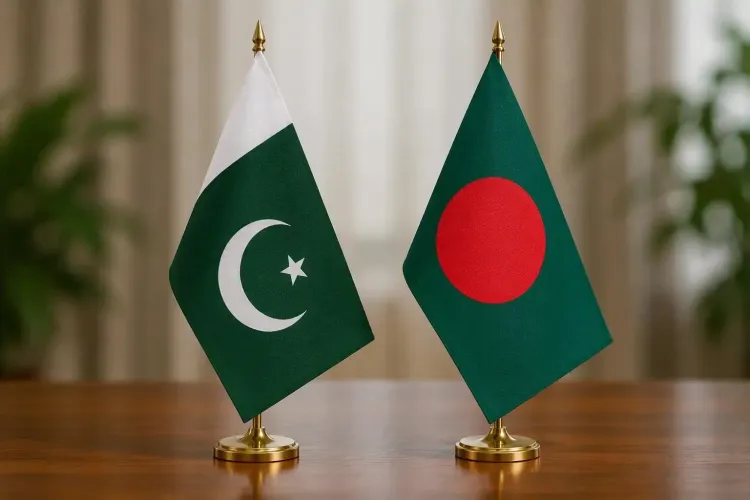
Bangladesh and Pakistan are exchanging delegations, expanding air and sea links, and announcing scholarships — but beneath the diplomatic warmth lies an 11-to-1 trade ratio in Islamabad's favour, blocked jute tariff concessions, and no stated target for boosting Bangladeshi exports. A new analysis warns Dhaka's gains remain elusive without structural fixes.
Key Takeaways
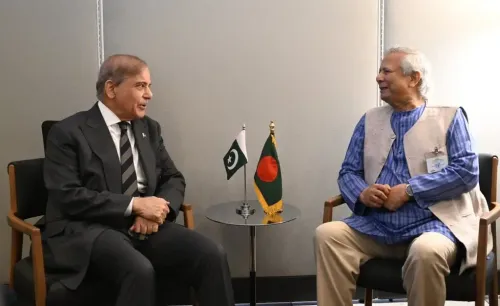
Bangladesh and Pakistan have deepened bilateral engagement through expanded air connectivity, port arrivals at Chattogram , and delegation exchanges.
Pakistan's exports to Bangladesh reached $67.2 million in FY2025–26 , reflecting an approximately 11-to-1 trade ratio in Pakistan's favour, per State Bank of Pakistan data.
Bangladesh has repeatedly sought tariff concessions on jute and value-added jute products, but Pakistan continues to impose higher duties, limiting Bangladeshi market access.
Pakistan has publicly targeted higher exports to Bangladesh, but no comparable target for Bangladeshi exports has been articulated by Islamabad.
Digital and institutional cooperation — including financial platforms and digital wallets — may offer Dhaka greater long-term value than merchandise trade.
The analysis cautions that unresolved historical disputes and domestic political sensitivities remain significant constraints on the relationship.
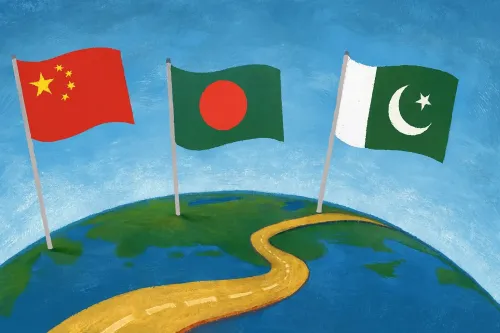
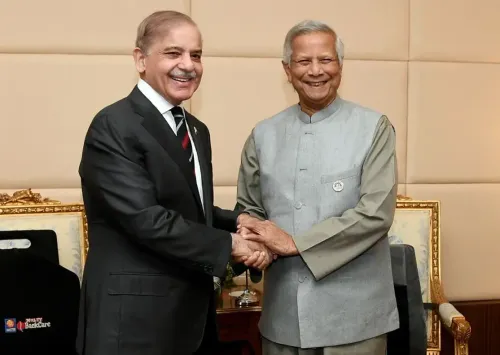
Bangladesh and Pakistan are deepening bilateral engagement after years of limited contact, yet an analysis by Daily Waadaa raises pointed questions about the tangible benefits Dhaka stands to gain — particularly given a persistent trade imbalance and unresolved historical grievances. The renewed relationship, while symbolically significant, is yet to translate into measurable economic gains for Bangladesh.
Renewed Ties on the Surface
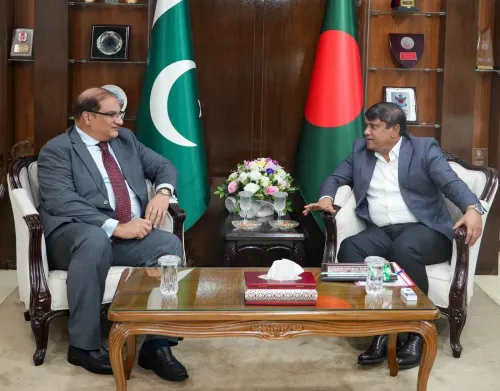
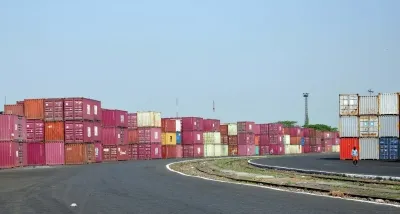
Recent months have witnessed a notable uptick in bilateral exchanges. Pakistan's national carrier has expanded connectivity, vessels from Karachi now regularly dock at Chattogram, and scholarship programmes have been launched. Official and private-sector delegations have travelled in both directions, signalling a warming of relations that had long been constrained by historical tensions rooted in the 1971 Liberation War.
The Trade Imbalance Problem
However, the underlying trade figures reveal a stark asymmetry. According to State Bank of Pakistan data cited in the analysis, Pakistan's exports to Bangladesh stood at $67.2 million in fiscal year 2025–26, reflecting an approximately 11-to-1 trade ratio in favour of Pakistan — compared to $71.6 million in the preceding year. Much of Pakistan's export basket to Bangladesh comprises cotton and textile raw materials, sectors that have grown more competitive following the sharp depreciation of the Pakistani rupee.
This comes amid a pattern that analysts say has consistently disadvantaged Dhaka. Bangladesh enjoys a dominant position as a supplier of raw jute and jute yarn — products Pakistan imports almost entirely from Bangladesh — yet significantly higher duties are imposed on value-added jute products, effectively restricting Bangladesh's access to deeper market segments. Industry representatives reportedly attribute a sharp decline in Bangladesh's jute earnings from Pakistan to this tariff structure.
Asymmetric Ambitions
The analysis also flags an imbalance in publicly stated trade ambitions. Pakistan has articulated goals of substantially raising its exports to Bangladesh, while no comparable target has been outlined for Bangladeshi exports into the Pakistani market. Critics argue this signals a transactional rather than reciprocal approach to the relationship, with Islamabad seeking market access without an equivalent commitment to opening its own doors.
Digital and Institutional Cooperation: A Silver Lining
Beyond trade, the report identifies potential value in digital and institutional cooperation. While Bangladesh has performed strongly on several international digital indicators, Pakistan has made notable progress in linking financial institutions, digital wallets, and government services through shared platforms. According to the analysis, such technological and institutional collaboration could ultimately offer Bangladesh greater long-term value than merchandise trade alone.
What Dhaka Must Weigh
The analysis cautions, however, that Bangladesh will need to carefully balance any prospective gains against a set of complicating factors: unresolved historical disputes, persistent market access concerns, and domestic political sensitivities that continue to shape public and policy discourse around the relationship. For Dhaka, the strategic calculus involves navigating the expectations of a citizenry for whom 1971 remains a live issue, while pursuing economic pragmatism. How Bangladesh manages this tension will likely determine whether the current diplomatic thaw yields durable outcomes or remains largely symbolic.
Point of View
But the economics tell a more complicated story. An 11-to-1 trade imbalance, combined with Pakistan's resistance to reducing jute tariffs in a sector where Bangladesh holds clear comparative advantage, suggests that Islamabad is pursuing market gains without reciprocal openness. What is missing from mainstream coverage is the asymmetry in ambition: Pakistan has set export targets for Bangladesh; Bangladesh has not been offered equivalents. Unless Dhaka conditions deeper engagement on concrete tariff relief and verifiable two-way trade targets, the warming relationship risks becoming a net gain for Pakistan dressed up as bilateral progress.
NationPress
31 Oct 2026
Frequently Asked Questions
What is driving the renewed Bangladesh-Pakistan engagement?
The two countries have expanded ties through increased air and sea connectivity, scholarship programmes, and official and private-sector delegation exchanges. This follows years of limited contact shaped by historical tensions linked to the 1971 Liberation War.
How large is the trade imbalance between Bangladesh and Pakistan?
Pakistan's exports to Bangladesh stood at $67.2 million in fiscal year 2025–26, reflecting an approximately 11-to-1 trade ratio in Pakistan's favour, according to State Bank of Pakistan data. Bangladesh's exports to Pakistan are significantly smaller in comparison.
Why is the jute tariff issue significant for Bangladesh?
Bangladesh is the dominant supplier of raw jute and jute yarn to Pakistan, yet Pakistan imposes significantly higher duties on value-added jute products, restricting Bangladeshi access to higher-margin segments. Industry representatives say this has contributed to a sharp decline in Bangladesh's jute earnings from Pakistan in recent years.
Could digital cooperation offset the trade disadvantage for Bangladesh?
The analysis suggests that Pakistan's progress in linking financial institutions, digital wallets, and government services through shared platforms could offer Bangladesh meaningful long-term value. However, it cautions that these potential benefits must be weighed against unresolved historical disputes and market access concerns.
What are the key risks for Bangladesh in deepening ties with Pakistan?
The analysis identifies three main risks: a persistent trade imbalance with no stated corrective targets, unresolved historical grievances rooted in 1971, and domestic political sensitivities that shape public opinion on the relationship. Balancing these factors will be central to how Dhaka manages the diplomatic thaw.