Rohingya refugees face deadly monsoon risks in Bangladesh, HRW warns
Synopsis
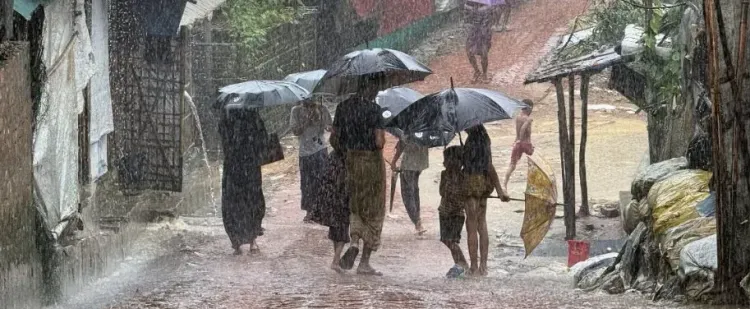
At least 17 Rohingya refugees have reportedly died and more than 3,000 have been displaced this monsoon season in Cox's Bazar — and Human Rights Watch says this is not a natural disaster but a policy failure. With funding cut, permanent construction banned, and new arrivals denied formal shelters, the camps are structurally primed for tragedy every monsoon.
Key Takeaways
Monsoon-season landslides and floods have reportedly killed at least 17 Rohingya refugees and displaced more than 3,000 in Bangladesh this month.
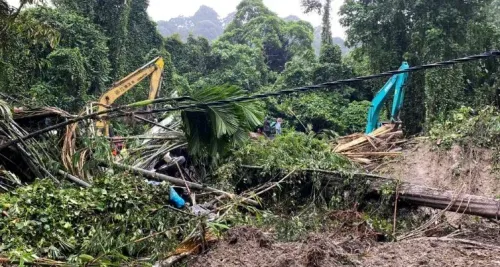
Between 4–9 July , 286 weather-related incidents affected 26,119 refugees in Cox's Bazar , including 95 landslides .
Human Rights Watch says funding cuts have halted critical landslide-prevention work such as brickwork and drainage, while the Bangladesh government bans permanent construction in the camps.
Newly arrived refugees — including one whose two daughters and two grandchildren died on 6 July — are denied formal shelters and forced into unsafe hillside structures.
HRW is calling on Bangladesh , the UN , and donor governments to urgently reduce overcrowding and restore infrastructure funding before the monsoon season intensifies.
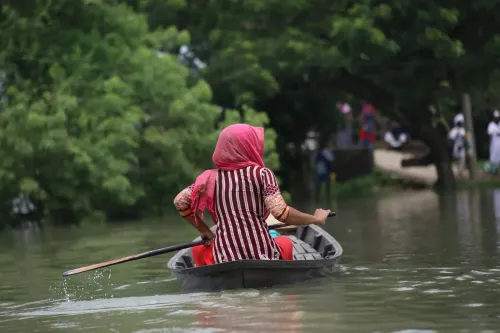
Human Rights Watch (HRW) has raised urgent alarm over the life-threatening conditions facing Rohingya refugees in Bangladesh's Cox's Bazar, warning that monsoon-season landslides and floods are killing and displacing thousands in overcrowded, under-resourced camps. The warning, issued on 14 July, follows a series of weather-related disasters this month that reportedly killed at least 17 people and displaced more than 3,000 others.
Scale of the Crisis
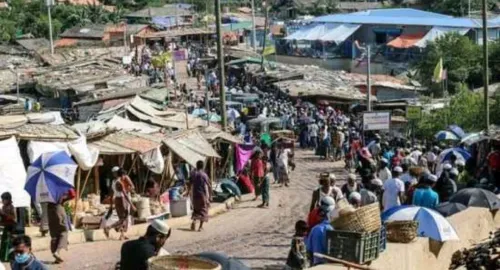
According to data cited by HRW from the Rohingya Coordination Platform, between 4 July and 9 July, a total of 286 weather-related incidents were recorded across the refugee camps. These events affected 26,119 refugees, triggered 95 landslides that displaced 4,307 people, partially damaged 2,809 shelters, and completely destroyed 13 more.
The United Nations High Commissioner for Refugees (UNHCR) has repeatedly flagged the danger of 'lethal cyclones, floods, and landslides' in the congested settlements, as the number of arrivals from Myanmar continues to grow. The Bangladesh government has yet to act on a UNHCR request for additional land to house new refugees, who have reportedly been crammed into the existing 24 square kilometres allocated for the camps.
Structural Failures Behind the Deaths
A water, sanitation, and hygiene civil engineer working in Bangladesh told HRW that the camp design was flawed from inception. 'When the Rohingya first took shelter here, the camps were made by cutting hills and without planned drainage systems,' the engineer said. 'Now, because of funding cuts, sustainable landslide-prevention work, especially brickwork, cannot be done properly, while the Bangladesh government refuses to allow permanent constructions in the camps.'
Newly arrived refugees face compounded risk because they are not allocated formal shelters and are forced to rent or occupy unsafe spaces on hillsides. One refugee who arrived in August 2024 recounted to HRW that NGO staff repeatedly told him shelters were unavailable for new arrivals. His two daughters and two grandchildren reportedly died on 6 July after the makeshift structure he had built on a hillside collapsed. 'I didn't know the hill would collapse like this,' he said.
What HRW Is Demanding
Meenakshi Ganguly, Deputy Asia Director at HRW, said the recurring casualties are not simply natural disasters. 'Every monsoon is becoming increasingly deadly for Rohingya refugees in Bangladesh, with denuded hills sliding away under makeshift structures, as the funding to buttress the camps has dried up. These are not simply natural disasters, but a predictable outcome of policies that put refugees' lives at risk,' she said.
HRW called on Bangladesh authorities, the UN, and donor governments to immediately reduce overcrowding and restore funding for embankments, drainage infrastructure, access routes, and emergency relocation sites. Ganguly added: 'Rohingya refugees won't benefit from further hand wringing, but by an urgent and effective response. Concerned governments need to act instead of waiting for the next landslide to sweep away another Rohingya family.'
A Crisis Compounded by Funding Cuts
The situation in Cox's Bazar reflects a broader pattern of humanitarian underfunding at a time of rising global displacement. Aid agencies have repeatedly warned that budget shortfalls are forcing trade-offs between basic food assistance and structural safety measures — with deadly consequences. This is not the first monsoon season to claim Rohingya lives in the camps; critics argue the cycle of disaster and inadequate response has become entrenched. Whether donor governments heed HRW's call before the monsoon season intensifies remains to be seen.
Point of View
Combined with a global funding retreat from the Rohingya response, has created a structural death trap that activates every rainy season. HRW's call is urgent, but it is also familiar; similar warnings were issued in 2022 and 2023. The harder question is why donor governments, having been warned repeatedly, continue to treat this as a funding line item rather than a protection emergency. Until the overcrowding and infrastructure deficits are addressed simultaneously, the monsoon will keep taking lives.
NationPress
13 Oct 2026
Frequently Asked Questions
What has Human Rights Watch said about Rohingya refugees in Bangladesh?
Human Rights Watch has warned that Rohingya refugees in Bangladesh's Cox's Bazar face deadly risks every monsoon season due to landslides, floods, and overcrowded, structurally unsafe camps. The group is calling on Bangladesh, the UN, and donor governments to urgently reduce overcrowding and restore infrastructure funding.
How many Rohingya refugees have been affected by monsoon-related disasters in July 2025?
According to data cited by HRW from the Rohingya Coordination Platform, between 4 and 9 July, 286 weather-related incidents affected 26,119 refugees in Cox's Bazar. At least 17 people were reportedly killed and more than 3,000 displaced this month.
Why are the Rohingya camps in Cox's Bazar so vulnerable to landslides?
The camps were built by cutting into hills without planned drainage systems, and the Bangladesh government prohibits permanent construction in the settlements. Funding cuts have halted sustainable landslide-prevention work such as brickwork, leaving makeshift shelters on denuded hillsides highly exposed.
What is UNHCR's role in the Bangladesh Rohingya crisis?
The UNHCR has repeatedly warned of deaths and injuries from lethal cyclones, floods, and landslides in the congested camps. It has also submitted a request to the Bangladesh government for more land to house newly arrived refugees, which has not yet been approved.
Who are the most at-risk refugees in the Cox's Bazar camps?
Newly arrived refugees are particularly vulnerable because they are not allocated formal shelters and are forced to rent or occupy unsafe spaces on hillsides. One refugee who arrived in August 2024 lost two daughters and two grandchildren on 6 July when his makeshift hillside shelter collapsed.