Rubio: Congress shift won't change Trump's foreign policy course
Synopsis
At the G20 foreign ministers' meeting in Atlanta, Secretary of State Marco Rubio made a pointed constitutional argument: no matter how November's congressional elections turn out, Trump's foreign policy agenda stays intact. Drawing on his own Senate frustrations, Rubio drew a sharp line between executive authority and congressional oversight — a signal that the administration is bracing for, and unbothered by, a potentially divided government.
Key Takeaways
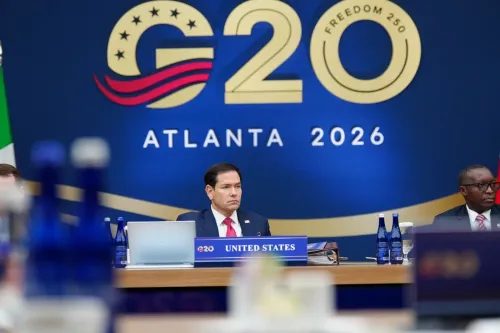
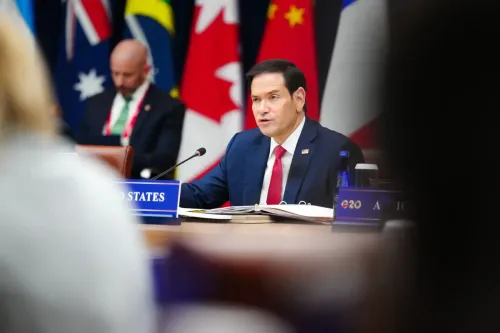
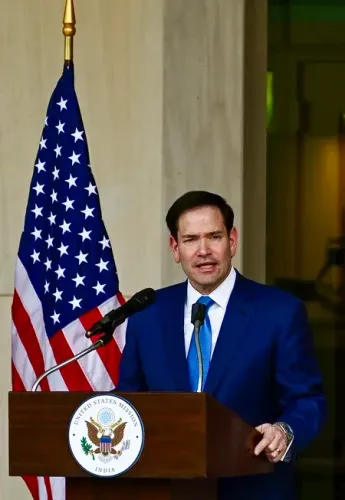
US Secretary of State Marco Rubio spoke at the G20 foreign ministers' meeting in Atlanta on Saturday .
Rubio said a change in congressional control would not alter President Trump 's foreign policy directives.
He acknowledged Congress's role in funding, appropriations, and oversight , but said the executive branch holds the central foreign policy authority.
Rubio cited former President Barack Obama 's experience with a Republican-controlled Congress as a precedent for divided government.
On Iran , Rubio declined to announce further military action; on Ukraine , he said Trump would decide whether President Zelenskyy attends the G20 summit in Florida .
Rubio said Trump directed the Atlanta meeting to focus on energy, technology, and supply chains .
US Secretary of State Marco Rubio said on Saturday that a change in congressional control following upcoming elections would not alter President Donald Trump's foreign policy directives, while acknowledging that lawmakers retain significant authority over funding and oversight. Rubio made the remarks at the close of the G20 foreign ministers' meeting in Atlanta.
Rubio's Core Argument
Responding to a reporter who asked whether his job would become more difficult if Democrats controlled Congress from January, Rubio pushed back on the premise itself. 'Well, first of all, we haven't had an election yet. So we don't know what Congress will look like,' he said, declining to concede the outcome in advance.
He argued that divided government is a familiar feature of the American political system and would not redefine the president's core responsibilities. 'It won't influence or change the President's directives in terms of what he was elected to do,' Rubio stated.
Executive Branch Leads, Congress Checks
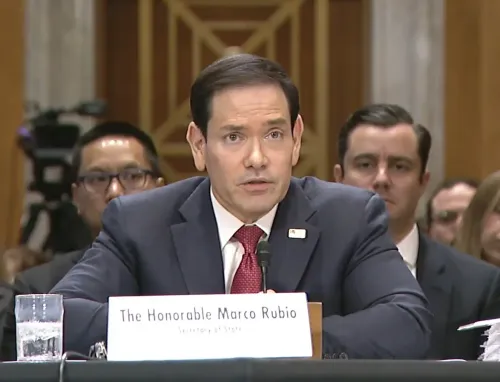
Rubio was careful to delineate the constitutional division of labour. While affirming the executive branch's primary role in shaping foreign policy, he acknowledged Congress's distinct but important function. 'Now, Congress has a role to play, primarily in the funding and the appropriations and in the oversight function,' he said.
Drawing on his own experience as a US Senator, Rubio noted he had served in both the majority and minority, and under both Republican and Democratic presidents — giving him a first-hand view of how these divisions of responsibility play out. 'And, to my great frustration when I was a member of the Senate, I realised that while there are things we can do, ultimately the foreign policy decisions are made by the executive branch,' he said.
Historical Precedent Cited
Rubio pointed to former President Barack Obama's tenure as a precedent for administrations navigating a Congress controlled by the opposing party. He suggested the Trump administration was prepared to operate under similar conditions if necessary, describing legislative oversight and appropriations as normal, expected parts of the system.
'The central role belongs to the executive branch is something I learned when I was in the legislative branch, and it's something I know now,' he said, closing the exchange without predicting the election result.
Iran, Ukraine, and the G20 Agenda
On other pressing foreign policy matters, Rubio declined to announce further military action against Iran, stating that such decisions rest with the president. He also confirmed that Trump would decide whether Ukrainian President Volodymyr Zelenskyy should attend the upcoming G20 summit in Florida.
Rubio described the Atlanta meeting's economic emphasis as a direct presidential directive, saying Trump wanted the forum to concentrate on energy, technology, supply chains, and other issues central to the G20's economic mandate. As the elections draw closer, the administration's posture on congressional relations will face its first real test.
Point of View
Particularly on defence appropriations and sanctions. Notably, Rubio's own Senate career was defined by using precisely that leverage to constrain executive overreach on foreign policy. His pivot from legislative hawk to executive loyalist is the real story here, and it signals how completely the Trump administration has consolidated its foreign policy decision-making away from Capitol Hill.
NationPress
1 Nov 2026
Frequently Asked Questions
What did Marco Rubio say about Congress and Trump's foreign policy?
Rubio said that even if Democrats gained control of Congress after the upcoming elections, it would not change President Trump's foreign policy directives. He argued that while Congress plays a role in funding and oversight, the executive branch holds primary authority over foreign affairs.
Where did Rubio make these remarks?
Rubio spoke at the conclusion of the G20 foreign ministers' meeting in Atlanta on Saturday. The meeting's agenda, he said, was shaped by Trump's directive to focus on energy, technology, and supply chains.
What is Rubio's position on Iran and Ukraine at the G20?
Rubio declined to announce further military action against Iran, saying those decisions rest with President Trump. He also said Trump would decide whether Ukrainian President Volodymyr Zelenskyy attends the upcoming G20 summit in Florida.
How did Rubio draw on his Senate experience to make his argument?
Rubio said his time in the Senate — serving under both Republican and Democratic presidents, and in both the majority and minority — taught him the limits of congressional influence over foreign policy. He quoted his own 'great frustration' at realising that foreign policy decisions ultimately rest with the executive branch.
What historical precedent did Rubio cite for divided government?
Rubio pointed to former President Barack Obama's experience governing with a Republican-controlled Congress as evidence that administrations can and do operate effectively under divided government. He said legislative oversight and appropriations disputes are a normal part of the American system.