Russia, China aiding Iran amid Hormuz tensions, says Hegseth
Synopsis
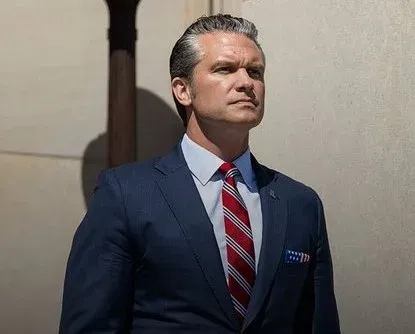
US Defence Secretary Pete Hegseth publicly confirmed before a Senate committee that Russia and China are enabling Iran's actions in the Strait of Hormuz — a rare on-record accusation implicating two permanent UN Security Council members. With US forces striking Iranian targets for 10 consecutive evenings and a covert oil-transit operation under way, the conflict around one of the world's most critical energy chokepoints is widening fast.
Key Takeaways
US Defence Secretary Pete Hegseth told the Senate Appropriations Committee on 22 July that Russia and China are enabling Iran's actions around the Strait of Hormuz .
US forces have struck Iranian targets for 10 consecutive evenings following Iran's renewed attacks on commercial shipping.
The Trump administration has reimposed a blockade on Iran, described by Hegseth as 'effectively impenetrable', and seized a vessel in the Arabian Gulf .
A covert operation called Project Freedom moved between 400 million and 500 million barrels of oil past Iran with Gulf country assistance.
Iran's conventional navy has reportedly been sunk, but Tehran retains fast boats, coastal missiles, and mining capabilities.
Congress is reviewing a $87.6 billion supplemental funding request, with roughly $67 billion allocated to the military.
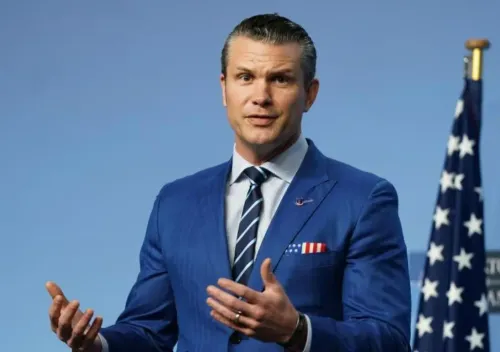
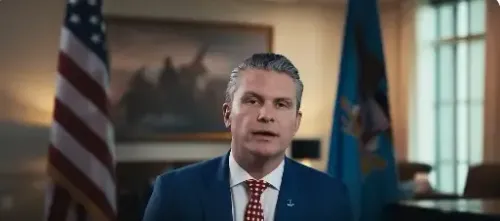
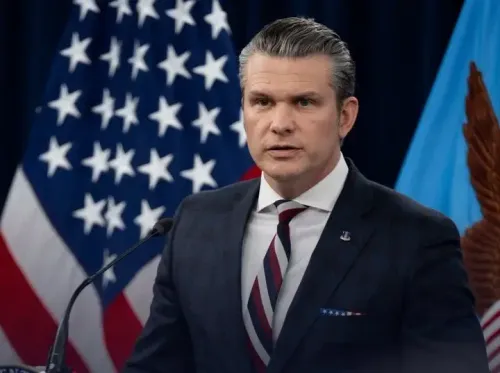
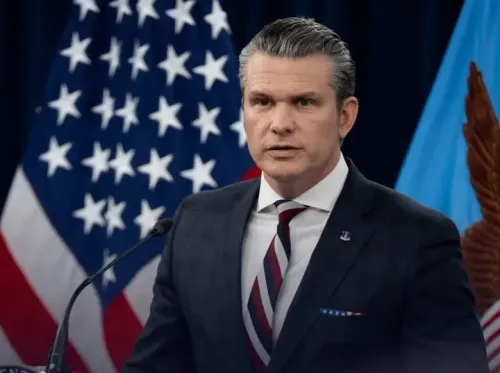
US Defence Secretary Pete Hegseth told a Senate committee on 22 July that Russia and China were providing assistance to Iran as Tehran resumed attacks on commercial shipping in and around the Strait of Hormuz and American forces intensified military operations in the region. The disclosure came during a high-stakes congressional hearing on a major supplemental funding request.
What Hegseth Told the Senate
Hegseth made the remarks before the Senate Appropriations Committee, which was examining President Donald Trump's request for $87.6 billion in supplemental funding — of which roughly $67 billion is earmarked for the military. The hearing took a sharp turn when Republican Senator John Hoeven pressed Hegseth on whether Moscow and Beijing were actively supporting Tehran.
'There are ways in which both of those countries are limiting at different levels, enabling some of the things Iran is doing. Yes,' Hegseth said, without elaborating on the nature or scale of the assistance.
General Dan Caine, chairman of the Joint Chiefs of Staff, also declined to discuss specifics publicly. 'I'd rather not opine on the specifics because that would divulge what we know and I never want the adversary to know what I know. I just want to know it,' Caine said.
US Strikes and the Breakdown of the Shipping Truce
Hegseth disclosed that US forces had struck Iranian targets for a 10th consecutive evening, following a breakdown in an earlier understanding with Tehran over commercial shipping. 'We moved into an MOU where Iran said we won't shoot at shipping, and then they turned — the IRGC turned around and decided to start shooting at commercial shipping again,' he said, referring to Iran's Islamic Revolutionary Guard Corps (IRGC).
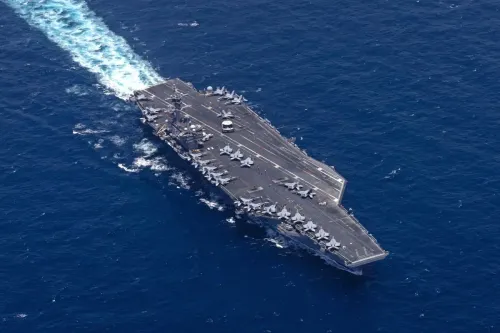
He said the Trump administration had reimposed a blockade against Iran, describing it as 'effectively impenetrable', and confirmed that the United States had seized a vessel inside the Arabian Gulf. American forces were also reportedly targeting Iran's surveillance and monitoring capabilities around the Strait of Hormuz to gain tactical advantages.
Project Freedom and Oil Transit Claims
Hegseth disclosed a covert operation — referred to as Project Freedom — under which the United States, with assistance from Gulf countries, had moved between 400 million and 500 million barrels of oil past Iran. 'We've been in control of moving traffic through there for quite some time,' he said.
Notably, Hegseth also confirmed that Iran's conventional navy had been sunk during the conflict, though he acknowledged that Tehran retained fast boats, coastal missiles, and the capability to mine international waters or strike commercial vessels.
Democratic Pushback and Competing Claims
Democratic senators challenged the administration's account of the situation. Senator Jack Reed argued that the Strait of Hormuz had been open to shipping before the conflict began and accused the administration of failing to prevent disruption to global energy supplies. He noted that Iran had again reduced commercial traffic through the strait, contradicting Hegseth's assertion of effective US control.
Broader Strategic Stakes
Hegseth argued that the supplemental funding would enable the United States to sustain operations around Hormuz while deterring Russia and China from intervening in future conflicts. The hearing underscores the widening geopolitical dimensions of the Hormuz standoff, with Washington now publicly implicating two permanent members of the UN Security Council in Iran's actions. How Congress responds to the $87.6 billion request could shape the next phase of US engagement in the region.
Point of View
The administration is building a public case that the Hormuz conflict is not a bilateral US-Iran dispute but a proxy front in a larger great-power contest. Yet the lack of specifics on the nature of Russian and Chinese assistance raises questions: is this material support, intelligence sharing, or sanctions evasion? Democratic senators were right to flag the contradiction between claims of 'effective control' and Iran's continued ability to disrupt shipping. If the strait was truly impenetrable, the 10th consecutive night of strikes would not be necessary. The $87.6 billion supplemental request now carries a geopolitical framing that will make it harder for Congress to reject — which may be precisely the point.
NationPress
22 Jul 2026
Frequently Asked Questions
What did Pete Hegseth say about Russia and China helping Iran?
US Defence Secretary Pete Hegseth confirmed before the Senate Appropriations Committee on 22 July that Russia and China are 'enabling some of the things Iran is doing' around the Strait of Hormuz. He did not specify the nature or scale of the assistance, and the chairman of the Joint Chiefs of Staff also declined to discuss intelligence details publicly.
Why are US forces striking Iran?
US forces have carried out strikes on Iranian targets for 10 consecutive evenings after Iran's Islamic Revolutionary Guard Corps (IRGC) resumed attacks on commercial shipping, violating an earlier understanding under which Tehran had agreed to halt such attacks. Hegseth said American forces are also targeting Iran's ability to monitor activity around the Strait of Hormuz.
What is Project Freedom?
Project Freedom is a covert US operation, conducted with assistance from Gulf countries, under which the United States reportedly moved between 400 million and 500 million barrels of oil past Iran through the Strait of Hormuz. Hegseth disclosed the operation during the Senate hearing on 22 July.
What is the $87.6 billion supplemental funding request?
President Donald Trump has requested $87.6 billion in supplemental funding, of which approximately $67 billion is intended for the military. Hegseth told the Senate Appropriations Committee the funds would help sustain US operations around the Strait of Hormuz and deter Russian and Chinese intervention in future conflicts.
How have Democrats responded to the administration's claims?
Democratic senators, including Senator Jack Reed, challenged the administration's account, arguing that the Strait of Hormuz was open before the conflict began and accusing the administration of failing to prevent disruption to global energy supplies. They noted that Iran had again reduced commercial traffic through the strait despite US claims of effective control.