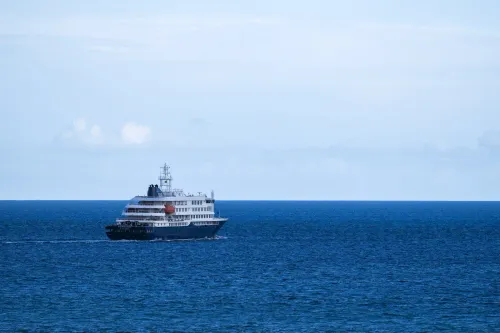
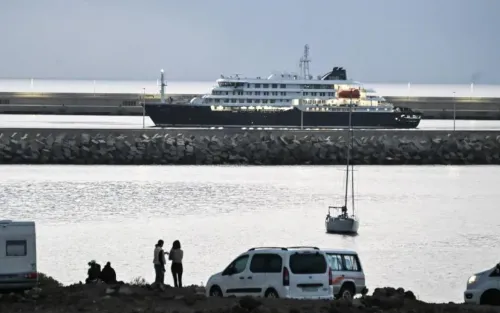
Hantavirus outbreak: Second Spaniard tests positive from MV Hondius cruise ship

Synopsis
A second Spanish national quarantined at Madrid's Gómez Ulla hospital has tested positive for hantavirus following the MV Hondius cruise ship outbreak in the Atlantic in April. The patient is asymptomatic and now in a high-level isolation unit — but authorities say the general public remains at no elevated risk.
Key Takeaways
Spain's Ministry of Health confirmed a second hantavirus case among the 14 Spaniards quarantined in Madrid .
The patient is asymptomatic and has been transferred to the High-Level Isolation Unit (UATAN) at Gómez Ulla Central Defence Hospital .
All 14 nationals were evacuated from Tenerife on 10 May after a hantavirus outbreak aboard the cruise ship MV Hondius in April 2025 .
The first confirmed patient is reportedly recovering after showing symptoms.
Authorities say the new detection does not alter the risk level for the general population or change existing epidemiological response measures.
The WHO notes there is no specific cure for hantavirus; early supportive care is key to survival.
Spain's Ministry of Health has confirmed a second positive case of hantavirus among the 14 Spanish nationals evacuated from the cruise ship MV Hondius, which experienced a disease outbreak while crossing the Atlantic Ocean in April 2025. The new case was detected through routine PCR testing at Madrid's Gómez Ulla Central Defence Hospital, where the group has been held in preventive quarantine since 10 May.
How the New Case Was Detected
The latest positive was identified under the isolation and monitoring system already in place at the hospital, according to the ministry. The patient is currently asymptomatic and has been transferred to the facility's High-Level Isolation Unit (UATAN), where specialised medical staff are overseeing care under strict biosafety protocols.
Health authorities stressed that this detection does not raise the risk level for the general population and does not change the epidemiological response measures currently in force.
Background: The MV Hondius Outbreak
The 14 Spaniards were among passengers aboard the MV Hondius when a hantavirus outbreak was recorded during an Atlantic Ocean crossing in April 2025. They were evacuated from the island of Tenerife in a tightly controlled operation on 10 May and transferred directly to the Gómez Ulla Central Defence Hospital in Madrid for quarantine.
The first Spanish patient to test positive after arriving in Madrid was reported to be recovering favourably after showing symptoms. This second confirmed case brings the total among the quarantined group to two.
What Is Hantavirus and How Dangerous Is It
According to the World Health Organization (WHO), hantaviruses are zoonotic viruses that naturally infect rodents and are occasionally transmitted to humans, sometimes resulting in severe illness or death. The clinical profile varies by virus strain and geography.
In the Americas, infection is associated with Hantavirus Cardiopulmonary Syndrome (HCPS) — a rapidly progressive condition affecting the lungs and heart. In Europe and Asia, hantaviruses are linked to Haemorrhagic Fever with Renal Syndrome (HFRS), which primarily affects the kidneys and blood vessels.
Treatment and Prevention
There is currently no specific curative treatment for hantavirus disease, the WHO notes. Early supportive care — focused on close clinical monitoring and management of respiratory, cardiac, and kidney complications — is considered key to improving survival outcomes.
Prevention relies primarily on reducing human contact with infected rodents and their habitats. With the second positive case now confirmed and the quarantine group still under observation, Spanish health authorities are expected to continue PCR screening of all 14 individuals in the coming days.
Point of View
And a second positive has emerged only now, raising questions about the incubation window and whether all 14 individuals have been screened with sufficient frequency. Spain's containment architecture appears robust, but the MV Hondius outbreak is a reminder that cruise ship biosafety protocols for zoonotic pathogens remain an underdiscussed gap in international travel health governance.
NationPress
10 Oct 2026
Frequently Asked Questions
What is the hantavirus outbreak on MV Hondius?
The MV Hondius is a cruise ship that experienced a hantavirus outbreak among passengers while crossing the Atlantic Ocean in April 2025. Fourteen Spanish nationals on board were subsequently evacuated from Tenerife on 10 May and placed in quarantine at Madrid's Gómez Ulla Central Defence Hospital.
How many Spaniards have now tested positive for hantavirus?
Two Spanish nationals from the quarantined group of 14 have tested positive as of 26 May 2025. The first patient showed symptoms and is reportedly recovering; the second patient is currently asymptomatic and has been moved to a high-level isolation unit.
Is hantavirus dangerous and is there a cure?
Hantavirus can cause severe illness and death, though the clinical outcome varies by virus strain and location. According to the WHO, there is no specific curative treatment; early supportive medical care focused on respiratory, cardiac, and kidney management is the primary approach to improving survival.
Does this new case pose a risk to the general public in Spain?
Spanish health authorities have stated that the new positive case does not alter the risk level for the general population and does not change existing epidemiological response measures. The patient is isolated in a high-level biosafety unit.
How is hantavirus transmitted to humans?
According to the WHO, hantaviruses are zoonotic pathogens that naturally infect rodents and are occasionally transmitted to humans, primarily through contact with infected rodents or their droppings. Human-to-human transmission is not a primary route of spread.