South Korea ballot shortage: Parliamentary panel grills NEC officials
Synopsis
South Korea's bipartisan parliamentary panel opened formal hearings into the National Election Commission over ballot shortages that disrupted the 3 June local elections in Seoul — with seven of eight NEC commissioners absent from the first session, drawing rare cross-party condemnation and raising questions about institutional accountability in one of Asia's most established democracies.
Key Takeaways
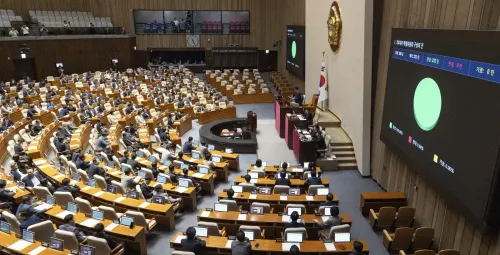
A parliamentary special committee launched its first inquiry into the National Election Commission (NEC) on 23 June over ballot shortages at Seoul polling stations during the 3 June local elections .
Only acting NEC chairman Wi Chul-hwan appeared before the panel; seven of eight incumbent commissioners were absent, drawing bipartisan criticism.
Both the ruling Democratic Party and the opposition People Power Party called the absences a 'collective act of defiance'.
The committee has approved summoning 43 witnesses , including 27 current and former NEC officials .
A second round of reporting is set for 1 July , an on-site probe on 8 July , and hearings on 14 July and 22 July .
Former NEC Chairman Roh Tae-ak acknowledged 'deep responsibility' for the oversight failures at the session.
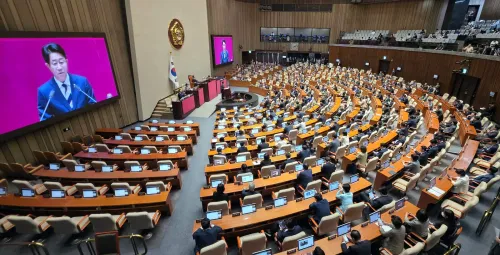
A parliamentary special committee in South Korea on Tuesday, 23 June conducted its first formal inquiry into the National Election Commission (NEC) over an unprecedented shortage of ballots that disrupted polling at more than a dozen stations in Seoul during the 3 June local elections. The probe marks the most serious institutional scrutiny the NEC has faced in recent memory over an operational failure.
How the Inquiry Unfolded
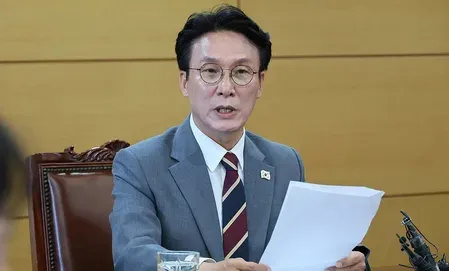
The 18-member special committee, constituted by the National Assembly last week, summoned NEC officials to account for the ballot shortfall. Of the NEC's eight incumbent commissioners, only acting chairman Wi Chul-hwan appeared before the panel during the morning session — an absence that drew sharp criticism from lawmakers across party lines.
Legislators from both the ruling Democratic Party and the main opposition People Power Party condemned the no-shows, calling it a 'collective act of defiance' and pressing the remaining witnesses to present themselves before the committee.
What Officials Said
Former NEC Chairman Roh Tae-ak acknowledged institutional failure, stating: 'As the chairperson, I feel a deep sense of responsibility for the shortcomings found in the NEC's oversight.'
Acting chairman Wi offered an apology to affected voters: 'I offer my sincere apologies to the voters who experienced significant confusion and inconvenience while exercising their precious right to vote, which should have been guaranteed.' Wi also pledged to pursue the truth behind the shortages but rebuffed calls for his resignation, arguing it would be 'irresponsible' to step down at this stage of the investigation.
Key Witnesses and Next Steps
The committee has approved the summoning of 43 witnesses, comprising 27 current and former NEC officials and one reference witness. A second round of reporting from the NEC, its regional offices, the interior ministry, and the National Police Agency is scheduled for 1 July.
An on-site probe is planned for 8 July, followed by two days of hearings on 14 July and 22 July, signalling that the investigation will extend well into the summer.
Why This Matters
Ballot shortages at polling stations strike at the credibility of electoral administration. South Korea has long been regarded as a model of democratic consolidation in Asia, making the NEC's operational lapse particularly striking. Notably, the bipartisan nature of the criticism — with both the ruling party and the opposition condemning witness absences — suggests the political fallout is unlikely to be contained quickly. How the NEC responds to the July hearings will be closely watched as a test of institutional accountability.
Point of View
While framed as a sense of duty, also forecloses the kind of swift accountability that could have defused political pressure. The July hearings will determine whether this remains a procedural inquiry or escalates into a broader reckoning with how South Korea administers elections.
NationPress
21 Sept 2026
Frequently Asked Questions
What caused the ballot shortage at South Korea's June 3 local elections?
The precise cause is still under investigation. Ballots ran short at more than a dozen polling stations in Seoul during the 3 June local elections, prompting the National Assembly to form an 18-member special committee to probe the National Election Commission's oversight failures.
What is the parliamentary special committee investigating?
The committee is investigating the National Election Commission's role in the unprecedented ballot shortage that disrupted voting in Seoul on 3 June 2025. It has summoned 43 witnesses, including 27 current and former NEC officials, and plans hearings through late July.
Why were most NEC commissioners absent from the first hearing?
Seven of the NEC's eight incumbent commissioners did not appear before the committee during the 23 June session. Lawmakers from both the ruling Democratic Party and the opposition People Power Party condemned the absences as a 'collective act of defiance', though no official explanation was given.
Will the NEC acting chairman resign over the ballot shortage?
Acting NEC chairman Wi Chul-hwan has dismissed calls for his resignation, saying it would be 'irresponsible' to step down at this stage. He pledged to cooperate with the investigation and help uncover the truth behind the shortages.
What are the next steps in the South Korea ballot shortage investigation?
The committee is scheduled to receive a second round of reporting from the NEC, regional offices, the interior ministry, and the National Police Agency on 1 July. An on-site probe follows on 8 July, with full hearings set for 14 July and 22 July.