Trump backs India-Middle East-Europe corridor at UN amid Iran pressure
Synopsis
At the UN General Assembly, Trump publicly championed the India-Middle East-Europe Economic Corridor as a direct counter to Iranian control over energy routes — the first time he has explicitly linked IMEC to his anti-Iran strategy. With Witkoff and Kushner in nuclear talks and a 'deal or swift end' ultimatum on the table, Washington is making IMEC and Iran policy two sides of the same coin.
Key Takeaways
Donald Trump reaffirmed US support for the India-Middle East-Europe Economic Corridor (IMEC) at a GCC sideline meeting on 23 September 2026 at the UN General Assembly .
Trump framed IMEC as a strategic alternative to energy routes vulnerable to Iranian disruption , citing attacks on commercial shipping.
Special envoy Steve Witkoff and Jared Kushner held reportedly productive talks with Iran mediators; Trump said 'there's a lot of momentum for them to make a deal.' Trump warned Iran: 'We're going to make a deal or it's going to end very, very quickly.' IMEC was originally announced at the G20 Summit in New Delhi in September 2023 , signed by India, the US, Saudi Arabia, UAE, the EU, France, Germany and Italy .
Trump claimed the US had escorted more than one billion barrels of oil out of the Gulf, with oil flow through the strait at record levels since the conflict began.
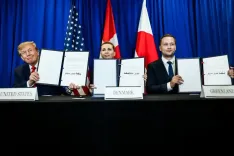
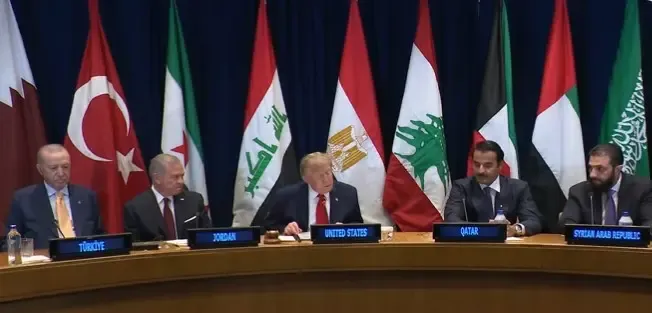
US President Donald Trump on 23 September 2026 reaffirmed his administration's support for the India-Middle East-Europe Economic Corridor (IMEC), framing the ambitious connectivity project as a strategic alternative for routing energy and goods away from Iranian-controlled chokepoints. The remarks were made during a multilateral meeting with leaders of the Gulf Cooperation Council (GCC) on the sidelines of the United Nations General Assembly in New York.
Trump's Case for the Corridor
'Iran's terrorist attacks on commercial shipping and neighboring countries have shown the need to shift Middle East energy infrastructure away from the Iranian checkpoints,' Trump said, according to reports from the UN meeting. He added: 'That's why my administration strongly supports the India, Middle East, Europe economic corridor.'
Trump also referenced pipelines and alternative overland routes as part of a broader push to reduce the region's dependence on maritime passages vulnerable to Iranian disruption. The President claimed the US had escorted more than one billion barrels of oil out of the Gulf in the recent period, asserting: 'We now have more oil flowing through the strait than at any point by far since the conflict began.'
Iran Deal or Swift End: Trump Issues Warning
Beyond the corridor, Trump issued a stark warning to Tehran, signalling that the nuclear standoff would be resolved through diplomacy or force. 'We're going to make a deal or it's going to end very, very quickly,' he said.
He disclosed that his special envoy Steve Witkoff and son-in-law Jared Kushner had held what he described as a productive meeting with mediators dealing with Iran. 'I think there's a lot of momentum for them to make a deal,' Trump said, expressing confidence that both men carried credibility with the Iranian side. Trump also claimed that US military action had crippled Iran's navy, eliminated its air force and destroyed much of its weapons infrastructure, while Operation Economic Outcast was intensifying financial pressure on Tehran.
Gulf Partners, Gaza and Regional Unity
Trump thanked GCC leaders for their partnership and investments in the United States, describing them as 'some of Washington's closest friends, allies and partners.' He also praised their role in what he characterised as efforts to end the Gaza war, crediting many of the same leaders with helping secure a peace agreement, the return of hostages and international support for a 20-point Gaza peace plan. 'We continue to stand together. We are all together very much united,' he said.
What Is IMEC and Where Does It Stand
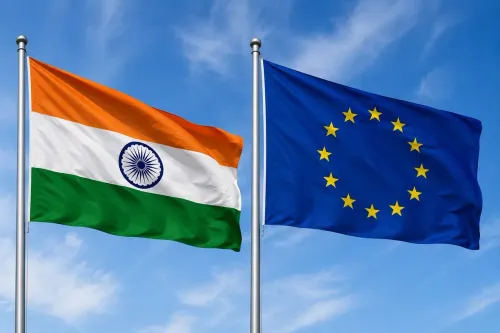
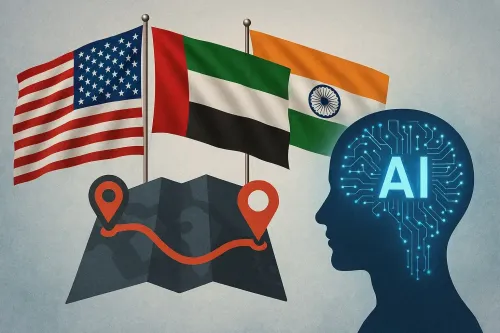
The India-Middle East-Europe Economic Corridor was announced at the G20 Summit in New Delhi in September 2023. The founding signatories — India, the United States, Saudi Arabia, the United Arab Emirates, the European Union, France, Germany and Italy — signed a memorandum outlining its objectives. The proposed corridor connects India with the Gulf through maritime links, and then links the Gulf to Europe through rail and shipping networks. Its stated goals include reducing transport time, improving trade flows and strengthening energy connectivity across Asia, the Middle East and Europe.
Notably, Trump's endorsement at the UN comes more than three years after the corridor's G20 launch, lending fresh geopolitical momentum to a project that had stalled amid regional conflict. This is the first time Trump has publicly championed IMEC within an explicit anti-Iran strategic frame, connecting corridor progress directly to maritime security and nuclear negotiations — a framing that could accelerate bilateral engagement on the project's implementation.
Point of View
Which could unlock Gulf funding and political will that have been hesitant since the 2023 G20 launch. However, linking IMEC's progress to an unpredictable Iran nuclear negotiation also introduces new risk: if talks collapse, the corridor's momentum could become collateral damage. India, which has been the most consistent champion of IMEC, now has a powerful US endorsement but on terms it did not fully set. The corridor's long-term credibility depends on separating infrastructure timelines from the volatility of US-Iran relations.
NationPress
23 Sept 2026
Frequently Asked Questions
What is the India-Middle East-Europe Economic Corridor (IMEC)?
IMEC is a multi-country connectivity initiative announced at the G20 Summit in New Delhi in September 2023, signed by India, the United States, Saudi Arabia, the UAE, the EU, France, Germany and Italy. It aims to connect India with the Gulf through maritime links and the Gulf to Europe through rail and shipping networks, with goals of reducing transport time and boosting trade and energy connectivity.
Why did Trump reaffirm support for IMEC at the UN?
Trump framed IMEC as a strategic alternative to energy routes that run through Iranian-controlled chokepoints, citing Iranian attacks on commercial shipping. He presented the corridor as central to his broader Middle East strategy covering maritime security, energy supplies and nuclear pressure on Tehran.
What did Trump say about an Iran nuclear deal?
Trump said special envoy Steve Witkoff and Jared Kushner had held productive meetings with Iran mediators and expressed confidence that a deal was possible, citing 'a lot of momentum.' He also issued a sharp warning: 'We're going to make a deal or it's going to end very, very quickly.'
Who are Steve Witkoff and Jared Kushner in Trump's Iran diplomacy?
Steve Witkoff is Trump's special envoy and Jared Kushner is his son-in-law; both have been involved in Middle East diplomacy. Trump described them as respected by the Iranian side and central to securing a potential nuclear agreement.
What was discussed at Trump's GCC meeting on the sidelines of the UN?
Trump met Gulf Cooperation Council leaders on the sidelines of the UN General Assembly on 23 September, covering support for IMEC, oil flow through the Gulf, Iran containment, the Gaza peace process and the 20-point Gaza peace plan. He praised GCC nations as close US partners and allies.