Trump Closes ASEAN Summit at Malacañang, Reaffirms US-Philippines Ties
Synopsis
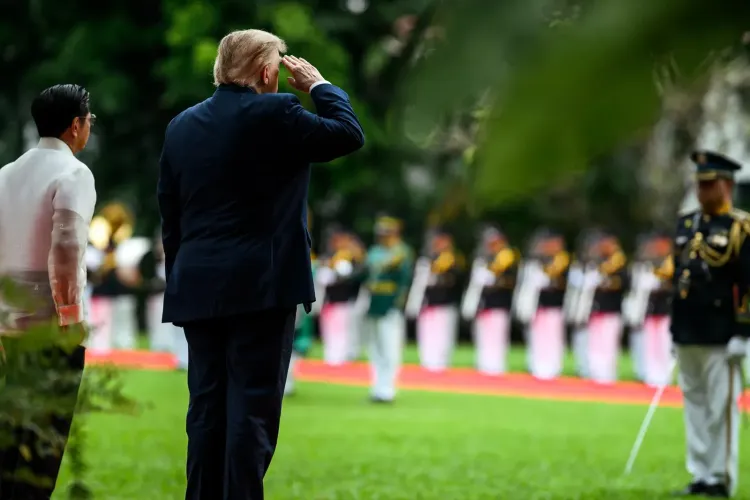
President Trump concluded the ASEAN Summit at Manila's Malacañang Palace on November 18, 2026, meeting Philippine President Bongbong Marcos and publicly reaffirming the US-Philippines alliance — one of America's oldest Pacific security partnerships, rooted in the 1951 Mutual Defense Treaty.
Key Takeaways
Trump closed the ASEAN Summit at Malacañang Palace in Manila on November 18, 2026 .
Trump met with Philippine President Bongbong Marcos and reaffirmed the U.S.-Philippines alliance .
The alliance is anchored by the Mutual Defense Treaty signed in 1951 , making it one of Washington's oldest in the Pacific.
The White House described the Philippines as 'one of America's oldest and most important' partners in the Pacific.
Trump previously participated in an ASEAN Summit in Manila in November 2017 during his first term.
Follow-on joint statements and defense cooperation announcements are expected after the summit's conclusion.
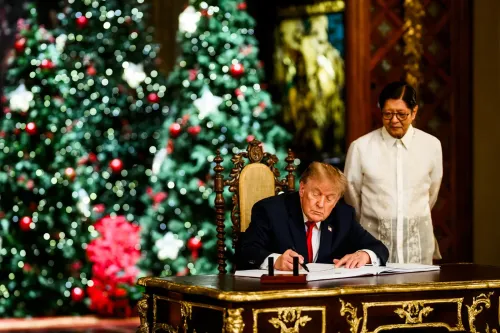
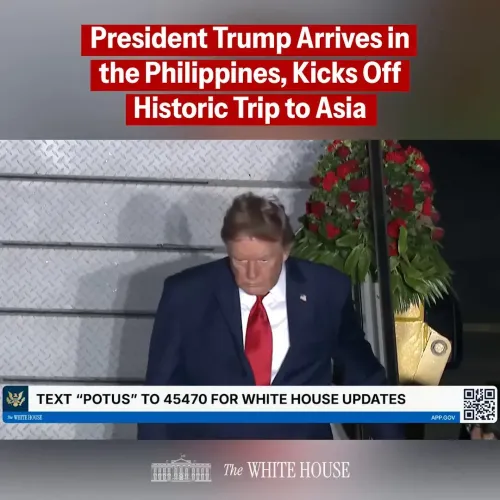
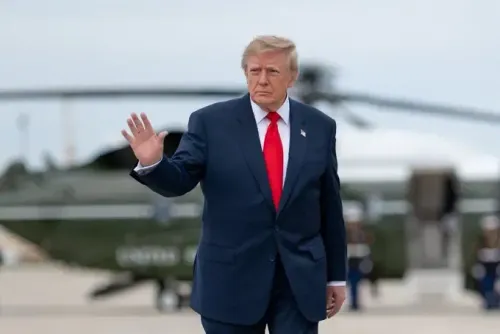
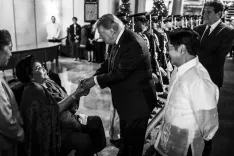
At the storied Malacañang Palace in Manila, President Donald J. Trump brought the curtain down on what the White House is calling a historic ASEAN Summit — shaking hands with Philippine President Bongbong Marcos and publicly reaffirming one of Washington's oldest alliances in the Pacific, on Wednesday, November 18, 2026.
A 75-Year Alliance Gets Its Moment in Manila
The U.S.-Philippines alliance, anchored by the Mutual Defense Treaty of 1951, is not a new relationship — but high-level presidential presence at multilateral forums has historically been how Washington signals that old commitments still carry weight. Trump's appearance alongside Marcos at the palace that serves as both the Philippine president's residence and seat of executive power sent precisely that signal to the region.
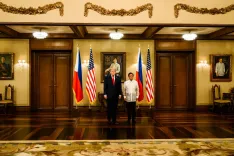
The White House framed the moment in unambiguous terms, describing the alliance as 'one of America's oldest and most important in the Pacific.' That phrasing is deliberate — in a region where China's strategic footprint has expanded steadily, staking that claim publicly at an ASEAN forum carries meaning well beyond the two flags in the frame.
ASEAN as a Stage for Bilateral Muscle
ASEAN, the Association of Southeast Asian Nations founded in 1967, groups ten member states and has long served as the region's primary multilateral architecture. For U.S. presidents, attending ASEAN summits is part diplomacy, part alliance maintenance — the multilateral setting provides cover and context for the bilateral meetings that often do more of the real work.
Trump's engagement with Manila is not without precedent in his own record. He participated in an ASEAN Summit hosted in Manila in November 2017 during his first term, meeting with regional leaders at the same forum. The return to Manila in 2026 bookends a pattern of Pacific engagement that spans both his administrations.
Follow-on joint statements and defense cooperation announcements are expected as the summit concludes — the communiqués that tend to convert a photo moment into policy on paper.
What Manila Signals to the Broader Pacific
Presidential visits to the Philippines have rarely been purely ceremonial. Each one arrives inside a larger strategic context — and right now, that context includes ongoing tensions in the South China Sea, where Philippine sovereignty claims and U.S. freedom-of-navigation commitments regularly intersect. A public, palace-steps reaffirmation of the alliance, broadcast from the White House's own account, is a message aimed well past Manila's city limits.
The image — two heads of state at Malacañang, flags of both nations in the frame — is the kind of frame Washington chooses carefully. The Pacific is watching.
Point of View
Particularly with treaty partners like the Philippines. The explicit invocation of the 1951 Mutual Defense Treaty at a time of continued South China Sea tensions suggests Washington is calibrating its messaging for regional audiences as much as domestic ones. For Marcos, the palace imagery alongside a sitting U.S. president is a domestic and diplomatic asset. The real test will come in the follow-on defense cooperation announcements — that is where summit optics either harden into policy or quietly fade.
NationPress
18 Nov 2026
Frequently Asked Questions
What happened at the ASEAN Summit in Manila in November 2026?
President Donald J. Trump closed the ASEAN Summit at Malacañang Palace in Manila on November 18, 2026, meeting Philippine President Bongbong Marcos and publicly reaffirming the US-Philippines alliance.
What is the US-Philippines Mutual Defense Treaty?
The US-Philippines Mutual Defense Treaty, signed in 1951, is the formal legal framework underpinning the alliance between Washington and Manila, committing each country to support the other in the event of an armed attack in the Pacific.
Who is Bongbong Marcos?
Bongbong Marcos is the President of the Philippines, serving since 2022. He met President Trump at Malacañang Palace during the 2026 ASEAN Summit.
What is ASEAN and where is its summit held?
ASEAN, or the Association of Southeast Asian Nations, is a regional intergovernmental organisation founded in 1967 grouping ten member states. Its summits rotate among member capitals, with Manila hosting on multiple occasions.
Has Trump attended an ASEAN Summit in Manila before?
Yes. Trump participated in an ASEAN Summit hosted in Manila in November 2017 during his first term, making the 2026 visit a return engagement at the same forum.