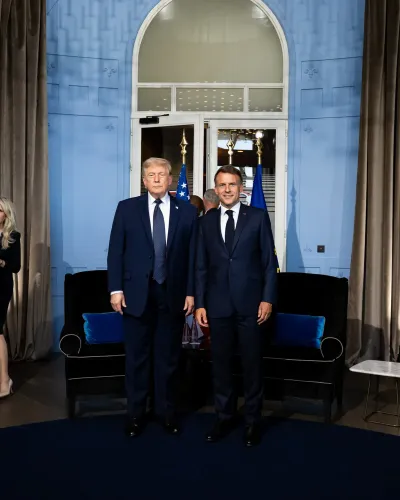
Trump Receives Turkey's Erdogan at White House Arrival Ceremony

Synopsis
President Trump received Turkish President Erdogan at a formal White House arrival ceremony on July 7, 2026. The bilateral visit highlights the enduring complexity of US-Turkey ties within NATO, including unresolved friction over defence systems and regional policy alignments.
Key Takeaways
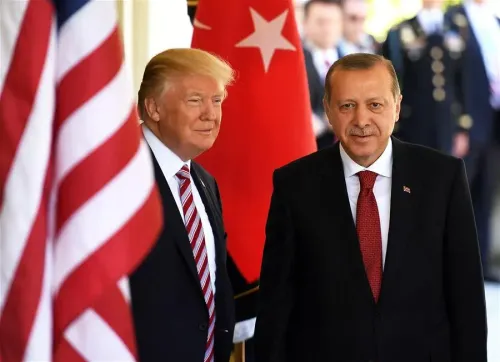
President Trump hosted Turkish President Recep Tayyip Erdogan at a formal arrival ceremony at the White House on July 7, 2026 .
Turkey has been a NATO member since 1952 and is a key partner in US strategy on Russia , Syria , and Black Sea energy routes.
The last White House meeting between the two leaders occurred in November 2019 , focused on Syria and defence cooperation.
Turkey's purchase of the Russian S-400 system led to its exclusion from the F-35 programme, a dispute that remains unresolved.
Bilateral visits of this type have historically been used to manage alliance strains without formal treaty-level changes.
Follow-on NATO summit appearances will indicate whether concrete understandings were reached during the visit.
The White House announced on Tuesday, July 7, 2026, that President Donald Trump participated in a formal arrival ceremony and greeting with the President of Turkey, marking a high-profile bilateral engagement between the two NATO allies at the White House in Washington DC.
Context
The arrival ceremony is a formal diplomatic protocol reserved for head-of-state visits, signalling the significance the Trump administration is placing on its engagement with Ankara. Turkish President Recep Tayyip Erdogan has been a central figure in NATO diplomacy, with Turkey's geographic position bridging Europe, the Middle East, and Central Asia making it indispensable to US strategic interests.
The two leaders last met at the White House in November 2019, when discussions centred on the conflict in Syria and bilateral defence cooperation. The 2026 visit continues a pattern of direct personal diplomacy that has characterised the Trump-Erdogan relationship.
Policy Backdrop
US-Turkey ties have long been defined by a tension between alliance solidarity and substantive policy friction. Turkey's acquisition of the Russian-made S-400 air defence system triggered Ankara's removal from the F-35 fighter jet programme, a rift that has persisted across successive administrations and remains unresolved.
Turkey has been a NATO member since 1952 and its cooperation is considered critical to alliance posture on Russia, Syria, and Black Sea energy routes. Bilateral visits of this nature have historically served as a mechanism to manage alliance strains without requiring formal treaty-level changes.
Stakeholders and Impact
NATO allies will be watching closely, as any signals emerging from the visit could shape the alliance's collective posture ahead of upcoming multilateral summits. Defence contractors on both sides of the Atlantic have a direct stake in whether the F-35 access question or new defence procurement discussions surface during the talks.
For India, which maintains its own independent defence partnerships with both Washington and Ankara, the recalibration of US-Turkey ties carries implications for regional security architecture, particularly regarding Afghanistan and the broader Indo-Pacific strategic balance.
What's Next
Follow-on joint statements or shared appearances at the next NATO leaders' summit will be the clearest indicator of whether the July 7 meeting produced concrete understandings on defence cooperation or regional policy. Observers will look for any language on the S-400 dispute or new frameworks for bilateral security engagement.
The visit underscores that personal leader-level diplomacy remains the primary instrument for navigating the complex and often contradictory demands of the US-Turkey alliance in an era of intensified great-power competition.
Point of View
The optics of a full arrival ceremony confer legitimacy and leverage ahead of any substantive negotiations on defence access. The broader pattern suggests that US-Turkey tensions are being managed, not resolved — a strategic ambiguity both sides have so far found useful.
NationPress
7 Jul 2026
Frequently Asked Questions
Why did Trump meet Erdogan at the White House in July 2026?
President Trump participated in a formal arrival ceremony with Turkish President Erdogan at the White House on July 7, 2026, as part of a bilateral diplomatic visit between the two NATO allies. The meeting continues a pattern of direct personal diplomacy used to manage complex US-Turkey relations.
What are the main issues between the US and Turkey?
The primary friction point in US-Turkey relations has been Turkey's purchase of the Russian S-400 air defence system, which led to Ankara's removal from the F-35 fighter jet programme. Broader issues include differing approaches to Syria, Russia, and NATO burden-sharing.
Is Turkey a NATO member?
Yes, Turkey has been a NATO member since 1952. Its strategic location bridging Europe, the Middle East, and Central Asia makes it one of the alliance's most geopolitically significant members.
When did Trump and Erdogan last meet before 2026?
The previous White House meeting between Trump and Erdogan took place in November 2019, where discussions focused on the Syrian conflict and bilateral defence cooperation.
What impact does the Trump-Erdogan meeting have on India?
India, which maintains independent defence and diplomatic ties with both Washington and Ankara, watches US-Turkey recalibrations closely, particularly for implications on regional security architecture involving Afghanistan and broader Indo-Pacific strategic alignments.