Trump team rejects Obama-era Iran deal model as new accord nears
Synopsis
Trump's team is selling the emerging US-Iran deal as the anti-JCPOA — no loopholes, no trust, no money until Iran performs. But Obama himself says it's unlikely to be 'significantly different' from the 2015 accord his administration built. The gap between the political branding and the actual architecture of the deal is the story — and it's widening by the hour.
Key Takeaways
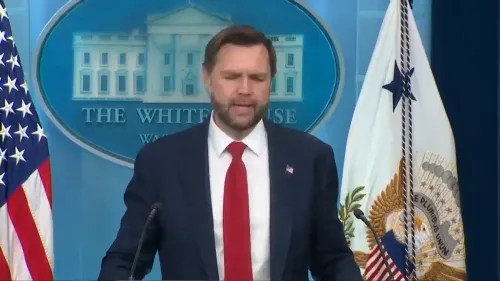
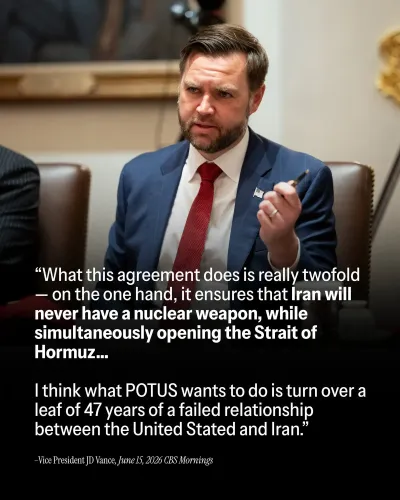
Trump administration officials on 14 June defended the emerging US-Iran deal, saying it is fundamentally different from the 2015 JCPOA .
Defence Secretary Pete Hegseth called the JCPOA 'a path to a bomb' and said the new deal would be 'a wall to a bomb.' The proposed agreement would require Iran to surrender highly enriched uranium and accept strict verification before any sanctions relief is granted.
Former President Barack Obama said it is 'doubtful' the new deal will be 'significantly different' from the original accord.
Former Chief Negotiator Wendy Sherman said the eventual deal could prove 'somewhat similar' despite the political rhetoric.
Trump withdrew the US from the JCPOA in 2018 , triggering a cascade of Iranian nuclear escalation that frames the current talks.
Senior Trump administration officials on Sunday, 14 June mounted a vigorous defence of an emerging US-Iran nuclear agreement, insisting it bears little resemblance to the 2015 Joint Comprehensive Plan of Action (JCPOA) negotiated under former President Barack Obama — even as Obama-era officials questioned whether the new arrangement would ultimately differ in any meaningful way.
Key Developments
US Ambassador to the United Nations Mike Waltz said the proposed deal would close what he described as major loopholes in the original accord. 'We are not going to have these massive loopholes,' Waltz said, arguing that the JCPOA lacked adequate verification measures and gave Iran excessive flexibility over inspections.
US Defence Secretary Pete Hegseth offered the sharpest contrast yet between the two frameworks. 'The JCPOA was a path to a bomb; what this deal will be, will be a wall to a bomb,' Hegseth said in an interview on CBS News. He added: 'There will be no money released to Iran until they perform. There's no trust here and we're going to verify everything.'
What the Proposed Agreement Would Require
According to administration officials, the emerging deal would obligate Iran to surrender highly enriched uranium, dismantle enrichment capabilities, and accept stringent verification requirements — all before receiving any economic relief. Waltz stressed that sanctions relief would be strictly conditional on Iranian compliance. 'This is all about verification,' he said. 'No one on this team is just going to take the Iranians at their word.'
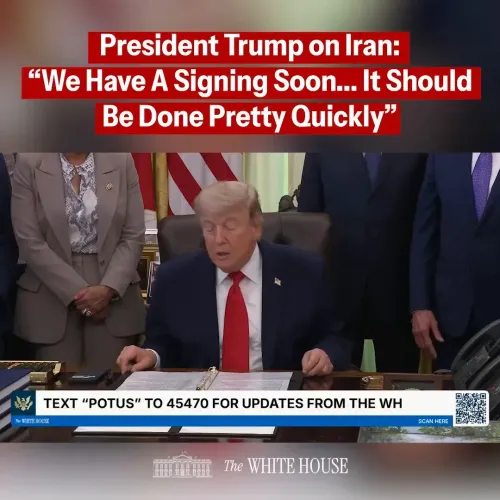
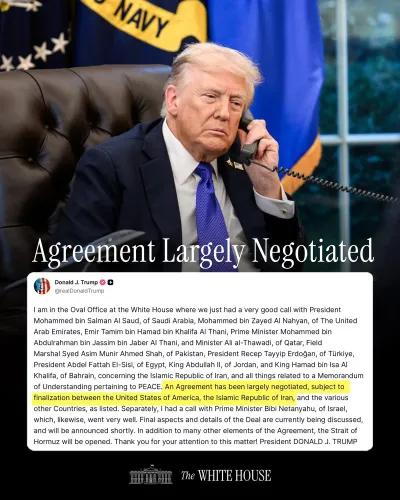
President Donald Trump had earlier indicated a memorandum of understanding could be signed as early as Sunday, signalling the pace at which the White House is pushing toward a formal arrangement.
Obama and Former Officials Push Back
Former President Barack Obama, whose administration spent years negotiating the original accord alongside the United States, Britain, France, Germany, Russia and China, disputed the framing in an interview aired by ABC News. 'It is doubtful that any agreement that arises is going to be significantly different or a significant improvement from the deal that we had in the first place and had worked for us for a long stretch of time before we, the United States, pulled out of it,' Obama said.
Obama also cautioned against coercive diplomacy. 'The notion that we can just bully our way or bomb our way to solutions may sometimes seem appealing,' he said, urging leaders to 'explore diplomacy and exhaust the possibilities of coming up with deals that don't solve 100 per cent of the problem, but solve 80 per cent, 90 per cent of the problem.'
Wendy Sherman, who served as Chief Negotiator for the Obama administration during the JCPOA talks, said the eventual agreement could prove 'somewhat similar' despite the current political rhetoric. Sherman noted that the present situation differs sharply from a decade ago because the conflict has already produced military strikes, civilian casualties, and economic disruption. 'We didn't have war,' she said, adding that the current conflict had left 'the world's economy a mess.'
The Military-Pressure Argument
The Trump administration insists it is negotiating from a position of military strength, arguing that diplomacy alone had failed to constrain Tehran's behaviour and that Iran responded only after sustained military and economic pressure. This framing represents a deliberate departure from the multilateral consensus-building that characterised the Obama-era approach.
Background: The JCPOA and Its Collapse
The 2015 JCPOA was a landmark multilateral accord that imposed limits on Iran's nuclear activities in exchange for sanctions relief. Trump withdrew the United States from the agreement in 2018, calling it one of the worst deals ever negotiated. The withdrawal set off a cascade of Iranian nuclear escalation that has shaped the current diplomatic landscape. This comes amid a broader pattern of the Trump administration seeking to reframe — and in some cases renegotiate — multilateral agreements inherited from the Obama years.
Whether the emerging framework will deliver materially stronger constraints on Iran's nuclear programme, or whether it will converge toward the original deal's architecture under a different political label, remains the central question as negotiations continue.
Point of View
The political cost of that admission will be considerable.
NationPress
21 Sept 2026
Frequently Asked Questions
What is the new US-Iran nuclear agreement being negotiated?
The Trump administration is negotiating a memorandum of understanding with Iran that would require Tehran to surrender highly enriched uranium, abandon enrichment capabilities, and accept strict verification before receiving any sanctions relief. President Trump indicated the agreement could be signed as early as 14 June 2025.
How does the Trump team say the new deal differs from the 2015 JCPOA?
Administration officials argue the new deal closes loopholes in the original accord, imposes tougher verification requirements, and makes all economic relief conditional on Iranian compliance. Defence Secretary Pete Hegseth described the JCPOA as 'a path to a bomb' and the new deal as 'a wall to a bomb.'
What did Barack Obama say about the emerging deal?
Obama said in an ABC News interview that it is 'doubtful' any new agreement will be 'significantly different or a significant improvement' from the 2015 JCPOA, which he said had worked for a considerable period before the US withdrew from it in 2018.
Who is Wendy Sherman and what is her view?
Wendy Sherman served as Chief Negotiator for the Obama administration during the original JCPOA talks. She said the eventual deal could prove 'somewhat similar' to the 2015 accord despite the current political framing, and noted that the present situation is more dangerous because it involves active military conflict.
Why did the US leave the JCPOA in the first place?
President Trump withdrew the United States from the 2015 JCPOA in 2018, calling it one of the worst agreements ever negotiated. He argued the deal lacked sufficient verification and allowed Iran too much flexibility, a critique his current team is now using to frame the new negotiations.