Trump slams Obama Iran deal, says current talks will block nuclear weapon
Synopsis
Trump took to Truth Social to draw the starkest possible line between his Iran diplomacy and Obama's 2015 nuclear deal — calling the JCPOA a 'direct path' to a bomb and insisting his talks will deliver 'THE EXACT OPPOSITE.' With a blockade in place, regional leaders on speed-dial, and even a hint that Iran could join the Abraham Accords, this is the most ambitious Middle East diplomatic gambit of Trump's second term.
Key Takeaways
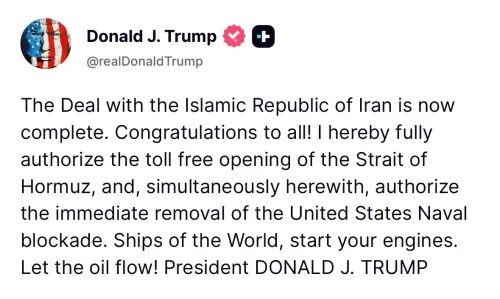
President Trump posted on Truth Social on Sunday, 25 May 2025 , defending ongoing US-Iran nuclear negotiations.
He called the 2015 Obama-era JCPOA 'one of the worst deals ever made' and a 'direct path to Iran developing a Nuclear Weapon.' Trump said he has instructed his representatives 'not to rush,' adding that 'time is on our side.' A US economic 'blockade' on Iran will remain until a deal is 'reached, certified, and signed,' he wrote.
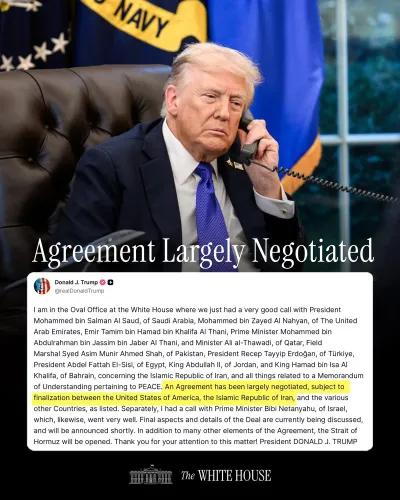
Trump held calls with leaders of Saudi Arabia, UAE, Qatar, Pakistan, Turkey, Egypt, Jordan and Bahrain , and separately with Israeli PM Netanyahu .
Trump floated the possibility of Iran eventually joining the Abraham Accords .
US President Donald Trump on Sunday, 25 May 2025, publicly defended his administration's ongoing negotiations with Iran, drawing a sharp contrast with the 2015 Obama-era nuclear agreement and asserting that the current diplomatic process would prevent Tehran from ever acquiring a nuclear weapon. Trump made the remarks in a post on Truth Social, framing the ongoing talks as a fundamental departure from his predecessor's approach.
Trump's Case Against the Obama Deal
Trump described the 2015 Joint Comprehensive Plan of Action (JCPOA), negotiated under former President Barack Obama, as 'one of the worst deals ever made by our Country.' He argued that the agreement had effectively created 'a direct path to Iran developing a Nuclear Weapon' — a characterisation long disputed by the deal's architects and international nuclear monitors, but one Trump has consistently maintained since withdrawing the US from the accord in 2018.
By contrast, Trump wrote of the current process: 'Not so with the transaction currently being negotiated with Iran by the Trump Administration — THE EXACT OPPOSITE, in fact!'
Key Developments in the Negotiations
The remarks followed Trump's announcement that a broad regional understanding involving Iran and several Middle Eastern nations was close to finalisation. He said he had held calls with leaders from Saudi Arabia, the United Arab Emirates, Qatar, Pakistan, Turkey, Egypt, Jordan, and Bahrain as part of the diplomatic outreach.
Trump also confirmed a separate conversation with Israeli Prime Minister Benjamin Netanyahu, describing discussions as progressing positively. He had earlier said a deal had been 'largely negotiated' between the United States, Iran, and regional partners.
Washington's Core Demand: No Nuclear Weapon
Trump reiterated that the US position is non-negotiable on one point. 'They must understand, however, that they cannot develop or procure a Nuclear Weapon or Bomb,' he wrote. He also signalled that economic pressure on Tehran would remain in place until a formal agreement is completed, certified, and signed. 'The Blockade will remain in full force and effect until an agreement is reached, certified, and signed,' he stated.
At the same time, Trump described the bilateral relationship as moving in a more constructive direction. 'Our relationship with Iran is becoming a much more professional and productive one,' he said — a notable shift in tone given decades of hostility between Washington and Tehran.
Abraham Accords and a Wider Regional Vision
Trump linked the Iran diplomacy to the Abraham Accords — the US-brokered normalisation agreements between Israel and several Arab nations — and praised regional countries for their 'support and cooperation.' He went further, floating the possibility that Iran itself could eventually join the broader arrangement. 'And, who knows, perhaps the Islamic Republic of Iran would like to join, as well!' he wrote.
Trump also stressed that his team was proceeding deliberately. 'The negotiations are proceeding in an orderly and constructive manner, and I have informed my representatives not to rush into a deal in that time is on our side,' he added. 'Both sides must take their time and get it right. There can be no mistakes!'
What Comes Next
No timeline for a final agreement has been publicly confirmed. The talks represent one of the most consequential diplomatic efforts of Trump's second term, with regional stability, global oil markets, and nuclear non-proliferation all in the balance. Whether the current framework can produce a verifiable, enforceable accord — something critics argued the JCPOA failed to deliver — remains the central question as negotiations continue.
Point of View
No timeline, and no public indication that Iran has agreed to the zero-enrichment standard Washington reportedly seeks. The invocation of the Abraham Accords as a template for Iran is particularly striking — and sceptics will note that the Accords normalised relations between Arab states and Israel, a very different ask from constraining a nuclear programme. The real test will be whether any eventual text is more enforceable than the JCPOA Trump spent years condemning.
NationPress
23 Sept 2026
Frequently Asked Questions
What did Trump say about the Obama Iran nuclear deal?
Trump called the 2015 JCPOA 'one of the worst deals ever made' by the United States, arguing it created 'a direct path to Iran developing a Nuclear Weapon.' He made the remarks in a Truth Social post on Sunday, 25 May 2025, contrasting it sharply with his administration's current negotiations.
How are the current US-Iran talks different from the 2015 deal, according to Trump?
Trump claims the current negotiations are 'THE EXACT OPPOSITE' of the Obama-era deal, asserting they are designed to prevent Iran from ever acquiring a nuclear weapon rather than enabling a path toward one. However, no specific terms or verification mechanisms from the current talks have been made public.
Which countries are involved in the broader regional understanding Trump described?
Trump said he had spoken with leaders from Saudi Arabia, the United Arab Emirates, Qatar, Pakistan, Turkey, Egypt, Jordan, and Bahrain, as well as Israeli Prime Minister Benjamin Netanyahu. He described a broad regional understanding involving Iran and these Middle Eastern nations as close to finalisation.
Will US sanctions on Iran be lifted during negotiations?
No — Trump stated the 'Blockade will remain in full force and effect until an agreement is reached, certified, and signed.' He emphasised that both sides must take their time and that there can be 'no mistakes.'
What is the Abraham Accords connection Trump raised?
The Abraham Accords are US-brokered agreements that normalised relations between Israel and several Arab states. Trump praised regional countries for their support and linked the current Iran outreach to this framework, even suggesting Iran could eventually join the Accords — though no such indication has come from Tehran.