UN chief warns of US-Iran escalation risk amid new sanctions
Synopsis
The UN has flagged a real escalation risk between the US and Iran as fresh American sanctions draw a blunt Iranian warning: any 'malicious' US act will be met with strikes on its military and economic interests across West Asia. With the Strait of Hormuz on the table and global energy supplies already disrupted, the diplomatic window — backed by Qatar, Egypt, and Pakistan — is narrowing fast.
Key Takeaways
UN Secretary-General António Guterres expressed concern over potential US-Iran escalation on 28 August .
UN spokesperson Stéphane Dujarric confirmed receipt of a letter from Iranian Foreign Minister Seyed Abbas Araghchi , distributed to the Security Council and General Assembly .
Mohsen Rezaei , Secretary of Iran's Supreme National Security Council, warned Iran would target US military and economic interests in West Asia if provoked.
Iran said it would reopen the Strait of Hormuz only after Washington meets Tehran's conditions.
US Treasury Secretary Scott Bessent announced sweeping new sanctions against Iran, calling them 'an economic D-Day.' Iranian President Masoud Pezeshkian said US economic pressure 'will not achieve anything.'
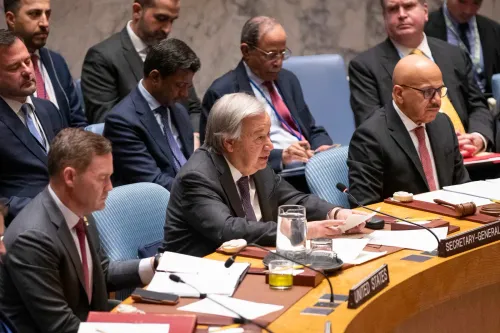
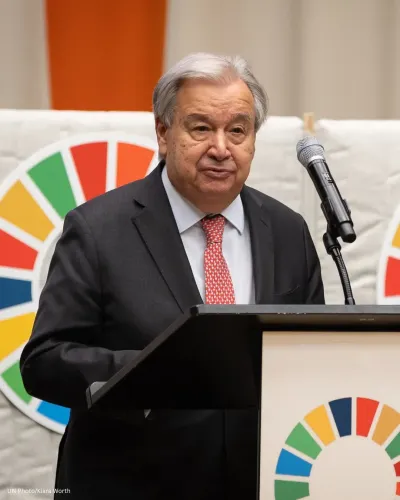
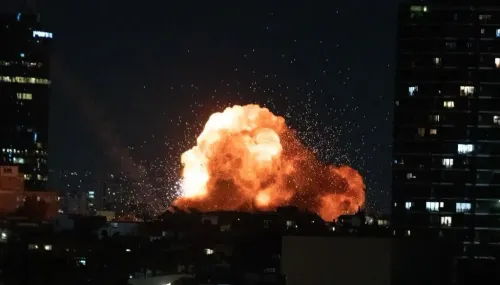
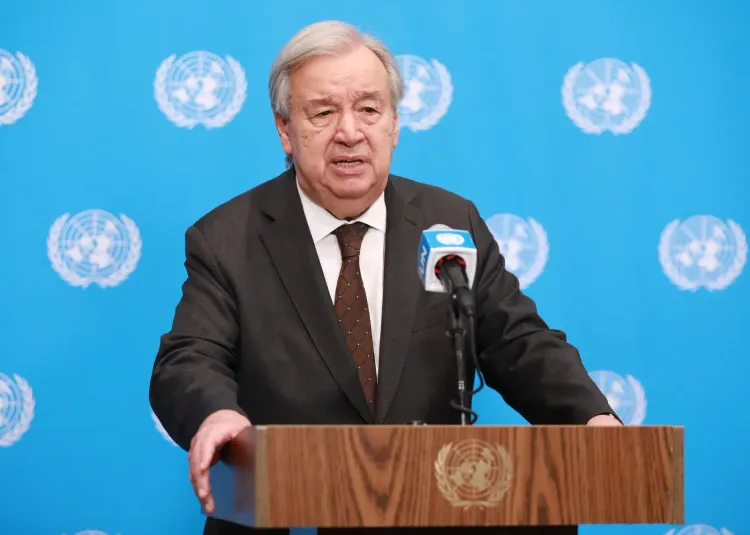
UN Secretary-General António Guterres has expressed serious concern over the growing risk of escalation between the United States and Iran, as fresh American sanctions and sharp Iranian warnings push tensions to a new threshold. The alarm was raised by his spokesperson on 28 August, amid mounting disruptions to global energy and food supplies tied to the ongoing conflict.
What the UN Said
Spokesperson Stéphane Dujarric confirmed that Guterres had received a letter from Iranian Foreign Minister Seyed Abbas Araghchi regarding the latest round of US sanctions. The letter was distributed to the UN Security Council and the UN General Assembly as Tehran had requested.
'The secretary-general is concerned about any new measures, any additional rhetoric that we see that could lead to an escalation. And we're continuing to see disruptions in the flow of energy, disruption in the flow of food,' Dujarric said.
He added that the conflict, even in what he described as 'a somewhat frozen kinetic phase,' continues to inflict serious harm on the region and the global economy. The UN's position, Dujarric underlined, is that only dialogue can produce a durable settlement. Guterres has specifically acknowledged mediation efforts by Qatar, Egypt, Pakistan, and other parties working toward a political resolution.
Iran's Warning to Washington
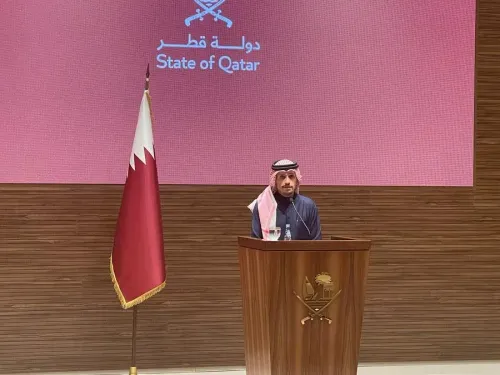
Mohsen Rezaei, Secretary of Iran's Supreme National Security Council, issued a stark warning during a meeting with Qatari Prime Minister and Foreign Minister Sheikh Mohammed bin Abdulrahman bin Jassim Al Thani in Tehran. Rezaei said that if the US commits any 'malicious' act, Iran will respond by targeting American military and economic interests across the West Asia region — a response, he said, that 'will be etched in history.'
Rezaei also accused Washington of repeatedly betraying diplomatic processes, citing what he described as a deep and structural distrust of American intentions. He further stated that Iran would reopen the Strait of Hormuz only after Washington takes concrete steps to meet Tehran's stated conditions — a significant signal given the strait's role in global oil transit.
The US Sanctions Trigger
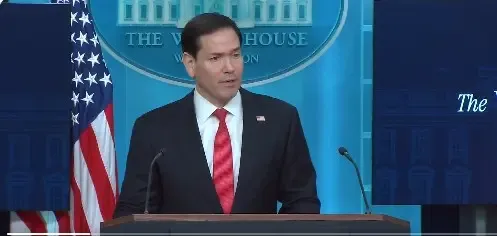
US Treasury Secretary Scott Bessent on Monday announced a sweeping new wave of sanctions against Iran, framing them as 'an economic D-Day' for Tehran. The announcement marked a sharp escalation in Washington's pressure campaign and drew an immediate response from Iranian leadership.
Iranian President Masoud Pezeshkian said on Wednesday that the United States 'will not achieve anything' through economic pressure on Iran, signalling that Tehran has no intention of conceding to the sanctions regime.
Regional and Global Stakes
This comes amid already-fragile global supply chains, with the UN flagging continued disruptions to energy and food flows as a direct consequence of the US-Iran standoff. Notably, the Strait of Hormuz — through which roughly 20% of global oil passes — remains a central pressure point. Any military miscalculation in this corridor could transmit immediately into commodity markets worldwide.
The mediation track involving Qatar, Egypt, and Pakistan reflects a broader regional effort to prevent a kinetic escalation, though no breakthrough has been reported. With both sides hardening their positions publicly, the diplomatic window remains narrow.
Point of View
But the underlying dynamics are not. Iran's threat to target US military and economic interests — and its explicit condition-setting on the Strait of Hormuz — represents a qualitative shift from rhetorical posturing to operational signalling. Washington's 'economic D-Day' framing, meanwhile, leaves little room for face-saving compromise. What is missing from mainstream coverage is the Hormuz dimension: a closure or even a credible threat of closure would spike global oil prices instantly, making this a crisis with direct consequences for India's import bill and inflation calculus. The mediation efforts by Qatar, Egypt, and Pakistan are real but under-resourced against the scale of distrust Rezaei described.
NationPress
28 Aug 2026
Frequently Asked Questions
Why is the UN concerned about US-Iran tensions?
The UN is concerned because fresh US sanctions and sharp Iranian counter-threats have raised the risk of military escalation in West Asia. UN Secretary-General António Guterres has flagged ongoing disruptions to global energy and food flows as direct consequences of the standoff.
What did Iran's security chief warn the US?
Mohsen Rezaei, Secretary of Iran's Supreme National Security Council, warned that any 'malicious' US act would prompt Iran to target American military and economic interests across West Asia — a response he said 'will be etched in history.'
What are the new US sanctions against Iran?
US Treasury Secretary Scott Bessent announced a sweeping new wave of sanctions on Monday, describing them as 'an economic D-Day' for Tehran. The move is the latest in Washington's sustained pressure campaign against Iran.
What is Iran's position on the Strait of Hormuz?
Iran's Supreme National Security Council Secretary Mohsen Rezaei stated that Iran would reopen the Strait of Hormuz only after Washington takes practical steps to meet Tehran's conditions — a significant threat given the strait's role in global oil transit.
Who is mediating between the US and Iran?
Qatar, Egypt, and Pakistan are among the parties actively mediating to push both sides toward a political solution, according to the UN spokesperson. The secretary-general has expressed appreciation for these efforts, though no breakthrough has been reported.