US bipartisan delegation meets Dalai Lama in Dharamsala amid Trump-Xi talks

Synopsis
A bipartisan US Congressional delegation met the 91-year-old Dalai Lama in Dharamsala on the same day Trump sat down with Xi Jinping — a deliberate juxtaposition that sent Beijing a clear message. Committee Chairman Brian Mast called China's transnational repression 'far-reaching', while a senior Tibetan official declared that repressive policies 'will not go unchallenged'. The visit underscores that Congressional pressure on Tibet operates independently of White House diplomacy.
Key Takeaways
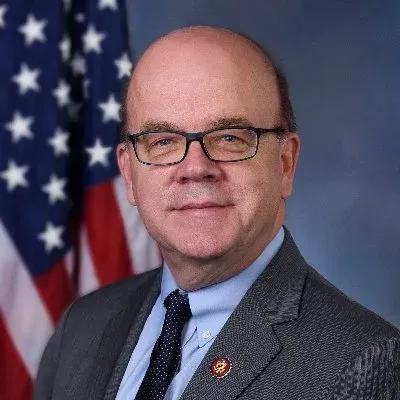
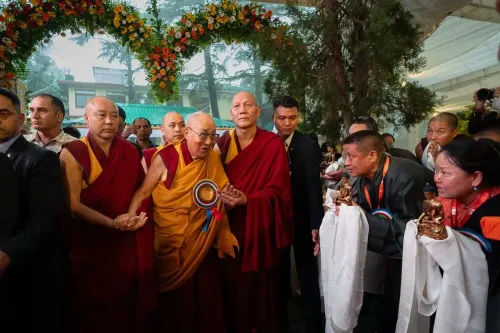
A bipartisan US Congressional delegation led by Brian Mast met the Dalai Lama in Dharamsala on 30 September .
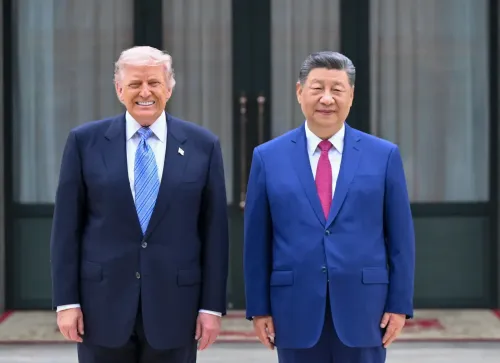
The visit coincided with President Trump 's meeting with Chinese President Xi Jinping .
The Dalai Lama , 91 , told lawmakers Tibetans worldwide placed 'great hopes' in him, according to Voice of Tibet .
Mast described China's transnational repression as 'far-reaching' and reaffirmed US commitment to freedom for Tibetans and Uyghurs.
Beijing labelled the visit a 'serious concern', maintaining its position that the Dalai Lama is a 'separatist'.
The CTA launched a revised 'Securing Tibet's Future' vision paper, three years after the original.
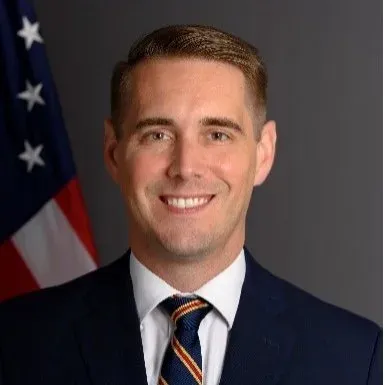
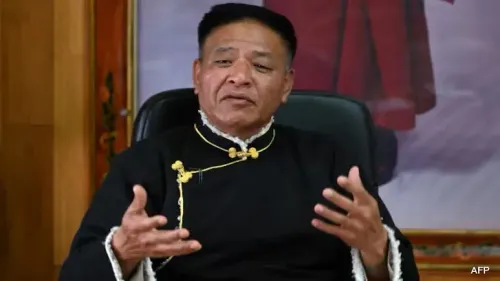
A high-level bipartisan US Congressional delegation led by House Foreign Affairs Committee Chairman Brian Mast met Tibetan spiritual leader the Dalai Lama at his residence in Dharamsala on Wednesday, 30 September, in a visit that carried pointed symbolism — coming on the same day as US President Donald Trump's meeting with Chinese President Xi Jinping. The delegation included Representatives James Gallagher, Jimmy Patronis, Haley Stevens, and Shri Thanedar, accompanied by Tibetan Prime Minister Penpa Tsering and Jigme Tsering of the New Delhi-based Office of the Dalai Lama.
Message from Dharamsala
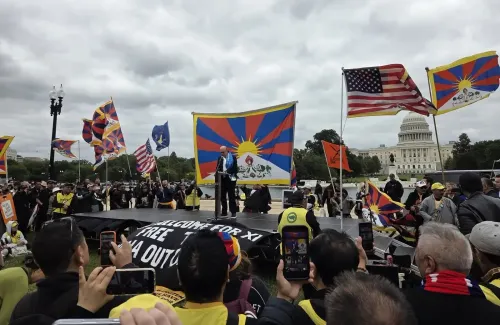
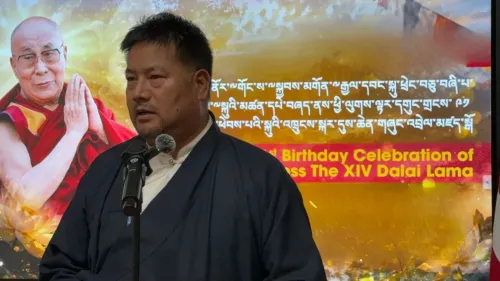
A senior Central Tibetan Administration (CTA) functionary described the visit as a signal that the international community had not forgotten Tibet. 'Chinese repressive policies will not go unchallenged,' the functionary said. The CTA also launched a revised version of its vision paper, 'Securing Tibet's Future' — three years after the original was released by the 17th Kashag — outlining goals of leadership-bureaucratic alignment, resolution of the Sino-Tibet conflict, and stronger administrative capacity for the Tibetan government-in-exile.
What the Dalai Lama Told the Delegation
Voice of Tibet, in a post on social media platform X, quoted the 91-year-old Dalai Lama — a Nobel Peace laureate — as telling the delegation that Tibetans around the world placed 'great hopes' in him, as they had kept their struggle and traditions alive. The Dalai Lama has lived in self-imposed exile in India since fleeing his homeland in 1959, and Dharamsala has served as the seat of the Tibetan government-in-exile for decades.
Mast on China's Transnational Repression
Speaking to reporters after the meeting, Mast identified China as among the central subjects of discussion and raised alarm over what he characterised as Beijing's transnational repression. 'The threat from China in terms of transnational repression is far-reaching,' Mast said, alleging that China monitors people and deploys personnel abroad to suppress activities it opposes. 'We believe in freedom and democracy for all of our people. These are fundamental differences between what China represents, what America represents, and what the people of Tibet seek,' he added.
Trump-Xi Meeting and US Stance
Mast noted that the Dalai Lama himself considered it important for Trump to meet Xi, recognising them as leaders of two of the world's most powerful countries. He was careful to clarify that such a meeting did not diminish the US delegation's opposition to repression in China, including against Tibetans and Uyghurs. The visit comes against a backdrop of continuing Washington-Beijing tensions spanning human rights, Tibet, and Xinjiang. Beijing, which labels the Dalai Lama a 'separatist', has said it is 'seriously concerned' about the US lawmakers' trip to Dharamsala.
Broader Context
The congressional visit is the latest in a series of high-profile US engagements with Tibetan leadership that have drawn sharp rebukes from Beijing. The concurrent timing with the Trump-Xi meeting adds a layer of diplomatic complexity, suggesting that bipartisan Congressional concern for Tibet persists independently of executive-level US-China diplomacy. The revised CTA vision paper signals that Tibetan exile institutions are recalibrating for a sustained, long-term push rather than expecting near-term resolution.
Point of View
Not subject to reset by executive-level trade or security diplomacy. Beijing's predictable fury aside, the more interesting question is whether the Trump administration will use the Congressional visit as quiet leverage in its talks with Xi, or publicly distance itself to protect broader negotiations. The CTA's revised vision paper, meanwhile, suggests Tibetan exile leadership is settling in for a generational campaign rather than expecting diplomatic breakthrough anytime soon.
NationPress
30 Sept 2026
Frequently Asked Questions
Why did the US Congressional delegation visit Dharamsala on 30 September?
The bipartisan delegation, led by House Foreign Affairs Committee Chairman Brian Mast, visited Dharamsala to meet the Dalai Lama and reaffirm US Congressional concern for Tibet and human rights in China. The visit coincided with a meeting between President Trump and Chinese President Xi Jinping, lending it added diplomatic weight.
What did Brian Mast say about China after the meeting?
Mast described China's transnational repression as 'far-reaching', alleging that Beijing monitors people and sends personnel abroad to suppress activities it opposes. He also stated that fundamental differences exist between what China, the United States, and the people of Tibet represent in terms of freedom and democracy.
How did China react to the US delegation's visit to Dharamsala?
Beijing said it was 'seriously concerned' about the US lawmakers' visit and reiterated its position that the Dalai Lama is a 'separatist'. China has consistently opposed foreign government contact with Tibetan leadership.
What is the revised CTA vision paper 'Securing Tibet's Future'?
It is an updated policy document launched by the 17th Kashag of the Central Tibetan Administration in Dharamsala, three years after the original. The paper focuses on seeking an early resolution to the Sino-Tibet conflict, promoting the welfare of Tibetans in exile, and strengthening CTA administrative capacity.
How long has the Dalai Lama lived in exile in India?
The Dalai Lama has lived in self-imposed exile in India since 1959, when he fled Tibet. He is currently 91 years old and resides in Dharamsala, which serves as the seat of the Tibetan government-in-exile.