Trump says US struck Iran again in tribute to three fallen service members
Synopsis
Trump confirmed a fresh US strike on Iran on 20 July, framing it as a tribute to three fallen American service members — and went further, claiming the US now controls the Strait of Hormuz. If that assertion holds, it marks a seismic shift in the Gulf's strategic balance, with immediate consequences for global oil flows and nations like India that depend on the passage.
Key Takeaways
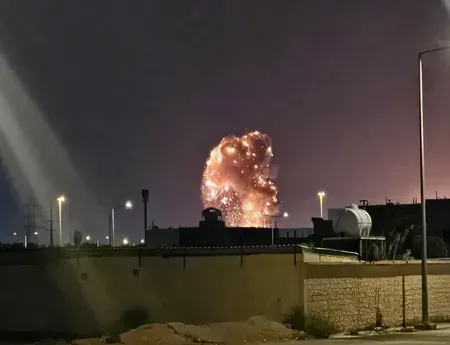
US President Donald Trump confirmed American forces struck Iran again on 20 July , in tribute to three fallen US service members .
Trump claimed Iran had suffered near-total military losses: 'They've lost everything almost militarily.' Trump asserted the United States now controls the Strait of Hormuz , through which a major share of global oil and LNG shipments pass.
The identities of the fallen service members and details of their deaths were not disclosed.
Trump also raised the prospect of tariffs on Canada over wildfire smoke drifting into the US, and said the Qatari Air Force One aircraft would be upgraded within a month.
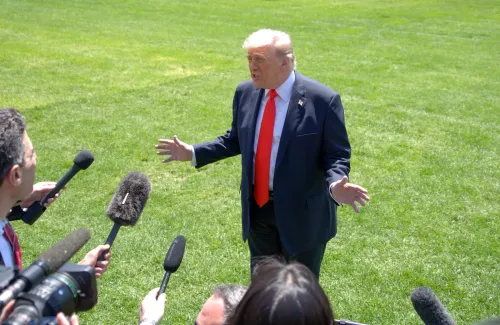
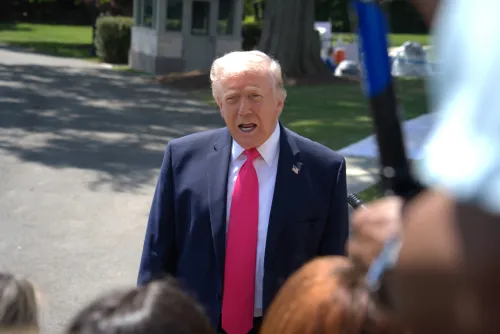
US President Donald Trump confirmed on 20 July that American forces had carried out another strike on Iran, saying the attack was conducted in honour of three US service members believed to have been killed. Speaking to reporters at the White House after stepping off Air Force One, Trump also asserted that Tehran had suffered catastrophic military losses and that the United States now controlled the Strait of Hormuz — one of the world's most critical energy corridors.
Trump's Remarks on the Strike
Trump addressed the deaths of the service members briefly but forcefully. 'We feel very badly, but you know those great people, those great patriots, were out there fighting that Iran cannot have a nuclear weapon,' he told reporters. He added that the strike was conducted 'in honor of the probably three — it's probably three as opposed to two great patriots,' suggesting the casualty count may have been revised upward.
He did not disclose the identities of the fallen service members or provide details about the circumstances of their deaths during the brief press interaction.
US Claims Control of Strait of Hormuz
Trump made a sweeping assertion about the strategic waterway, saying: 'We control the strait; they don't control anything.' The Strait of Hormuz, which connects the Persian Gulf with the Gulf of Oman and the Arabian Sea, is among the world's most consequential energy chokepoints. A significant share of global oil and liquefied natural gas shipments passes through it daily.
Any sustained military disruption to the passage would place upward pressure on global energy prices — with direct consequences for oil-importing nations, including India.
Iran's Military Capacity, According to Trump
Trump described Iran's remaining military capability in stark terms. 'Iran has been very, very badly damaged. They've lost everything almost militarily. They've got very little left. They've got some missiles. They've got some drones. They've got some manufacturing ability, not much,' he said. These claims have not been independently verified, and no official US military assessment was cited during the interaction.
Other Remarks: Air Force One and Canada Wildfires
Trump also fielded questions on separate matters. On the Qatari aircraft intended for use as Air Force One, he said its missile defence systems would be 'maxed out' within approximately a month after the aircraft is sent for upgrades.
He separately said he had spoken with Canadian Prime Minister Mark Carney about wildfire smoke drifting into the United States. 'I told them — you got to stop these fires from coming in and you know poisoning our air,' Trump said, adding that Canada should 'pay us some damages or something, or we should do some tariffs.' When asked about tensions with Spain following its World Cup victory, Trump said: 'No, I have no tension. I have no tension with anybody.'
Broader Implications for Global Energy Markets
The escalation between the US and Iran comes at a moment of acute sensitivity for global oil markets. Control — or disruption — of the Strait of Hormuz has historically triggered immediate price spikes, and any prolonged conflict in the region raises the risk of supply shocks. For India, which imports a substantial portion of its crude from the Gulf, the situation warrants close monitoring. How the conflict develops in the coming days will determine whether this remains a contained military exchange or escalates into a broader regional crisis.
Point of View
If accurate, would represent a fundamental reshaping of Gulf security architecture. Yet it arrived without supporting detail, military briefing, or independent verification, delivered in a brief tarmac exchange. The upward revision of US casualties from two to 'probably three' mid-sentence also signals that the situation on the ground remains fluid and not fully accounted for. For India and other oil-dependent economies, the more urgent question is not who controls the strait today, but what happens to energy supply lines if this conflict deepens before any diplomatic channel opens.
NationPress
21 Jul 2026
Frequently Asked Questions
Why did the US strike Iran again on 20 July?
US President Trump said the strike was conducted in honour of three American service members believed to have been killed, framing it as a tribute to 'great patriots' who died opposing Iran's nuclear ambitions. No further operational details were provided.
What did Trump claim about the Strait of Hormuz?
Trump asserted that the United States now controls the Strait of Hormuz and that Iran 'doesn't control anything.' The strait connects the Persian Gulf with the Gulf of Oman and is one of the world's most critical oil and gas shipping routes. The claim has not been independently verified.
How badly has Iran been damaged, according to Trump?
Trump said Iran had lost 'everything almost militarily,' retaining only some missiles, drones, and limited manufacturing capacity. These are Trump's own characterisations and have not been confirmed by an independent military assessment.
Who are the US service members killed?
Trump referred to 'probably three' fallen US service members but did not disclose their identities or the circumstances of their deaths during his brief remarks to reporters.
What does the US-Iran conflict mean for India?
India is a major oil importer from the Gulf region, and any sustained disruption to the Strait of Hormuz — through which a large share of global crude and LNG flows — could trigger supply shortages and price spikes. The ongoing military escalation is being closely watched by energy markets worldwide.