US lawmakers flag Webull's China links, warn of investor data risk
Synopsis
A bipartisan US congressional committee has publicly accused trading app Webull of obscuring deep China ties — alleging that 62 per cent of its workforce sits in mainland China and that investor data could be accessible to Chinese authorities. Webull has pushed back hard, but its shares fell sharply, and five sweeping policy recommendations signal this could be the start of a regulatory reckoning for foreign-controlled brokerages.
Key Takeaways
The US House Select Committee on China released a bipartisan report on 8 October 2025 alleging national security risks tied to trading app Webull's China connections.
The report, led by John Moolenaar (Republican) and Ro Khanna (Democrat), identified six areas of concern including data risk, misleading disclosures, and Chinese government financial support.
Webull's mainland Chinese subsidiary Hunan Weibu employs 863 people — roughly 62 per cent of the company's global workforce, according to the committee.
Webull rejected the findings , saying its US customer data is stored domestically and its US operations are run from St.
Petersburg, Florida .
The committee recommended five policy changes , including expanded CFIUS jurisdiction and stronger oversight of foreign-controlled brokerages.
Webull shares fell sharply on Wednesday; no sanctions or trading restrictions were imposed by the report itself.
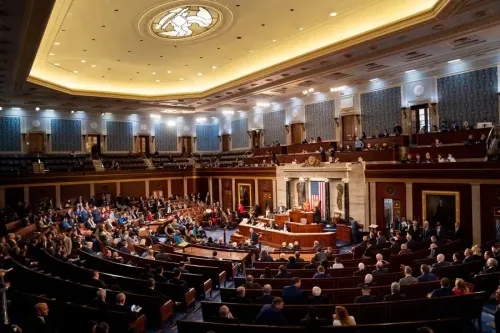
A bipartisan US House Select Committee on China investigation has raised serious national security concerns about the China-linked ownership, technology operations, and data practices of online brokerage Webull, warning that American investors' financial information could be exposed to Chinese government surveillance. The committee released its findings on Wednesday, 8 October 2025, alleging the Florida-headquartered trading platform had not been transparent about its connections to China.
Key Allegations in the Report
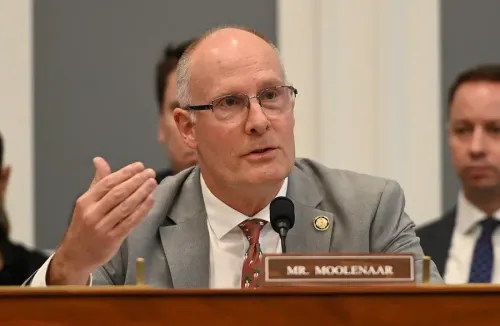
The investigation, titled 'Free Trades, Hidden Ties: Exposing Webull's China Links', was led by Republican Chairman John Moolenaar and Democratic Ranking Member Ro Khanna. The committee identified six areas of concern: alleged risks to investor data, misleading disclosures about employees and supervision, China-linked corporate control, weaknesses in regulatory compliance, Chinese government financial support, and concerns involving clearing and custody arrangements.
According to the investigation, Webull's mainland Chinese subsidiary, Hunan Weibu, employed 863 people, accounting for approximately 62 per cent of the company's global workforce. The committee alleged that the company had misrepresented the location of important employees and the nature of their supervision. It also alleged that Hunan Weibu had received government subsidies tied to political requirements.
What the Lawmakers Said
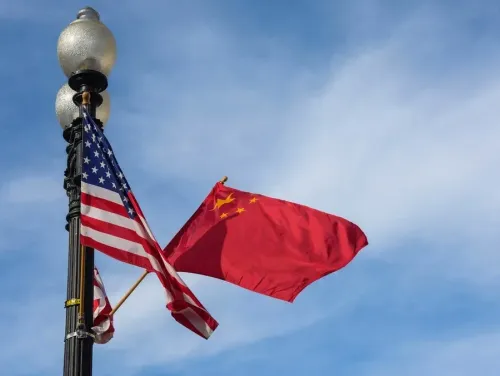
'Webull's China-based operations put American investors and their data at risk,' Moolenaar said. He warned that Chinese national security laws could compel companies and individuals to cooperate with government demands for information. 'Using technology providers in mainland China and an opaque China-linked ownership structure, Webull exposes its data to our foremost adversary,' he added.
Khanna stressed the need for greater transparency from financial institutions holding Americans' savings. 'Whether it's this trading app or other brokerage apps, custodians of Americans' financial data and savings should strive for transparency with the customers they serve,' he said. 'Webull should be forthright about its connections to the PRC, rather than seemingly seeking to minimise them.'
Webull's Response
Webull rejected the findings, saying the congressional report contained significant inaccuracies and unsupported conclusions. A company spokesperson said its US operations were conducted from its headquarters in St. Petersburg, Florida, and an office in New York City. The company maintained that US customer data was stored in the United States and that access to sensitive information was controlled domestically.
Market Reaction and Regulatory Implications
Webull shares fell sharply on Wednesday following publication of the report, reflecting investor concerns about possible regulatory consequences. Notably, the report did not itself impose sanctions, trading restrictions, or penalties on the company.
The committee recommended five policy changes, including stronger oversight of foreign-controlled brokerages, new protections for Americans' financial data, legislation establishing inspection requirements for broker-dealers with overseas operations, and an expansion of the jurisdiction of the Committee on Foreign Investment in the United States (CFIUS). Lawmakers also proposed tighter regulation of clearing and custody arrangements where conflicts of interest could arise.
This comes amid a broader pattern of US congressional scrutiny of Chinese-linked technology and financial platforms — a trend that has previously ensnared TikTok and other firms. The report's policy recommendations signal that legislative action targeting foreign-controlled brokerages could follow in the months ahead.
Point of View
Surface structural opacity, and build a legislative case before any regulator acts. What makes this notable is the cross-aisle unity — Moolenaar and Khanna rarely agree, yet both signed off on findings of this severity. Webull's rebuttal that data stays in the US is familiar ground; the harder question the committee raises is whether the legal architecture of Chinese national security law renders that claim structurally unreliable, regardless of where servers sit. If the five policy recommendations advance, every foreign-controlled brokerage with mainland Chinese operations faces a compliance overhaul — and the retail investment market may be about to get a great deal more complicated.
NationPress
8 Oct 2026
Frequently Asked Questions
What did the US Congress report allege about Webull?
The House Select Committee on China alleged that Webull had not been transparent about its China-linked ownership structure, that its technology operations were tied to mainland China, and that American investors' financial data could be exposed to Chinese government surveillance under Chinese national security laws. The report identified six specific areas of concern, released on 8 October 2025.
How did Webull respond to the congressional report?
Webull rejected the findings, calling the report significantly inaccurate and based on unsupported conclusions. The company said its US operations are run from St. Petersburg, Florida, and New York City, and that all US customer data is stored domestically with access controlled within the United States.
What policy changes has the committee recommended?
The committee recommended five changes: stronger oversight of foreign-controlled brokerages, new protections for Americans' financial data, legislation requiring inspection of broker-dealers with overseas operations, expanded CFIUS jurisdiction, and tighter regulation of clearing and custody arrangements. These are recommendations and have not yet been enacted into law.
What is Webull and who uses it?
Webull is an online investment platform headquartered in St. Petersburg, Florida, offering access to stocks, exchange-traded funds, options, and other financial products. It competes with established American retail brokerage firms and is primarily used by individual investors in the United States.
Does the report impose any penalties or trading bans on Webull?
No. The congressional report did not impose sanctions, trading restrictions, or financial penalties on Webull. However, Webull shares fell sharply on Wednesday following publication, reflecting investor concerns about potential future regulatory action based on the committee's recommendations.