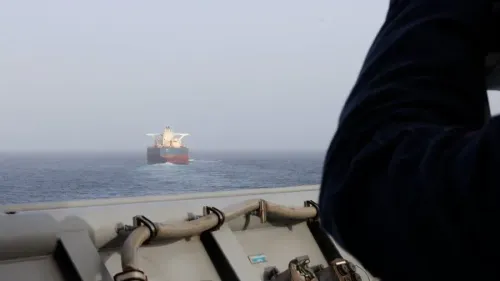
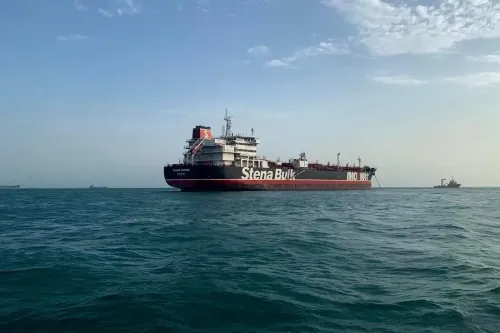
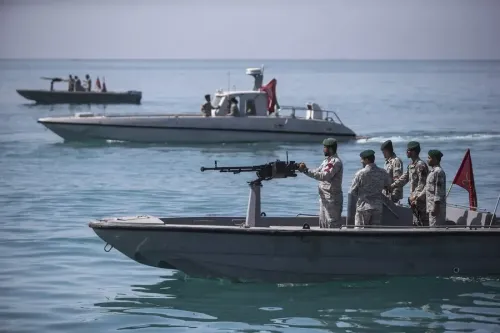
US Navy fires Hellfire missiles at Iran-bound ship in Gulf of Oman
Synopsis
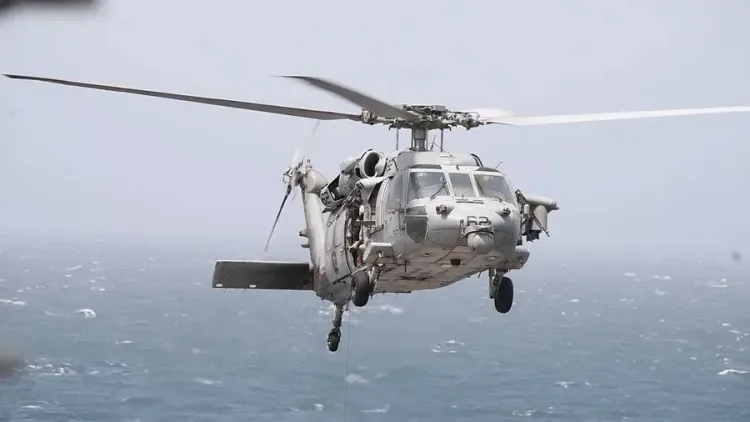
A US Navy helicopter fired two Hellfire missiles into the engine room of a Panama-flagged cargo ship allegedly heading for an Iranian port — the third vessel disabled under the US blockade of Iran. With 55 ships redirected and the blockade declared 'in full effect,' Washington is signalling it will use kinetic force to enforce the maritime cordon.
Key Takeaways
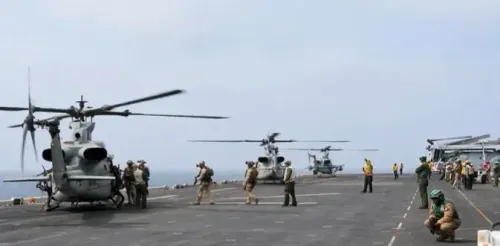
A US Navy MH-60 helicopter fired two Hellfire missiles into the engine room of the M/V Vela Nova on 11 August in the Gulf of Oman .
The Panamanian-flagged cargo vessel was allegedly attempting to breach the US blockade of Iranian ports ; its civilian crew had ignored repeated warnings.
A fire broke out aboard the vessel following the strike but was subsequently extinguished, according to maritime security firm Vanguard .
As of 11 August , CENTCOM had redirected 55 vessels , disabled three , and boarded two under the blockade.
CJTF-OIR underwent a command transition on 11 August , with Rear Admiral Liam Hulin replacing Major General Kevin Lambert .
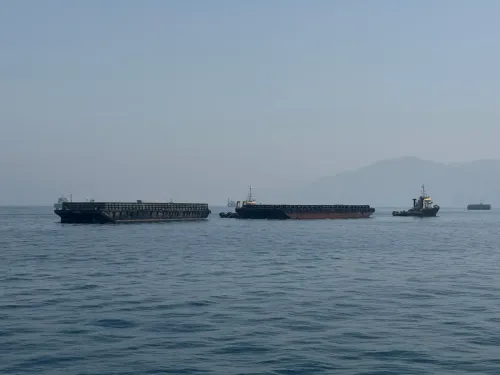
US Central Command (CENTCOM) forces disabled the steering gear of a Panamanian-flagged cargo vessel on 11 August after it allegedly attempted to breach the US naval blockade of Iranian ports in the Gulf of Oman. The incident marks the third vessel disabled under the blockade since its enforcement began, according to CENTCOM figures.
What Happened
A US Navy MH-60 helicopter fired two Hellfire missiles into the engine room of the M/V Vela Nova after the ship's civilian crew ignored repeated warnings from American forces. CENTCOM confirmed the strike in an official statement, saying the vessel had been 'attempting to transit the Gulf of Oman and violate the US blockade against Iran by sailing toward an Iranian port.'
Maritime security firm Vanguard reported that the missile strike caused a fire aboard the vessel, which was subsequently extinguished. The ship was no longer en route to Iran following the strike, according to CENTCOM.
Scale of the Blockade Enforcement
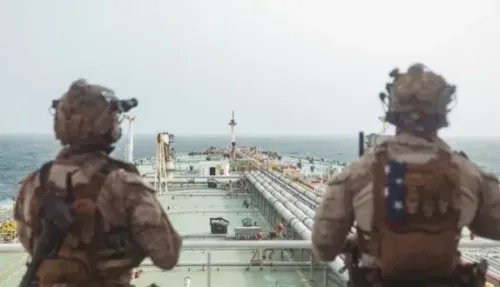
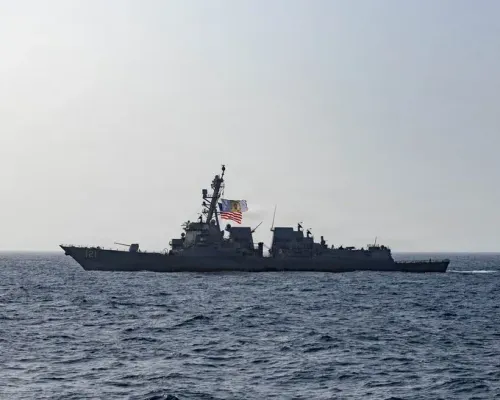
The action against the Vela Nova is part of a broader and intensifying enforcement campaign. According to CENTCOM, as of 11 August, US forces had redirected 55 commercial vessels attempting to run the blockade, disabled three non-compliant vessels — including the Vela Nova — and boarded two others. The blockade, CENTCOM stated, 'remains in full effect.'
Command Transition in the Middle East
Separately, the Combined Joint Task Force – Operation Inherent Resolve (CJTF-OIR) underwent a formal change of command on 11 August. Major General Kevin Lambert handed over leadership to Rear Admiral Liam Hulin in a ceremony presided over by CENTCOM commander Admiral Brad Cooper.
Established in 2014, CJTF-OIR advises, assists, and enables partner forces in countering ISIS across Iraq and Syria. Admiral Cooper highlighted the task force's role in 'countering terrorism, strengthening partnerships, and promoting regional security and stability,' according to a post by CENTCOM on X. He also praised outgoing commander Lambert for his 'dedication and leadership' during his tenure.
Why It Matters
The use of Hellfire missiles against a commercial cargo ship — even one allegedly defying a blockade — is a significant escalation in the enforcement posture of US forces in the region. The strike on a civilian-crewed vessel in international waters is likely to draw scrutiny from maritime law experts and regional actors. This comes amid already elevated tensions in the Middle East, with the blockade of Iranian ports adding a new flashpoint to an already volatile theatre. The simultaneous command transition at CJTF-OIR underscores the breadth of US military operations currently active across the region.
Point of View
And the silence of flag-state Panama will be telling. With 55 vessels redirected and three now disabled, the blockade is no longer a diplomatic signal; it is an active naval operation with kinetic consequences. How Iran, and the broader shipping industry, responds to this enforcement posture could reshape commercial traffic through the Gulf of Oman for months.
NationPress
26 Sept 2026
Frequently Asked Questions
What happened to the M/V Vela Nova in the Gulf of Oman?
The M/V Vela Nova, a Panamanian-flagged cargo vessel, was disabled by US forces on 11 August after it allegedly attempted to breach the US naval blockade of Iranian ports. A US Navy MH-60 helicopter fired two Hellfire missiles into the ship's engine room after its civilian crew ignored repeated warnings; the strike caused a fire that was subsequently extinguished.
What is the US blockade of Iranian ports?
The US has imposed a naval blockade on Iranian ports, enforced by CENTCOM forces in the Gulf of Oman and surrounding waters. As of 11 August, US forces had redirected 55 commercial vessels, disabled three non-compliant ships, and boarded two others attempting to run the blockade.
Was anyone hurt in the missile strike on the Vela Nova?
CENTCOM's statement and the initial report from maritime security firm Vanguard did not mention any casualties. The fire caused by the missile strike was reported to have been extinguished.
What is CJTF-OIR and why did its command change?
The Combined Joint Task Force – Operation Inherent Resolve (CJTF-OIR) is a US-led task force established in 2014 to advise, assist, and enable partner forces in countering ISIS in Iraq and Syria. On 11 August, Major General Kevin Lambert handed command to Rear Admiral Liam Hulin in a ceremony presided over by CENTCOM commander Admiral Brad Cooper.
What are the implications of the US using missiles against a commercial ship?
The use of Hellfire missiles against a civilian-crewed cargo vessel in international waters is a significant escalation in US enforcement of the Iran blockade. It signals Washington's willingness to use kinetic force and is expected to draw scrutiny from maritime law experts, regional governments, and the global shipping industry.