US strikes 80+ Iranian targets after Strait of Hormuz vessel attacks
Synopsis
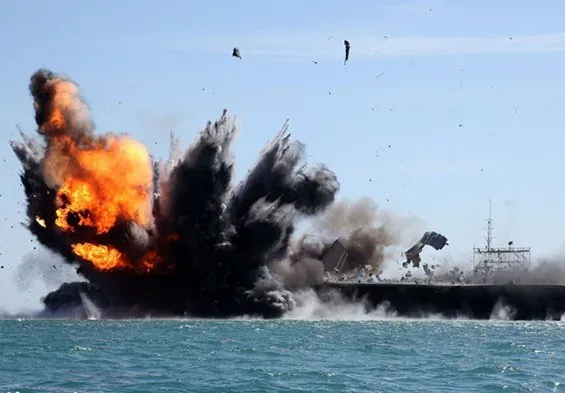
The US struck more than 80 Iranian targets on 7 July — including over 60 IRGC boats — after Iran attacked three commercial vessels in the Strait of Hormuz. CENTCOM has put Tehran on notice: the next ceasefire violation will draw another response. With 20% of global oil supply transiting this corridor, the stakes extend far beyond the Persian Gulf.
Key Takeaways
The US struck more than 80 Iranian targets on 7 July using precision-guided munitions.
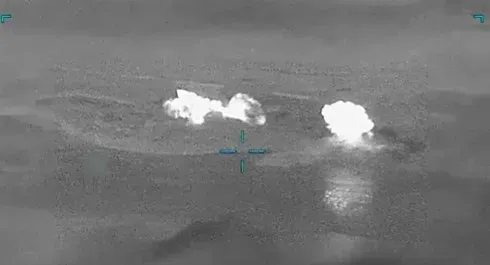
CENTCOM said over 60 IRGC small boats in and near the Strait of Hormuz were destroyed.
Strikes also hit Iranian air defence systems , command and control networks , coastal radar sites , and anti-ship missile capabilities .
Iran allegedly attacked three vessels: M/T Al Rekayyat (Marshall Islands), M/T Wedyan (Saudi Arabia), and M/T Cyprus Prosperity (Liberia).
The US called the attacks a 'clear and dangerous violation of the ceasefire' and vowed further action if Iran does not comply.
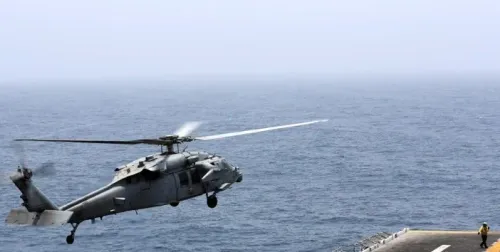
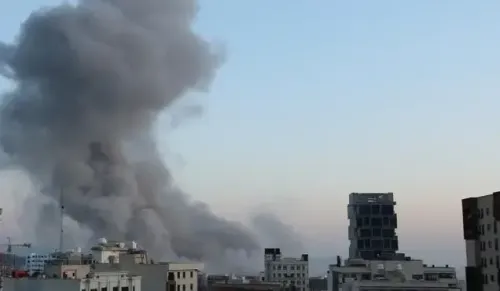
The United States launched a fresh wave of military strikes against Iran on 7 July, hitting more than 80 targets in direct response to Tehran's attacks on commercial vessels navigating the Strait of Hormuz, one of the world's most critical maritime chokepoints. US Central Command (CENTCOM) confirmed the operation was executed using precision-guided munitions, aimed at degrading Iran's capacity to continue threatening international shipping.
What the Strikes Targeted
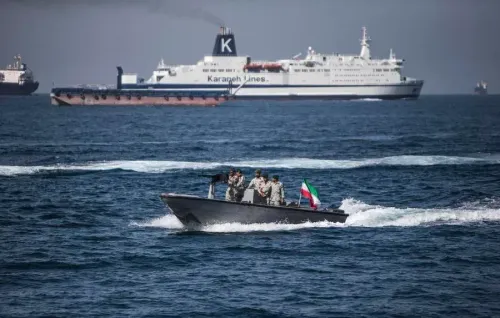
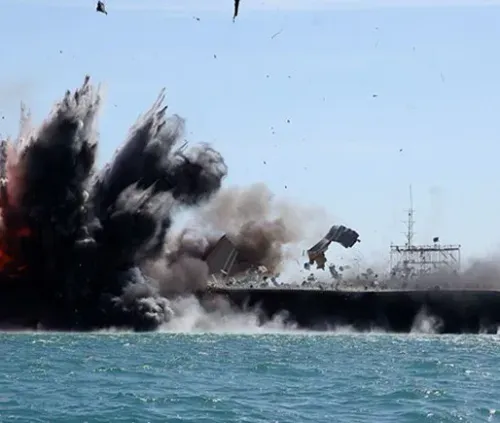
According to CENTCOM, the strikes hit a broad spectrum of Iranian military infrastructure: air defence systems, command and control networks, coastal radar installations, and anti-ship missile capabilities. Notably, more than 60 Islamic Revolutionary Guard Corps (IRGC) small boats operating in and around the strait were also struck.
'U.S. forces struck Iranian air defense systems, command and control networks, coastal radar sites, anti-ship missile capabilities, and more than 60 Islamic Revolutionary Guard Corps small boats in and near the strait to degrade Iran's ability to continue attacking international commerce flowing through the international trade corridor,' CENTCOM stated.
The Vessels Iran Allegedly Attacked
Washington accused Iranian forces of attacking three commercial vessels transiting the Strait of Hormuz: the Marshall Islands-flagged M/T Al Rekayyat, the Saudi Arabia-flagged M/T Wedyan, and the Liberian-flagged M/T Cyprus Prosperity. The US described these attacks as a violation of an existing ceasefire agreement and a direct threat to freedom of navigation.
'The unwarranted aggression by Iranian forces is a clear and dangerous violation of the ceasefire and undermines freedom of navigation,' CENTCOM said in its statement.
Strategic Significance of the Strait of Hormuz
The Strait of Hormuz serves as the single most important maritime transit corridor for global oil exports, with an estimated 20% of the world's oil supply passing through it daily. Any sustained disruption to navigation through the waterway carries significant consequences for international energy markets and global trade supply chains. This latest military exchange underscores how vulnerable that corridor remains to escalation.
US Posture Going Forward
CENTCOM signalled that Washington is prepared to conduct further operations if Iran does not comply with ceasefire terms. 'CENTCOM forces remain postured and prepared to hold Iran accountable when the agreement is not adhered to or obeyed,' the command added. The strikes mark a significant escalation in the ongoing standoff between the two nations over maritime security in the Persian Gulf region.
Point of View
Giving the US a legal and diplomatic justification for continued strikes. What mainstream coverage underweights is the multi-flag nature of the attacked vessels — Marshall Islands, Saudi Arabia, Liberia — which internationalises the incident and could draw in allied navies. The IRGC boat count of 60-plus also suggests a more systematic degradation of Iran's harassment capability than a punitive one-off.
NationPress
8 Jul 2026
Frequently Asked Questions
Why did the US strike Iran on 7 July?
The US struck more than 80 Iranian targets on 7 July in direct response to Iran's attacks on three commercial vessels transiting the Strait of Hormuz. CENTCOM described the Iranian action as a violation of an existing ceasefire and a threat to freedom of navigation.
What targets did the US hit inside Iran?
According to CENTCOM, the strikes targeted Iranian air defence systems, command and control networks, coastal radar installations, anti-ship missile capabilities, and more than 60 IRGC small boats operating in and around the Strait of Hormuz.
Which commercial vessels did Iran attack?
Iran allegedly attacked three vessels: the Marshall Islands-flagged M/T Al Rekayyat, the Saudi Arabia-flagged M/T Wedyan, and the Liberian-flagged M/T Cyprus Prosperity, all transiting the Strait of Hormuz.
What is the Strait of Hormuz and why does it matter?
The Strait of Hormuz is the world's most critical oil shipping chokepoint, through which an estimated 20% of global oil supply passes daily. Disruptions there directly affect international energy prices and global trade.
Will the US carry out more strikes on Iran?
CENTCOM has warned that US forces 'remain postured and prepared to hold Iran accountable' if the ceasefire agreement continues to be violated, signalling that further military action is possible if Tehran does not stand down.