VP Vance Holds Quadrilateral Meet with Pakistan, Qatar, Iran
Synopsis
Vice President JD Vance participated in a quadrilateral meeting with Pakistan, Qatar, and Iran on June 21, 2026. The unusual grouping of Sunni and Shia-majority states alongside a South Asian partner signals ad-hoc U.S. outreach under an administration favouring transactional diplomacy over multilateral institutions.
Key Takeaways
Vice President JD Vance participated in a quadrilateral diplomatic meeting on June 21, 2026 , confirmed by The White House .
The meeting involved Pakistan , Qatar , and Iran — an unusual combination of Sunni-majority, Shia-majority, and Gulf states in a single format.
The format is distinct from the established Quad grouping and reflects the administration's preference for ad-hoc, transactional diplomacy.
Qatar has historically served as a U.S.-aligned mediator, including in the 2020 Doha Agreement on Afghanistan.
Iran remains under U.S. sanctions, making its inclusion in a VP-level multilateral format diplomatically significant.
No joint statement or agenda details were released, leaving outcomes subject to follow-on diplomatic signals from the State Department .
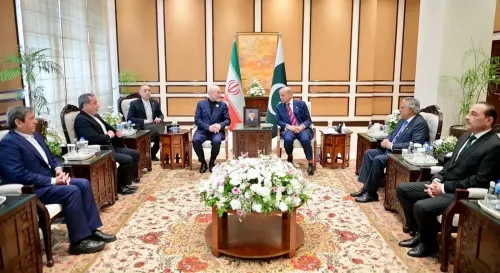
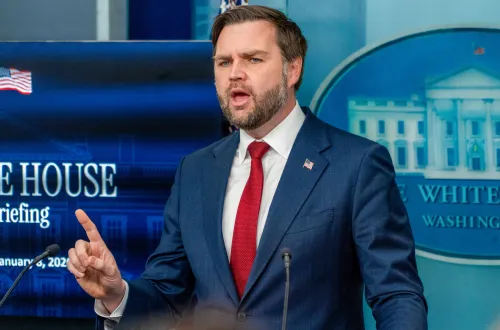
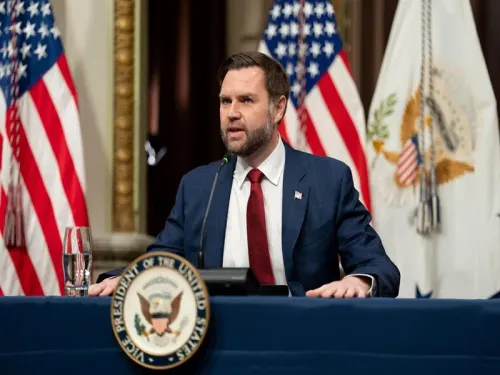
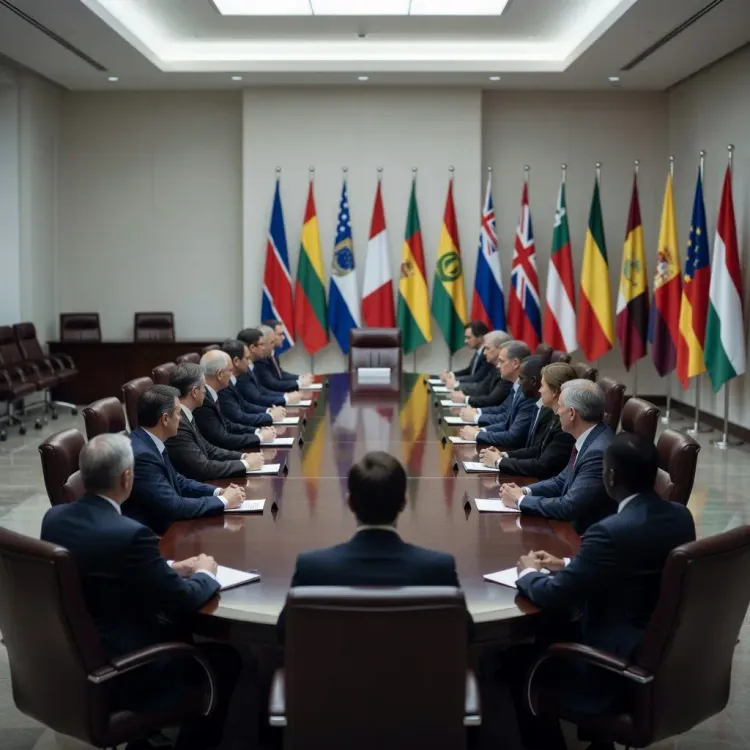
Vice President JD Vance of the United States participated in a quadrilateral diplomatic meeting involving Pakistan, Qatar, and Iran on Sunday, June 21, 2026, according to an official communication from The White House. The meeting marks an unusual grouping that brings together both Sunni and Shia-majority states alongside a key South Asian partner in a single diplomatic format.
Context
The quadrilateral format is distinct from the established Quad security grouping — which includes the United States, India, Japan, and Australia — and represents an ad-hoc diplomatic configuration. Bringing Pakistan, Qatar, and Iran to the same table signals a deliberate effort by the Trump-Vance administration to engage a cross-sectional mix of regional actors spanning the Gulf and South Asia.
Qatar hosts the forward headquarters of U.S. Central Command and has served as a critical mediator in regional disputes, including the 2020 Doha Agreement that governed the U.S. withdrawal from Afghanistan. Pakistan has been a long-standing partner in U.S. counterterrorism frameworks, with a strategic dialogue first formalised in 2010. Iran, by contrast, has been under sustained U.S. sanctions and remains a point of deep diplomatic tension over its nuclear programme and regional influence.
Policy Backdrop
The current administration has signalled a preference for bilateral and transactional deal-making over multilateral institutional frameworks. Convening a quadrilateral meeting of this composition — pairing a sanctions-subject adversary like Iran with close security partners Pakistan and Qatar — is a notable departure from conventional diplomatic siloing.
Issues historically linking these four actors include counterterrorism cooperation, Afghan stability, and energy transit routes through the Gulf and Central Asia. Qatar's role as a prior mediator between competing parties gives it particular value in any multilateral format involving Iran and Pakistan simultaneously.
Stakeholders and Impact
For India, a quadrilateral U.S. engagement that includes both Pakistan and Iran — two countries with which New Delhi maintains complex and often adversarial ties — will be closely watched. India has significant strategic interests in Iranian port infrastructure at Chabahar and has historically opposed any diplomatic architecture that elevates Pakistan in U.S. strategic calculus.
Regional security officials, energy stakeholders, and Afghan diaspora communities all have a direct stake in any agreements or understandings that may emerge from this format. The participation of Vice President Vance — rather than a cabinet-level envoy — lends the meeting considerable political weight.
What's Next
Observers will watch for any joint statement, readout, or follow-on bilateral engagements by the U.S. State Department in the weeks ahead. The absence of a detailed agenda in the official announcement leaves the scope and outcomes of the meeting open to diplomatic interpretation.
Whether this quadrilateral format becomes a recurring mechanism or remains a one-off engagement will be a key indicator of the administration's broader strategy toward South Asia and the Gulf heading into the second half of 2026.
Point of View
A sanctioned adversary, at the same table as close U.S. partners Pakistan and Qatar suggests the administration is pursuing back-channel or confidence-building tracks that bypass conventional multilateral architecture. For India, the elevation of both Pakistan and Iran in U.S. diplomatic outreach simultaneously complicates New Delhi's strategic calculus, particularly given its own interests in Chabahar and its fraught relationship with Islamabad. The choice of Vance rather than a special envoy signals political seriousness, but the lack of a public agenda or joint statement leaves room for both optimism and scepticism about substantive outcomes. This meeting fits a broader pattern of the current administration testing unconventional diplomatic groupings to advance deal-making outside established institutional frameworks.
NationPress
19 Sept 2026
Frequently Asked Questions
What was the quadrilateral meeting involving JD Vance about?
Vice President JD Vance participated in a quadrilateral diplomatic meeting with Pakistan , Qatar , and Iran on June 21, 2026 , as announced by The White House . No detailed agenda or joint statement was publicly released.
Why is the US meeting with Iran significant in 2026?
Iran has been under sustained U.S. sanctions since 1979 and remains a point of tension over its nuclear programme and regional influence. A Vice President-level multilateral meeting that includes Iran is diplomatically unusual and signals a potential shift in engagement strategy.
What role does Qatar play in US diplomacy?
Qatar hosts the forward headquarters of U.S. Central Command and has served as a key mediator in regional conflicts, most notably brokering the 2020 Doha Agreement on the U.S. withdrawal from Afghanistan .
How does this quadrilateral meeting affect India?
India will closely watch any U.S. diplomatic format that simultaneously elevates Pakistan and Iran , given New Delhi's adversarial ties with Islamabad and its strategic interest in Iran's Chabahar port . Such a grouping could influence regional power dynamics that directly affect Indian foreign policy.
Is this the same as the Quad grouping involving India?
No. The Quad is an established security grouping comprising the United States , India , Japan , and Australia . This quadrilateral meeting — involving Pakistan , Qatar , and Iran — is a separate, ad-hoc diplomatic format with no institutional connection to the Quad.