US Vice President J.D. Vance Arrives in Islamabad for Critical US-Iran Negotiations
Synopsis
US Vice President J.D. Vance's arrival in Islamabad marks the start of crucial negotiations with Iran. This engagement could reshape Middle Eastern stability and impact the global economy. With high-profile representatives on both sides, the discussions are pivotal in determining future relations.
Key Takeaways
Vance has arrived in Islamabad for US-Iran talks.
The negotiations are crucial for regional stability and global economic implications.
Both sides' intentions will significantly influence the negotiation outcomes.
High-profile representatives from both countries are involved.
Ongoing regional tensions present challenges to the negotiation process.
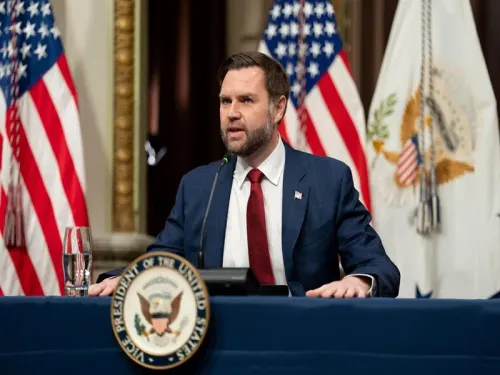
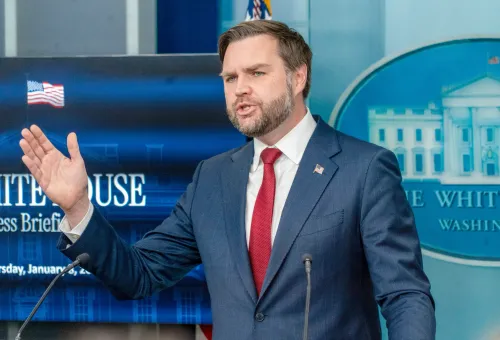
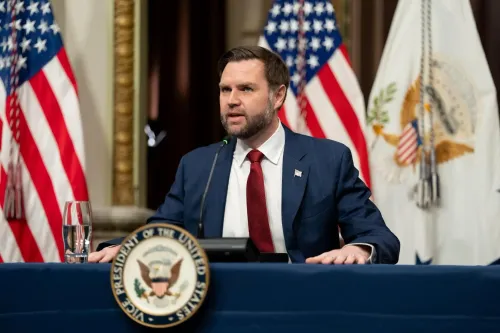
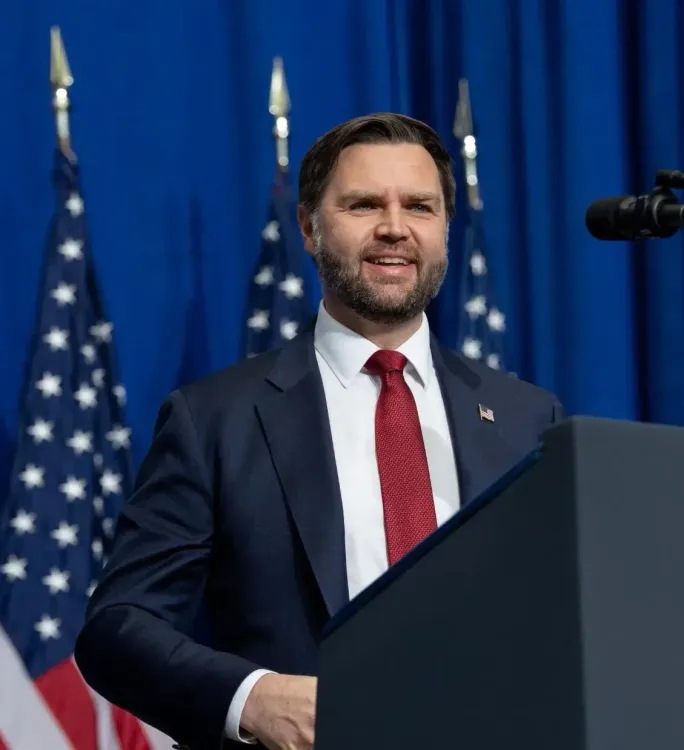
Islamabad, April 11 (NationPress) - The US Vice President, J.D. Vance, touched down in Islamabad at approximately 11:15 A.M. (IST) on Saturday, heading the American contingent for pivotal discussions regarding US-Iran relations.
This weekend, all attention is directed toward Islamabad as significant negotiations between the United States and Iran commence, with major ramifications for both regional stability and the global economy.
Prior to his departure from Joint Base Andrews on Air Force Two, Vance expressed optimism about the forthcoming talks, stating, “We’re looking forward to the negotiation. I think it’s going to be positive.”
These negotiations symbolize the first official dialogue between Washington and Tehran in this recent phase, taking place under a delicate two-week ceasefire that has temporarily eased regional tensions.
Nevertheless, uncertainty persists, particularly with ongoing events—especially Israel’s military actions against Hezbollah and disputes over Lebanon’s involvement in any potential agreement—raising concerns about the negotiation process.
The American delegation is of high caliber, featuring Vice President Vance, special envoy Steve Witkoff, and Jared Kushner, the son-in-law of former President Donald Trump. The team aims to establish a structured framework for negotiations, adhering to explicit directives from the White House.
Reaffirming the administration’s position, Vance remarked, “We’re looking forward to negotiation. I think it’s going to be positive.”
He noted that the US’s approach would hinge on Iran’s intentions. “As the President of the United States said, if the Iranians are willing to negotiate in good faith, we’re certainly willing to extend the open hand,” Vance commented. “If they’re going to try to play us, then they’re going to find the negotiating team is not that receptive.”
He also stressed that the delegation enters these talks with established guidelines. “So we’re going to try to have a positive negotiation. The President provided us with some clear guidelines, and we’re going to see,” he stated.
On the Iranian side, the delegation will be spearheaded by Parliament Speaker Mohammad Bagher Ghalibaf and Foreign Minister Abbas Araghchi.
Point of View
The arrival of Vice President Vance in Islamabad signifies a critical juncture in US-Iran relations. The ongoing negotiations are essential not only for regional stability but also for global economic dynamics. The implications of these discussions merit close attention.
NationPress
19 Sept 2026
Frequently Asked Questions
What is the purpose of Vice President Vance's visit to Islamabad?
Vice President Vance's visit aims to lead the American delegation in crucial negotiations with Iran that could impact regional stability and global economic relations.
Who is part of the US delegation alongside Vice President Vance?
The US delegation includes special envoy Steve Witkoff and Jared Kushner, the son-in-law of former President Donald Trump.
What are the expectations for the US-Iran negotiations?
There are hopes for a positive outcome, with clear guidelines set by the White House, depending on Iran's willingness to engage in good faith.
Who leads the Iranian delegation in these talks?
The Iranian delegation is led by Parliament Speaker Mohammad Bagher Ghalibaf and Foreign Minister Abbas Araghchi.
What challenges could affect these negotiations?
Ongoing tensions, including Israel's military actions against Hezbollah and disputes over Lebanon's role, pose risks to the negotiation process.