White House: Anduril to Invest $3.7B in Next-Gen US Submarines
Synopsis
The White House announced that Anduril Industries will invest over $3.7B alongside a $2.9B federal contract for ARSENAL-TWO, a next-generation American submarine programme aimed at creating tens of thousands of jobs and restoring US maritime dominance.
Key Takeaways
Anduril Industries will invest over $3.7 billion in the ARSENAL-TWO submarine programme.
A $2.9 billion federal contract accompanies the private investment, bringing the combined commitment to over $6.6 billion .
The programme targets the development of next-generation American submarines.
The White House says the project will create tens of thousands of jobs and drive billions in economic output.
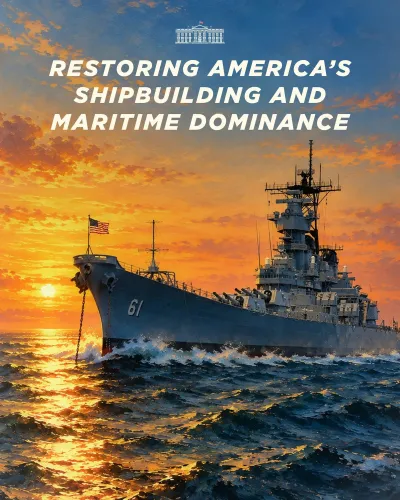
The initiative is framed as central to restoring America's maritime dominance .
Anduril's private investment exceeds the federal contract by roughly $800 million , signalling a platform-business bet beyond a single procurement cycle.
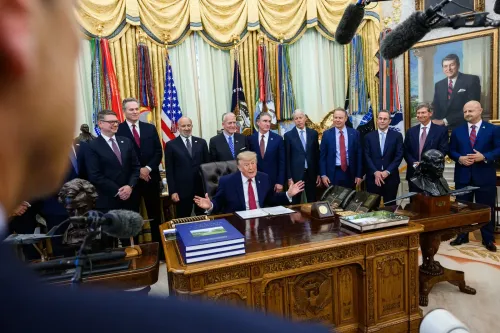
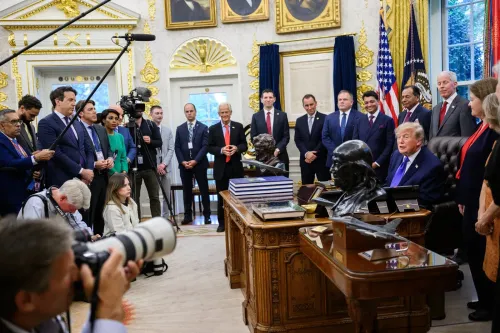
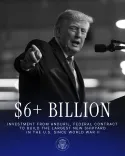
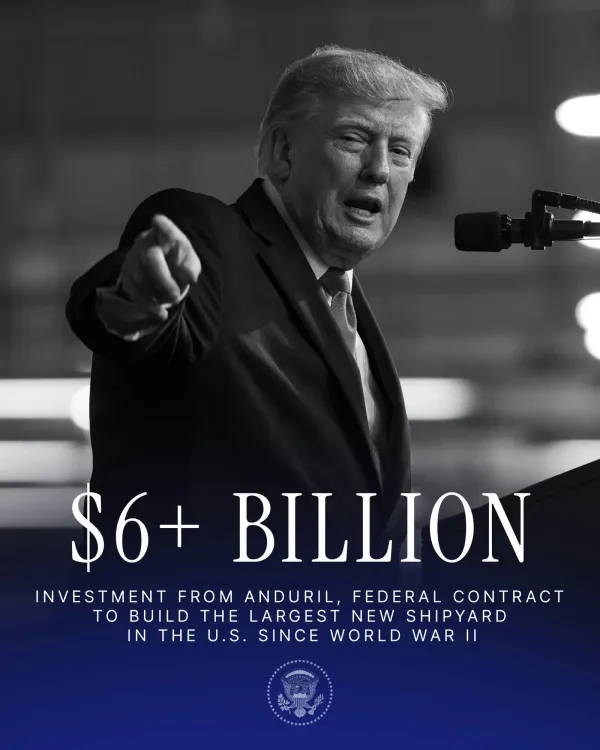
A $6.6 billion bet on American maritime power just landed — and it comes with a fleet of new submarines. The White House announced on Wednesday, October 7, 2026, that defence-technology firm Anduril Industries will pour over $3.7 billion in private investment into the ARSENAL-TWO programme, paired with a $2.9 billion federal contract, to build the next generation of American submarines.
What ARSENAL-TWO actually is
The programme's name signals ambition from the outset. Dubbed ARSENAL-TWO, the initiative is positioned as a cornerstone of Washington's push to restore what the White House calls 'America's maritime dominance' — a phrase that carries unmistakable strategic weight at a moment when undersea competition in both the Pacific and Atlantic has intensified sharply. Anduril, founded by Palmer Luckey, is not a traditional defence contractor; it is a technology-first defence firm that has built its reputation on autonomous systems, software-defined hardware, and rapid prototyping — precisely the kind of company the Pentagon has been trying to draw deeper into the defence-industrial base.
Tens of thousands of jobs, billions in output
The White House framed the announcement in unmistakably economic terms: the project will 'create tens of thousands of jobs' and 'drive billions in economic output.' Submarine manufacturing is among the most labour-intensive and technically demanding work in defence industry — hull fabrication, propulsion systems, pressure-vessel welding, and sonar integration each require highly specialised workforces. The injection of combined public-private capital at this scale would ripple through the domestic supply chain, from steel foundries to advanced electronics suppliers.
Why the private-federal partnership model matters
The structure of the deal — private investment exceeding the federal contract by roughly $800 million — is itself a signal. It suggests Anduril is treating ARSENAL-TWO not merely as a government services contract but as a platform business, betting that the underlying technology and intellectual property will generate returns beyond this single programme. For the administration, it is a proof-of-concept for blending private capital with defence procurement, reducing the Treasury's upfront burden while accelerating timelines that traditional acquisition cycles notoriously drag out. Whether the model holds under the scrutiny of congressional oversight and auditing requirements will be the real test in the years ahead.
At $6.6 billion combined, ARSENAL-TWO is one of the largest defence-technology announcements of the year — and for a Washington increasingly focused on undersea deterrence, the submarines that come out of it may matter far more than the dollar signs attached to them.
Point of View
Washington is effectively stress-testing a new acquisition model — one that treats defence technology as a commercial platform, not just a government purchase order. For Indo-Pacific watchers in New Delhi, a reinvigorated American undersea capability directly underpins the credibility of QUAD security commitments and the AUKUS submarine-sharing framework, making this a geopolitical story as much as an industrial one. The scale of private commitment also raises the political stakes: if ARSENAL-TWO delivers, it validates the administration's industrial policy; if it stalls, Congress will ask hard questions about oversight of non-traditional contractors managing public funds.
NationPress
7 Oct 2026
Frequently Asked Questions
What is the ARSENAL-TWO submarine programme?
ARSENAL-TWO is a next-generation American submarine programme announced by the White House, combining a $3.7 billion investment from defence-technology firm Anduril Industries with a $2.9 billion federal contract to design and build advanced submarines.
What is Anduril Industries?
Anduril Industries is a US defence-technology company founded by Palmer Luckey, known for autonomous systems and software-defined hardware. It has become one of the most prominent non-traditional defence contractors working with the Pentagon.
How many jobs will the ARSENAL-TWO programme create?
The White House stated the programme will create 'tens of thousands of jobs' and drive billions in economic output, though specific job numbers by location or timeline have not been detailed in the announcement.
How much is the total investment in ARSENAL-TWO?
The combined commitment is over $6.6 billion — more than $3.7 billion from Anduril's private investment and $2.9 billion from a federal government contract.
Why does America's maritime dominance matter for India?
A stronger US undersea capability reinforces QUAD security commitments and the AUKUS submarine-sharing framework in the Indo-Pacific, both of which are directly relevant to India's maritime security interests and its strategic partnership with Washington.