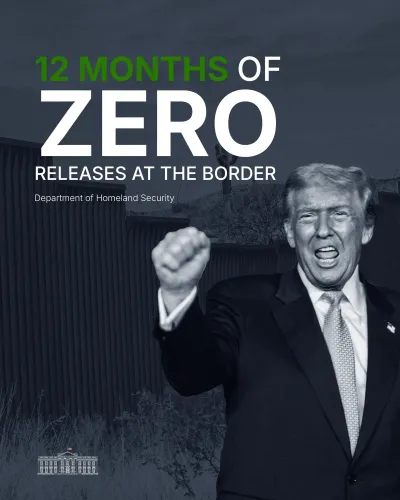
White House Claims 16 Months of Zero Migrant Releases at Border
Synopsis
The White House announced on X that the US has seen 16 straight months of zero migrant releases into the country, framing the end of catch-and-release as a signature achievement of the current president in a playfully branded 'Story Time' post.
Key Takeaways
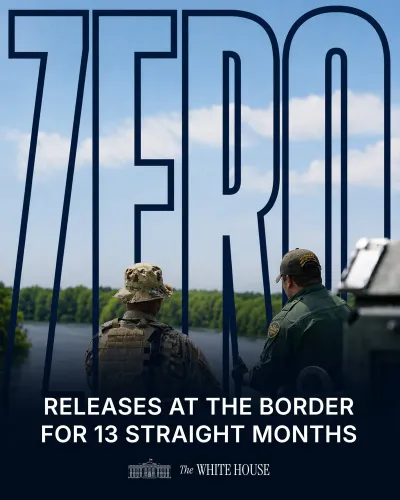
The White House posted on September 29, 2026 claiming 16 consecutive months of zero migrant releases into the United States.
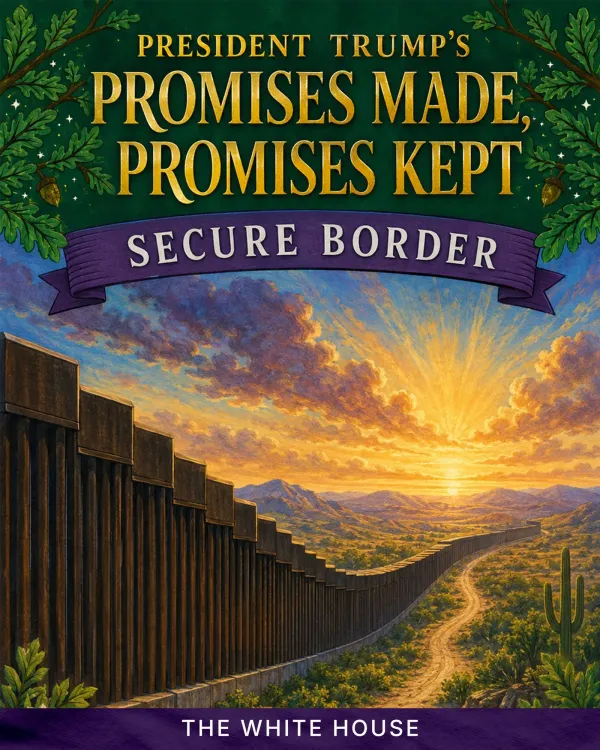
The post declares that catch-and-release — the practice of releasing migrants pending immigration hearings — is 'finished.' The messaging is framed as 'White House Adventures - Book #1: Secure Border,' suggesting a serialised communications campaign.
Catch-and-release has been a central flashpoint in US immigration debate, with enforcement approaches alternating sharply between Republican and Democratic administrations since at least 2017 .
The 'zero releases' claim awaits independent verification through Customs and Border Protection monthly encounter and release statistics.
Border patrol agents and immigration courts remain the key operational actors whose data will confirm or complicate the White House's assertion.
The White House is framing sixteen consecutive months of halted migrant releases into the United States as a landmark enforcement milestone — and it is doing so with the breezy confidence of a children's book launch. In a post on X dated Tuesday, September 29, 2026, the official White House account introduced what it called 'White House Adventures - Book #1: Secure Border,' crediting a change in presidential leadership for ending the long-contested practice of catch-and-release.
The post declared: 'Sixteen straight months of zero releases into the country. Criminal illegals kept out. Catch-and-release is finished. All we needed was a new president!' The playful framing — story-time aesthetic, emoji, serialised 'Book #1' branding — is a deliberate communications choice, translating hard-edged immigration enforcement into accessible, shareable content.What catch-and-release actually meant — and why it became a flashpoint
Catch-and-release is the shorthand for a practice in which migrants apprehended at the US-Mexico border were released into the interior of the country while they awaited immigration hearings — a process that could stretch years. The practice became one of the most politically charged phrases in American immigration debate, with enforcement advocates arguing it functioned as a de facto open-door policy and humanitarian groups contending it was a necessary accommodation for an overwhelmed immigration court system.
The Trump administration (2017–2021) moved aggressively to curtail it, introducing the Migrant Protection Protocols — colloquially known as 'Remain in Mexico' — alongside expanded border barrier construction. Encounter numbers and release rates shifted again under the subsequent administration, with Customs and Border Protection reporting record migrant encounters at various points from 2021 onward. The pendulum has swung with near-clockwork regularity along partisan lines: Republican administrations tightening enforcement, Democratic ones expanding humanitarian processing channels.
The '16 straight months' claim and what the data would need to show
The White House's claim of sixteen straight months of zero releases is a significant assertion — one that, if borne out by Customs and Border Protection monthly statistics, would represent a sustained enforcement posture unlike anything in recent memory. CBP's encounter, expulsion, and release data are published monthly and serve as the authoritative ledger against which such claims are measured. Independent verification of the 'zero releases' figure will hinge on those official datasets, particularly the distinction between outright expulsions, voluntary returns, and releases with notices to appear.
The post does not specify which categories of releases it references, leaving room for definitional debate — a recurring feature of immigration-enforcement messaging across administrations. Border patrol agents and immigration courts remain the operational actors whose workload and procedures will ultimately reflect whether the policy shift is as absolute as the White House describes.
Story-time branding as a White House strategy
The 'Book #1' framing is not accidental. Serialised, branded content — digestible, emotionally direct, and algorithmically friendly — has become a feature of modern executive communications. By packaging a contentious enforcement record as an adventure story, the White House signals that it expects more chapters: more milestones, more messaging, more moments to contrast with the previous administration's record. The question the next CBP monthly report will answer is whether the numbers hold the story together.
Point of View
Shareable narrative before independent data can interrogate it. The 'Book #1' serialisation signals a deliberate campaign architecture, not a one-off post, suggesting the administration intends to build a sustained public record of border achievements heading into the political cycle. Historically, US border messaging has been most effective when enforcement numbers and White House claims align closely; the gap between the two has, in past administrations, become the opposition's sharpest attack line. The durability of this narrative will depend almost entirely on what CBP's monthly data actually shows.
NationPress
29 Sept 2026
Frequently Asked Questions
What is catch-and-release in US immigration policy?
Catch-and-release refers to the practice of releasing migrants apprehended at the US border into the country's interior while they await immigration hearings, which can take years. It became one of the most contested practices in US border enforcement debates.
What did the White House claim about the US border on September 29, 2026?
The White House claimed on X that the United States had recorded 16 straight months of zero migrant releases into the country, declaring catch-and-release 'finished' under the current president.
How has US border policy changed between administrations?
US border policy has shifted sharply with each administration. The Trump administration (2017-2021) introduced Migrant Protection Protocols and border barriers to reduce releases. The subsequent administration expanded humanitarian processing, with record migrant encounters reported by Customs and Border Protection from 2021 onward.
How can the White House's '16 months of zero releases' claim be verified?
The claim can be checked against Customs and Border Protection's monthly published data on border encounters, expulsions, and releases. Independent analysts and lawmakers typically scrutinise these figures to assess whether enforcement claims match official statistics.
What is Migrant Protection Protocols and how does it relate to catch-and-release?
Migrant Protection Protocols, also known as 'Remain in Mexico,' was a Trump-era policy requiring asylum seekers to wait in Mexico while their US immigration cases were processed — a direct alternative to releasing migrants into the US interior under catch-and-release.