White House Claims Historic Drug Price Drop Under Trump MFN Policy
Synopsis
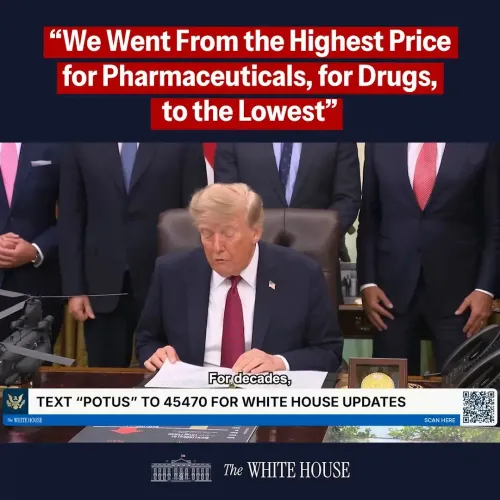
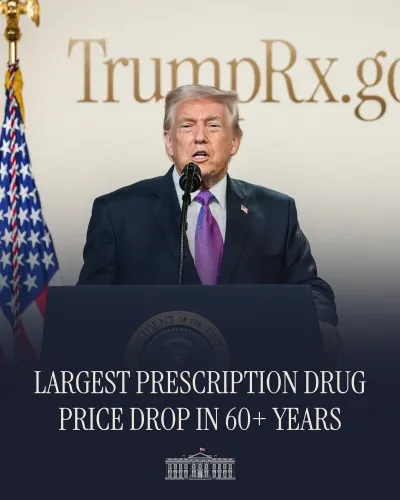
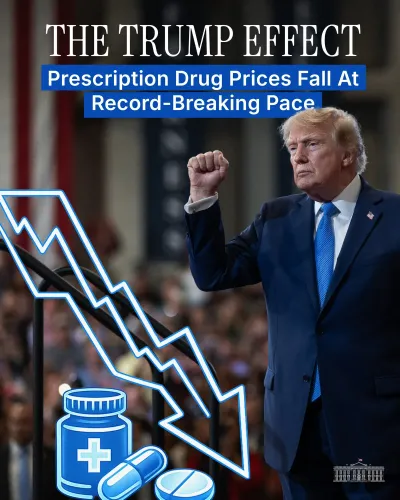
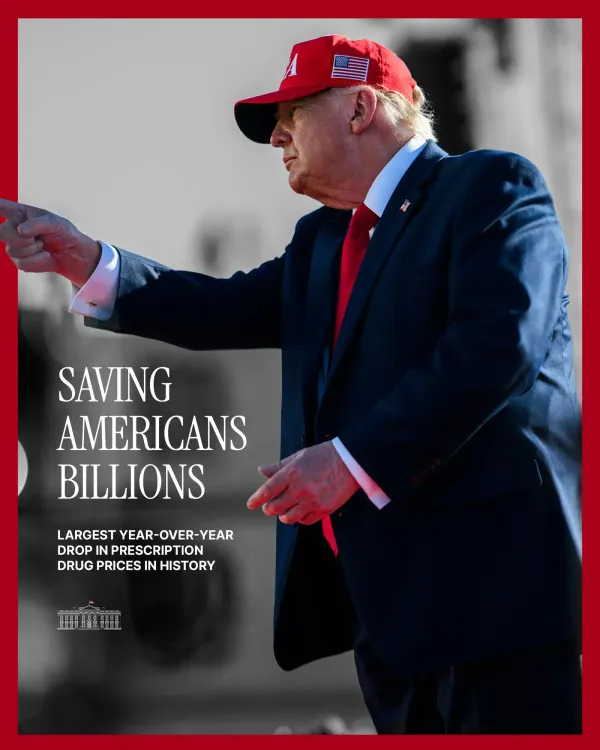
The White House announced on October 14, 2026, that Americans saw the largest ever year-over-year drop in prescription drug prices, attributing the milestone to President Trump's Most-Favored-Nation pricing model that benchmarks Medicare drug payments against the lowest prices paid by comparable nations.
Key Takeaways
The White House claimed on October 14, 2026 that US prescription drug prices recorded their biggest-ever year-over-year decline.
The claim is attributed to President Trump's Most-Favored-Nation (MFN) pricing policy , which ties Medicare reimbursements to the lowest prices paid by peer nations.
The MFN model was first introduced as a final rule in December 2020 , targeting Medicare Part B drugs, but was initially blocked by courts.
Pharmaceutical manufacturers have historically opposed MFN pricing, arguing it suppresses drug innovation and development investment.
The specific magnitude of the price drop was not detailed in the White House post; the 'largest in history' characterisation has not been independently verified.
Medicare covers approximately 65 million Americans, making any sustained drug-cost reduction significant for both patients and federal programme finances.
Prescription drug prices in the United States recorded their steepest year-over-year decline on record, the White House declared on Wednesday, October 14, 2026 — crediting President Donald Trump's Most-Favored-Nation pricing policy as the driving force behind a shift that American patients have waited decades to see.
What Most-Favored-Nation pricing actually does
The Most-Favored-Nation model — first introduced by the Trump administration in December 2020 — ties what Medicare pays for certain drugs to the lowest price that comparable wealthy nations pay for the same medicines. The logic is disarmingly simple: if France or Japan pays half what an American does for an identical drug, why should American taxpayers subsidise the difference? The original 2020 rule targeted Medicare Part B drugs — medicines administered in clinical settings, often high-cost infusions and injections — and was almost immediately challenged in court, delaying its implementation.
The Trump administration's 2026 iteration of the policy appears to have cleared those legal hurdles, and the White House now claims it has delivered the 'largest year-over-year drop in prescription drug prices in history.' The specific magnitude of the drop has not been independently detailed in the official post, but the claim is sweeping in its scope.
The long road from 2020 to a functioning price benchmark
The MFN concept traces back to a broader 2018–2020 strategy under which the Trump White House sought to import foreign price discipline rather than rely solely on domestic negotiation or market transparency. Each attempt met fierce resistance from pharmaceutical manufacturers, who argued that benchmarking to lower foreign prices would reduce incentives for innovation and ultimately harm the pipeline of new drugs reaching American patients.
Successive administrations explored their own versions of international reference pricing, but none translated into the kind of broad, measurable consumer relief the White House is now claiming. If the administration's figure holds up to scrutiny, it would represent a political and policy landmark — one that eluded reformers on both sides of the aisle for the better part of three decades.
What Medicare beneficiaries and patients stand to gain
Medicare covers roughly 65 million Americans — seniors and people with certain disabilities — making any durable drop in Part B drug costs consequential not just for household budgets but for the long-term solvency of the federal health programme itself. Pharmaceutical manufacturers, by contrast, have consistently warned that capped reimbursements could dampen investment in next-generation therapies.
The White House framing — 'leveled the playing field' — casts the policy less as price control and more as a correction of a market distortion that has long made the United States the most expensive drug market among peer nations. Whether that framing survives a full independent audit of the price-drop data will be the defining test of this claim's staying power.
Point of View
It would validate a reference-pricing approach that reformers have pursued — and industry has resisted — for three decades. The policy's revival after its 2020 court defeat signals that the Trump administration successfully navigated the legal architecture this time, which itself reshapes the landscape for future federal drug-price intervention. For India, which exports a significant share of generic drugs to the US market, any structural shift in American drug pricing policy carries downstream implications for export revenue and competitive positioning. The broader question is whether MFN becomes a durable legislative fixture or remains an executive-order instrument vulnerable to the next change in administration.
NationPress
15 Oct 2026
Frequently Asked Questions
What is Most-Favored-Nation drug pricing in the US?
Most-Favored-Nation (MFN) drug pricing is a policy that sets what Medicare pays for certain drugs at the lowest price paid by comparable wealthy nations, such as France or Japan, rather than allowing US prices to remain far higher than international benchmarks.
Did Trump's drug pricing policy actually lower prescription prices?
The White House claimed on October 14, 2026, that Americans saw the largest year-over-year drop in prescription drug prices in history under the MFN policy. The specific figures have not been independently verified based on available information.
What is Medicare Part B and why does MFN pricing affect it?
Medicare Part B covers medical services and drugs administered in clinical settings, including costly infusions and injections. The original 2020 MFN rule specifically targeted Part B drug reimbursements because these medicines tend to be among the most expensive in the Medicare system.
Why was the Most-Favored-Nation rule blocked the first time?
The December 2020 MFN final rule was challenged in federal court by pharmaceutical industry groups, which argued it violated administrative procedure requirements. Courts issued injunctions blocking its implementation, preventing the 2020 version from taking effect.
How does US drug pricing policy affect India?
India is a major supplier of generic pharmaceuticals to the United States. Any broad restructuring of American drug pricing and reimbursement policy can affect demand, pricing margins, and regulatory expectations for Indian generic drug exporters operating in the US market.