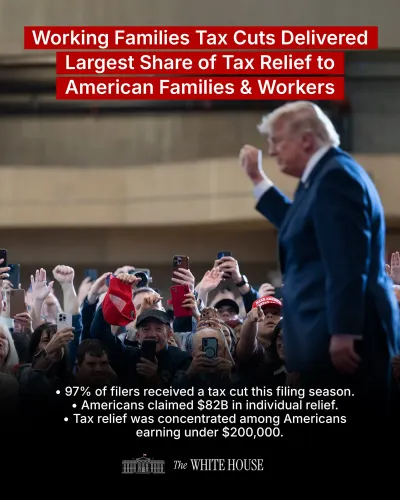
White House Promotes No Tax on Social Security Under Trump

Synopsis
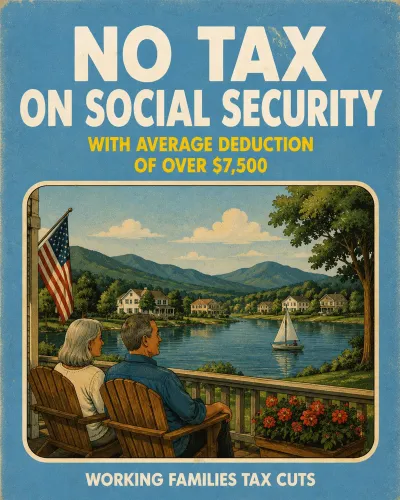
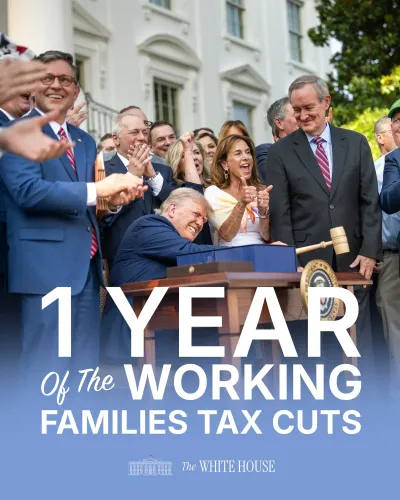
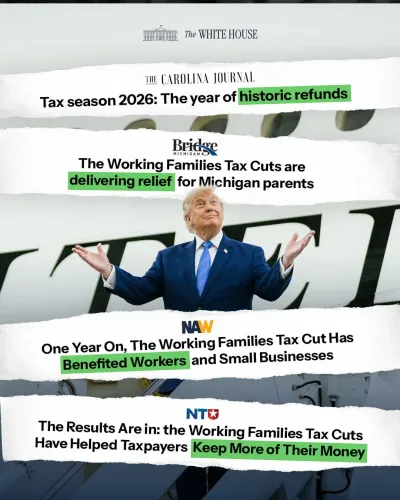
The White House promoted President Trump's 'Working Families Tax Cuts' on July 7, 2026, claiming the policy eliminates federal income tax on Social Security benefits. The ASMR-style video targets retirees and senior citizens, continuing Republican messaging on tax relief for Social Security recipients amid ongoing federal budget debates.
Key Takeaways
The White House posted a video on July 7, 2026 , promoting no federal income tax on Social Security benefits.
The policy is attributed to President Trump's Working Families Tax Cuts , though precise legislative provisions remain unconfirmed.
Over 70 million Americans receive Social Security benefits and would be affected by any such tax change.
The Tax Cuts and Jobs Act of 2017 was Trump's landmark first-term tax legislation, though it did not eliminate Social Security taxes for most recipients.
Fiscal analysts caution that reducing tax revenue linked to Social Security could pressure federal deficits and programme solvency.
Congressional action on tax extenders and budget reconciliation will determine whether these provisions become permanent law.
The White House on Tuesday, July 7, 2026, shared a video described as 'Satisfying ASMR,' promoting the elimination of federal income tax on Social Security benefits, crediting the development to what it called President Trump's Working Families Tax Cuts.
Context
The post, published from the official White House account on X, accompanied a video framing the policy as a relief measure for retirees and benefit recipients. The caption read: 'Satisfying ASMR: No Tax on Social Security, Thanks to President Trump's Working Families Tax Cuts.' The use of an ASMR-style video signals a deliberate effort to reach broader, younger digital audiences with messaging about senior-focused tax policy.
Social Security is a federal programme providing retirement, disability, and survivor benefits to tens of millions of Americans. Under existing law, beneficiaries with income above certain thresholds have historically paid federal income tax on a portion of their benefits — a provision that has drawn criticism from retirees and advocacy groups for decades.
Policy Backdrop
President Donald Trump signed the Tax Cuts and Jobs Act in December 2017 during his first term, which lowered individual and corporate tax rates and doubled the standard deduction, though it did not directly eliminate taxes on Social Security benefits for most recipients. The 'Working Families Tax Cuts' branding referenced in the post appears to be associated with a subsequent or extended legislative effort, the precise provisions of which have not been independently confirmed.
Eliminating or reducing the tax burden on Social Security has been a recurring theme in Republican platforms and campaign messaging, particularly aimed at seniors who represent a significant and reliable voting bloc. The framing positions the policy as a direct financial benefit delivered to working families and retirees.
Stakeholders and Impact
The primary beneficiaries of any such policy shift would be Social Security recipients — a group numbering over 70 million Americans — particularly those in middle-income brackets who currently pay federal tax on a share of their benefits. For Indian-Americans and the broader diaspora with retired relatives dependent on Social Security, the policy carries direct household financial implications.
Critics and fiscal analysts have long warned that reducing revenue tied to Social Security-adjacent taxation could add pressure to federal deficits and the long-term solvency of entitlement programmes. Congressional debate over tax extenders and budget reconciliation remains active, making the legislative status of these provisions a key variable to watch.
What's Next
Congressional action on tax extenders and any new proposals addressing the taxation of Social Security benefits will be closely watched ahead of upcoming budget deadlines. Whether the 'Working Families Tax Cuts' provisions are codified into permanent law or remain subject to expiry will determine the long-term impact on retirees. The White House's use of viral content formats to promote the policy suggests an ongoing communications push to build public support for the measure.
Point of View
Emotionally resonant content aimed at seniors and their families. The messaging fits squarely within a long-running Republican effort to position the party as a protector of retiree income, a narrative that carries electoral weight given the demographic's turnout rates. However, the lack of confirmed legislative specifics around 'Working Families Tax Cuts' leaves the policy claim in a grey zone between enacted law and campaign messaging. The broader tension between tax relief for beneficiaries and the fiscal health of Social Security itself remains unresolved and will define the policy debate in the months ahead.
NationPress
8 Jul 2026
Frequently Asked Questions
What are Trump's Working Families Tax Cuts?
The 'Working Families Tax Cuts' is the branding used by the White House to describe tax relief measures credited to President Trump, including the claimed elimination of federal income tax on Social Security benefits. The precise legislative provisions under this label had not been independently confirmed as of July 2026.
Will Social Security benefits be tax-free in the United States?
The White House claimed on July 7, 2026, that Social Security benefits are no longer subject to federal income tax under President Trump's Working Families Tax Cuts. However, the specific legislation enacting this change has not been independently verified.
How does the Tax Cuts and Jobs Act affect Social Security?
The Tax Cuts and Jobs Act, signed in December 2017, lowered individual and corporate tax rates and doubled the standard deduction, but it did not directly eliminate taxes on Social Security benefits for most recipients at that time.
Who benefits from no tax on Social Security?
Retirees and other Social Security recipients — particularly those in middle-income brackets who currently pay federal income tax on a portion of their benefits — would be the primary beneficiaries if such a tax exemption is enacted into law.
Does eliminating Social Security tax affect the programme's solvency?
Fiscal analysts have cautioned that reducing tax revenue associated with Social Security could add pressure to federal deficits and raise questions about the long-term solvency of the programme, making congressional oversight of the policy critical.