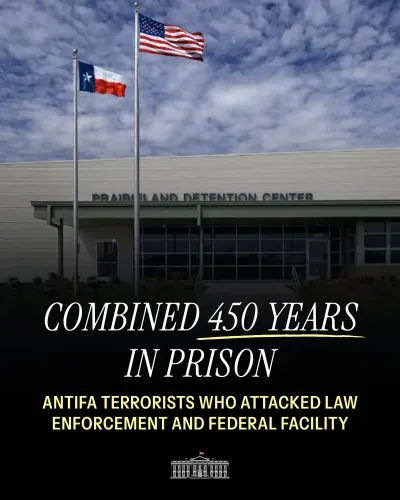
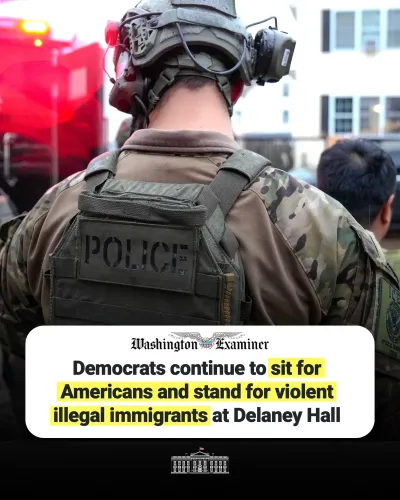
White House Says State Dept to Crush Far-Left Terror Groups
Synopsis
The White House on 17 July 2026 declared the US State Department is working to crush far-left terrorist groups responsible for decades of attacks on citizens, officials, law enforcement, businesses, and critical infrastructure in the US and overseas, signalling a possible expansion of international designation and sanctions mechanisms.
Key Takeaways
The White House on 17 July 2026 publicly directed the US State Department to dismantle far-left violent organisations globally.
The post cited decades of attacks by far-left terrorists on private citizens, government officials, police, businesses, and critical infrastructure in the US and abroad.
The State Department has maintained a Foreign Terrorist Organizations list since 1997 , enabling sanctions and international law-enforcement cooperation.
Any new designations would require a legal finding of foreign nexus, limiting the State Department's reach to groups with transnational ties.
No specific group designations or executive orders have been announced as of this report; formal Congressional notifications would precede any binding FTO listing.
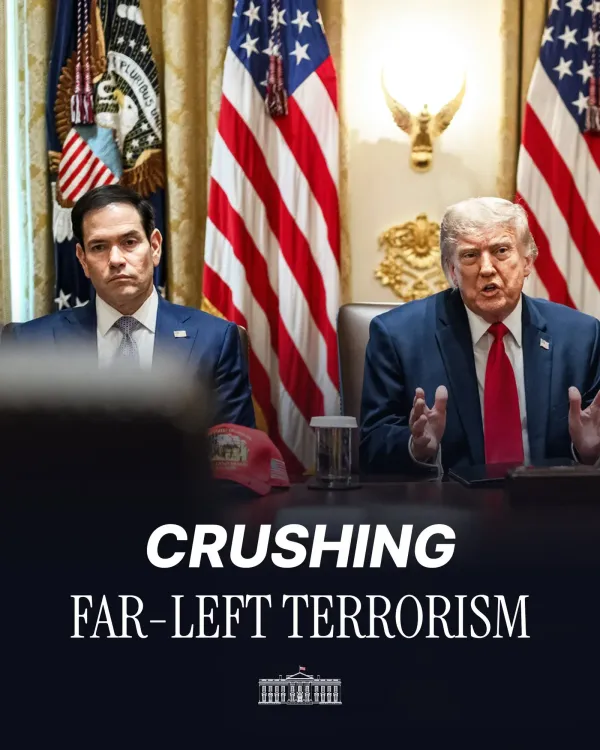
The White House on Thursday, 17 July 2026 declared that the US Department of State is actively working to dismantle far-left violent organisations that have targeted private citizens, government officials, law enforcement, businesses, and critical infrastructure both inside the United States and abroad.
The official White House post stated: 'For decades, far-left terrorists have attacked private citizens, government officials, police and law enforcement, businesses, and critical infrastructure in the U.S. and overseas. The State Department is working to CRUSH these violent groups all around the world.'
Context
The statement marks a pointed escalation in the Trump administration's public messaging on domestic and transnational violent extremism, explicitly naming far-left ideology as a terrorism threat. While US counterterrorism frameworks have historically addressed threats from multiple ideological directions, public executive-branch communications of this nature specifically targeting far-left groups are relatively rare in recent decades.
The White House's framing — placing far-left groups alongside the kind of transnational networks the State Department traditionally designates — signals a potential broadening of the foreign-policy toolset to address ideologically motivated domestic and overseas violence.
Policy Backdrop
The State Department has maintained a list of Foreign Terrorist Organizations (FTOs) since 1997 under the Antiterrorism and Effective Death Penalty Act. Designation on this list triggers sanctions, asset freezes, and international law-enforcement cooperation, making it one of the most consequential tools available to the executive branch short of military action.
US counterterrorism policy has historically addressed far-left violence — including groups active in the 1960s and 1970s — primarily through domestic law enforcement channels. The State Department's mandate, by contrast, focuses on foreign-based or transnational networks. The White House post's explicit reference to the State Department suggests the current administration may be seeking to apply international designation mechanisms to groups with overseas links or operations.
Analysts note that any expansion of the FTO list or related sanctions regimes would require legal findings of foreign nexus, a standard that has shaped which organisations qualify for State Department action versus purely domestic prosecution.
Stakeholders and Impact
The groups most directly affected by any new State Department designations would be those with transnational ties, as domestic-only organisations remain outside the department's primary jurisdiction. Law enforcement agencies, private businesses, and critical infrastructure operators — all cited in the White House post as past targets — stand to benefit from tighter international coordination if new designations materialise.
For India and other partner nations, a broadened US approach to far-left transnational networks could translate into enhanced intelligence sharing and joint action through existing bilateral counterterrorism frameworks. Several Indian security agencies already cooperate with US counterparts on designations affecting groups with South Asian connections.
What's Next
The immediate question is whether the White House's statement will be followed by concrete action — specifically, updates to the Foreign Terrorist Organizations list or new executive orders expanding the scope of international designations and sanctions. The State Department has not, as of this report, announced specific group designations linked to this statement.
Observers will watch for formal State Department notifications to Congress, which are required before FTO designations take effect, as the clearest signal of whether this messaging translates into binding policy action.
Point of View
Framing ideological domestic violence as a matter of foreign-policy and international sanctions architecture. This mirrors the rhetorical and legal strategy used against right-wing transnational networks in earlier administrations, but applied to the opposite end of the spectrum, suggesting the executive branch is building a case for new FTO designations. For partner countries like India, which cooperate with Washington on counterterrorism designations, any formal expansion of the FTO list could open new channels for joint action against groups with South Asian or European links. The key test of seriousness will be whether formal Congressional notifications follow — without them, this remains messaging rather than policy.
NationPress
17 Jul 2026
Frequently Asked Questions
What did the White House say about far-left terrorism on 17 July 2026?
The White House posted that far-left terrorists have attacked citizens, officials, law enforcement, businesses, and critical infrastructure for decades, and that the US State Department is working to crush these violent groups worldwide.
What is the US State Department's role in fighting terrorism?
The State Department designates Foreign Terrorist Organizations under a law passed in 1997, which triggers sanctions, asset freezes, and international cooperation against listed groups. Its primary mandate covers foreign-based or transnational networks rather than purely domestic organisations.
What is the Foreign Terrorist Organizations list?
The Foreign Terrorist Organizations list is maintained by the US State Department since 1997 under the Antiterrorism and Effective Death Penalty Act. Designation enables the US government to impose sanctions, freeze assets, and coordinate with international partners against listed groups.
Which far-left groups has the US government designated as terrorists?
The White House post did not name specific groups, and as of this report no new designations have been announced. The research background notes that specific groups referenced in the post cannot be verified from available public records.
How does US counterterrorism policy affect India?
India and the US cooperate on counterterrorism through bilateral frameworks, and any expansion of the US Foreign Terrorist Organizations list could enhance intelligence sharing and joint action on groups with South Asian connections.