Amit Shah: Cabinet clears 132nd Bill to realise women's quota

Synopsis
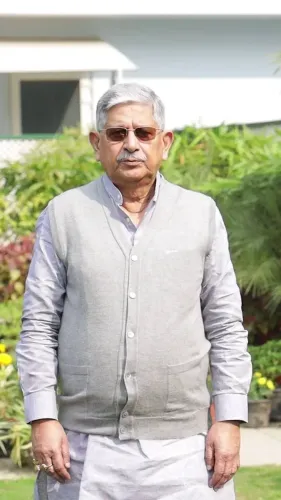
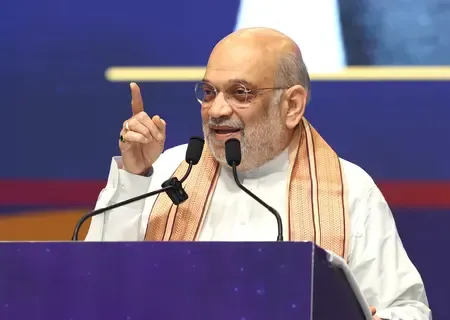
Union Home Minister Amit Shah said the Union Cabinet led by Prime Minister Narendra Modi has approved the 132nd Constitutional Amendment Bill. He framed it as the step that will realise 33 percent women's reservation in the Lok Sabha and assemblies under the Nari Shakti Vandan Adhiniyam, and urged every party to support the historic move.
Key Takeaways
Union Home Minister Amit Shah said the Union Cabinet approved the 132nd Constitutional Amendment Bill on Friday under Prime Minister Narendra Modi.
Shah said the step would realise 33 percent reservation for women in the Lok Sabha and state assemblies under the Nari Shakti Vandan Adhiniyam.
He argued one-third women in Vidhan Sabhas would make state and Union Territory schemes more inclusive.
He said women's presence in the Lok Sabha would add a new dimension to policy, law-making and national priorities.
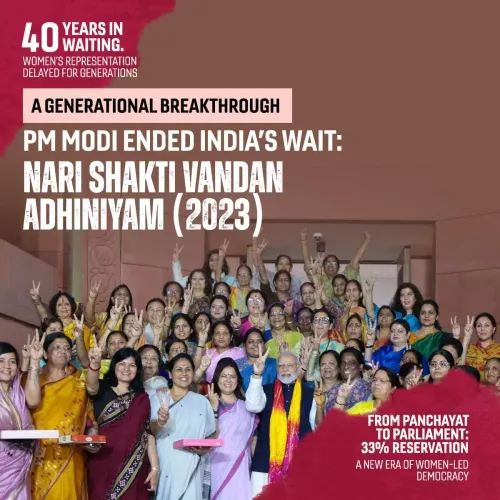
India first mandated 33 percent women's reservation in local bodies through the 73rd and 74th Amendments in 1992; a national bill was first introduced in 1996 and passed in 2023.
Shah appealed to all parties to support the initiative in Parliament.
Union Home Minister Amit Shah on Saturday said a decades-old wait of Indian women is about to end, after the Union Cabinet under Prime Minister Narendra Modi approved the 132nd Constitutional Amendment Bill a day earlier. He framed the decision as the moment the 33 percent reservation for women in the Lok Sabha and state assemblies — promised through the Nari Shakti Vandan Adhiniyam — would finally take shape in the Houses that write India's laws.
Posting in Hindi, Shah wrote that giving nari shakti (women's power) a strong share of representative politics has been the Modi government's resolve. 'With the approval given yesterday by the Union Cabinet under the leadership of Modi ji to the 132nd Constitutional Amendment Bill, the decades-old wait of the country's women is about to end,' he said.
He added that through the नारी शक्ति वंदन अधिनियम (Nari Shakti Vandan Adhiniyam), the 33 percent reservation already given to women in the Lok Sabha and Vidhan Sabhas 'will now be realised.' He urged every party to support what he called a historic initiative to make women strong partners in governance.
Shah's case for one-third women in every House
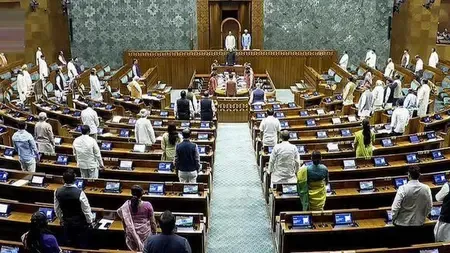
According to Shah, at least one-third participation of women in Vidhan Sabhas would make the schemes of states and Union Territories more inclusive. Their presence in the Lok Sabha, he said, would add a new dimension to policy-making, law-making and the setting of national priorities.
That is the political core of the Saturday message: reservation is not being sold as a symbolic seat-count. It is being sold as a change in who designs schemes, who drafts statutes, and who ranks what the country does first.
From 1992 panchayat seats to a parliamentary lock
India first wrote a one-third women's quota into the Constitution at the grassroots. The 73rd and 74th Constitutional Amendments of 1992 mandated 33 percent reservation for women in panchayats and municipalities.
Lifting that model to Parliament proved far harder. A Women's Reservation Bill was first introduced in the Lok Sabha in 1996 and lapsed again and again. The Rajya Sabha approved a version in 2010, but the Lok Sabha did not pass the measure until 2023, as the Nari Shakti Vandan Adhiniyam. That law left actual reserved constituencies tied to a census and a later delimitation — which is why 'enacted' and 'realised' have never been the same thing.
The gates still ahead: House vote, census, maps
Shah presented Cabinet clearance of the 132nd amendment as the instrument that turns the 2023 promise into seats. The next tests sit in Parliament and in the statistical machinery of the state: final passage, then the census-linked delimitation without which reserved constituencies cannot be drawn.
His closing appeal — that all parties back the initiative — is a bid to treat the Bill as unfinished national business rather than a partisan trophy. Successive governments since the mid-1990s have chased the same upward extension of the local-body quota. The argument Shah is forcing now is narrower and sharper: who will vote it through, and how fast the maps will follow.
Point of View
He is pushing women's reservation out of the census-and-delimitation waiting room and onto the political calendar. The all-party appeal is not incidental: this is a bill on which parties have long agreed in speeches and stalled in the fine print of seat rotation and sub-quotas. The sharp question now is whether Parliament treats the 132nd amendment as shared unfinished business or as another round of positional warfare before the next maps are drawn.
NationPress
28 Nov 2026
Frequently Asked Questions
What did Amit Shah say about the 132nd Constitutional Amendment Bill?
Union Home Minister Amit Shah said the Union Cabinet, under Prime Minister Narendra Modi, approved the 132nd Constitutional Amendment Bill on Friday. He described it as the step that would realise 33 percent reservation for women in the Lok Sabha and state assemblies.
What is the Nari Shakti Vandan Adhiniyam?
It is the legislation that provides 33 percent reservation for women in the Lok Sabha and state legislative assemblies. Parliament passed it in 2023 after a Women's Reservation Bill first introduced in 1996 had lapsed repeatedly.
When was women's reservation first introduced in Indian local bodies?
The 73rd and 74th Constitutional Amendments of 1992 mandated 33 percent reservation for women in panchayats and municipalities. That local-body model is the template later governments tried to extend to Parliament and state assemblies.
Will 33 percent women's reservation start immediately after Cabinet approval?
Cabinet approval is only the first executive step. The amendment still requires parliamentary passage, and earlier women's reservation law has been linked to a census and delimitation before reserved seats can be drawn.
Why is Amit Shah asking all parties to support the Bill?
Shah called the move a historic initiative to make women strong partners in governance. He appealed for all-party support so the 33 percent reservation can be realised in the Lok Sabha and Vidhan Sabhas.