Amit Shah Honours NIA Officers, Lays Foundation of Chandigarh Complex

Synopsis
Union Home Minister Amit Shah honoured seven NIA officers at the Anti-Terror Conference on November 19, 2026, laid the foundation stone of a new NIA office complex in Chandigarh, and inaugurated a residential complex in New Delhi — marking a significant push to strengthen India's federal counter-terrorism infrastructure.
Key Takeaways
Seven NIA officers and personnel were honoured for meritorious service at the Anti-Terror Conference on November 19, 2026 .
Union Home Minister Amit Shah laid the foundation stone of the NIA office complex in Chandigarh , extending the agency's footprint in the strategically critical northwest.
Shah also inaugurated a NIA residential complex in New Delhi , boosting welfare and retention of agency personnel.
The National Investigation Agency was established in December 2008 under the NIA Act as India's dedicated federal counter-terrorism body following the 26/11 Mumbai attacks.
The developments align with a consistent post-26/11 policy trajectory of expanding NIA's mandate, manpower, and physical infrastructure across India.
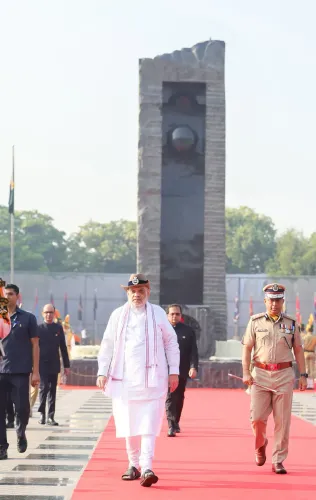
India's counter-terrorism architecture got a concrete upgrade on Thursday, November 19, 2026 — both literally and institutionally. Union Home Minister Amit Shah presided over the Anti-Terror Conference, where he honoured seven NIA officers and personnel for meritorious service, laid the foundation stone of a new NIA office complex in Chandigarh, and inaugurated a residential complex in New Delhi for agency personnel.
Seven honoured at the Anti-Terror Conference
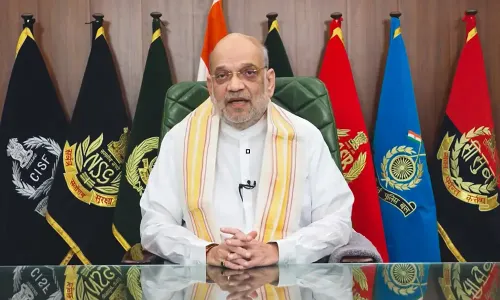
The Anti-Terror Conference served as the centrepiece of the day's events, bringing together the agency's leadership and field personnel. Seven officers and staff of the National Investigation Agency were recognised for exceptional service — a moment that Shah framed as a reflection of the agency's 'unwavering resolve and institutional strength in the fight against terrorism.' While the specific names of the honoured personnel could not be independently confirmed, the ceremony underscored the government's intent to publicly celebrate counter-terrorism work at the highest political level.
A foundation stone in Chandigarh, a new home in New Delhi
The twin infrastructure moves carry real operational weight. The foundation stone for the NIA office complex in Chandigarh plants a formal institutional footprint for the agency in the Union Territory — a strategic node given its proximity to Punjab and the broader northwestern security theatre. Meanwhile, the inauguration of the residential complex in New Delhi addresses a persistent challenge for federal agencies: keeping trained investigators close, motivated, and housed near their operational base. Dedicated housing is rarely headline-grabbing, but it is precisely the kind of investment that determines whether an elite agency retains its best people.
The NIA at 18: from 26/11 emergency to federal counter-terror pillar
The National Investigation Agency was born in crisis. Constituted in December 2008 under the NIA Act, it was India's direct legislative response to the 26/11 Mumbai attacks — an acknowledgment that terrorism had outgrown the capacity of state police forces acting alone. In the years since, the agency has steadily expanded its mandate, its bench of specialised prosecutors, and its network of branches across states. Today's announcements fit neatly into that arc: each new office, each piece of residential infrastructure, each layer of manpower is another brick in what the government has consistently described as a permanent federal counter-terrorism architecture — not a temporary crisis response.
What the Chandigarh complex signals going forward
The choice of Chandigarh as the site for a dedicated NIA complex is worth noting. The city is the shared capital of Punjab and Haryana and a key administrative hub for the northwest — a region that has historically been a focus of cross-border terror financing, smuggling, and organised crime networks. An NIA presence anchored there could sharpen inter-agency coordination with state forces and strengthen the pipeline for cases that originate in the region. The Anti-Terror Conference's deliberations on inter-state mechanisms — whatever form they take — will be worth tracking as follow-up decisions emerge.
The NIA was built to outlast emergencies. Every square foot of office space and every officer honoured is a signal that India intends to keep it that way.
Point of View
One in New Delhi — reflect a calculated effort by the Home Ministry to give the NIA both geographic reach and personnel depth, not just investigative authority on paper. Planting a formal complex in Chandigarh is strategically deliberate, signalling heightened federal attention to Punjab's security environment. The public felicitation of seven officers at a ministerially-chaired conference is also a morale-and-messaging play: it ties individual service to national security in a visible, state-endorsed frame. Together, these moves reinforce a consistent BJP-era governance theme — building durable institutional capacity in internal security rather than relying on ad hoc responses.
NationPress
19 Nov 2026
Frequently Asked Questions
What is the NIA and why was it created?
The National Investigation Agency is India's primary federal agency for investigating terrorism-related offences. It was established in December 2008 under the NIA Act, directly in response to the 26/11 Mumbai attacks, to give India a dedicated central body capable of handling major terror cases across state boundaries.
What happened at the Anti-Terror Conference on November 19, 2026?
Union Home Minister Amit Shah presided over the Anti-Terror Conference where seven NIA officers and personnel were honoured for meritorious service. He also laid the foundation stone of an NIA office complex in Chandigarh and inaugurated a residential complex for NIA personnel in New Delhi.
Why is an NIA office being set up in Chandigarh?
Chandigarh is the Union Territory that serves as the shared capital of Punjab and Haryana and is a key administrative hub in northwestern India — a region that has historically been a focus of cross-border terrorism, arms smuggling, and organised crime networks. An NIA presence there is expected to strengthen regional counter-terrorism coordination.
What is the significance of the NIA residential complex in New Delhi?
The residential complex inaugurated in New Delhi provides dedicated housing for NIA personnel posted in the capital, addressing a core welfare need for the agency's workforce and helping retain trained investigators close to their operational base.
How has the NIA grown since it was founded?
Since its creation in December 2008, the NIA has seen successive expansions in its mandate, specialised courts, branch network, and physical infrastructure as part of India's long-term post-26/11 counter-terrorism institutional response. The November 2026 announcements are the latest additions to that expanding footprint.