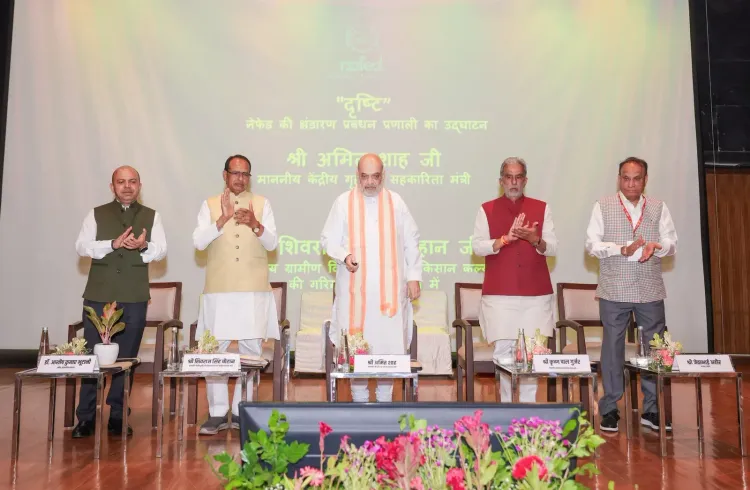
Amit Shah launches NAFED's Nafex.in, DRISHTI portals to cut farm middlemen
Synopsis
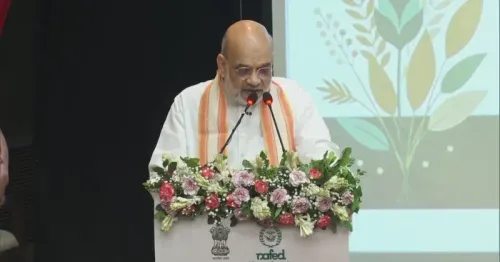
Union Home Minister Amit Shah launched NAFED's Nafex.in commodity exchange, DRISHTI ERP portal, and Kalyan scholarship scheme in New Delhi on 23 June 2026, aiming to digitise farm-to-bank transactions, eliminate middlemen, achieve pulses self-sufficiency, and support farmers' children in higher education.
Key Takeaways
Nafex.in , NAFED's online agricultural commodity trading platform, was formally launched by Union Home Minister Amit Shah in New Delhi on 23 June 2026 .
The DRISHTI ERP portal was simultaneously launched to digitise NAFED's internal supply-chain management and operational processes.
The launches aim to eliminate middlemen and route payments directly into farmers' bank accounts , improving price realisation for agricultural produce.
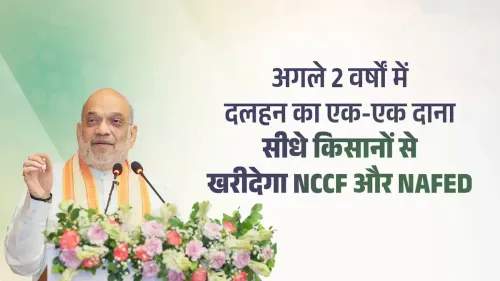
Achieving pulses self-sufficiency under the Atmanirbhar Bharat framework was cited as a key goal of the new digital platforms.
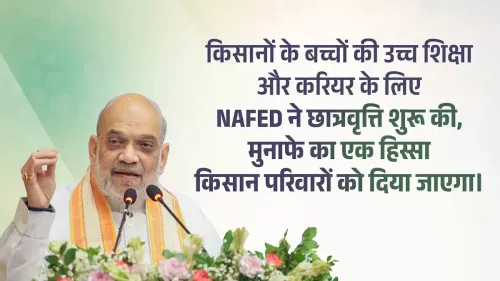
NAFED's 'Kalyan' scheme was inaugurated with on-the-spot scholarship distribution to children of farmers for higher education and career support.
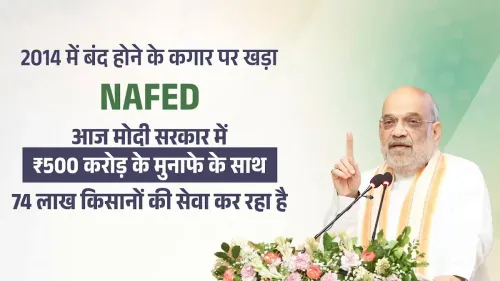
NAFED , established in 1958 , is the apex cooperative body for agricultural marketing in India and the implementing agency for all three initiatives.
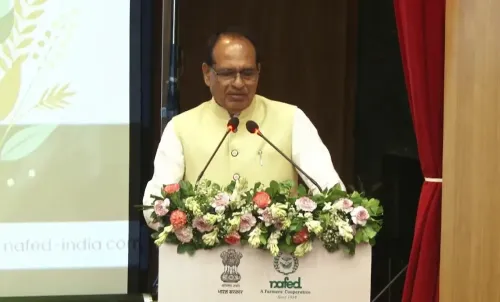
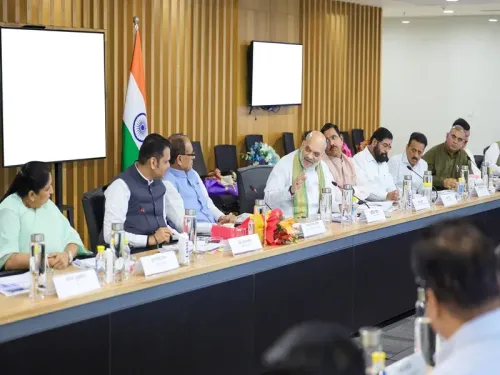
Union Home Minister Amit Shah on Tuesday, 23 June 2026, launched three major initiatives at an event in New Delhi: NAFED's online commodity trading platform Nafex.in, the DRISHTI ERP portal for supply-chain digitisation, and the 'Kalyan' scholarship scheme for children of farmers — marking a significant push to bring cooperative agricultural marketing into the digital age.
Context
Posting on X, Shah wrote — 'Khet se lekar kisan ke khate tak ki poori prakriya ko digital banana' ('digitising the entire process from the farm to the farmer's bank account') — framing the launches as a direct assault on middlemen who have historically captured a large share of agricultural profits. The three initiatives together target price realisation, internal efficiency, and the welfare of farming families.
NAFED, the National Agricultural Cooperative Marketing Federation of India, was established in 1958 as the apex body for cooperative marketing of farm produce. It procures, processes, and markets a wide range of commodities, with a particular focus on pulses and oilseeds, making it a central institution in India's food-security architecture.
Policy Backdrop
The launches sit squarely within the Digital India and Atmanirbhar Bharat policy frameworks. India has long struggled with import dependence on pulses; the National Food Security Mission, launched in 2007, included a dedicated pulses component to address this gap. Shah specifically highlighted pulses self-sufficiency as a goal the new portals will advance, echoing a priority that has run through successive agricultural policies.
The push to eliminate middlemen mirrors the intent behind the e-NAM electronic trading portal, launched in 2016, and the Model Agricultural Produce and Livestock Marketing Act circulated in 2017, both of which sought to enable direct farmer-to-buyer transactions. DRISHTI, as NAFED's internal ERP system, is designed to digitise supply-chain management across the cooperative's operations, while Nafex.in provides an online exchange platform for agricultural commodities.
The integration of Farmer Producer Organisations (FPOs) with digital platforms has been a parallel track in recent years, and the Nafex.in launch extends that logic to NAFED's own network of cooperative societies and farmer members.
Stakeholders and Impact
Pulse growers and members of cooperative societies stand to gain most directly. By routing transactions through Nafex.in, NAFED aims to ensure that price discovery happens transparently and that payments flow directly into farmers' bank accounts — eliminating the layers of commission agents and aggregators that have traditionally reduced farm-gate earnings.
The 'Kalyan' scheme addresses a separate but related concern: the welfare of farming households beyond the farm gate. Under the scheme, scholarships were distributed to children of farmers for higher education and career development at the launch event itself, signalling an intent to provide immediate, tangible benefit rather than a deferred rollout. The scheme represents a welfare dimension that complements the market-access focus of Nafex.in and DRISHTI.
Cooperative societies affiliated with NAFED across states will be key implementation partners. Their onboarding onto the new digital platforms will determine how quickly the benefits reach the grassroots level.
What's Next
Attention will now turn to state-level adoption: how rapidly cooperative societies and mandi networks integrate with Nafex.in and whether DRISHTI's ERP rollout achieves seamless linkage with existing state agricultural marketing infrastructure. Any convergence with the established e-NAM network could significantly amplify the reach of both platforms.
The disbursement data from the Kalyan scheme — including beneficiary numbers and scholarship amounts — will be a key metric to watch as the programme scales. Together, these initiatives position NAFED as a more technologically capable institution at a time when the government's broader agricultural reform agenda continues to evolve.
Point of View
Not merely an administrative reshuffle. The bundling of market-access tools (Nafex.in, DRISHTI) with a welfare component (Kalyan scholarships) is a deliberate political design: it allows the government to speak simultaneously to farmers' incomes and their aspirations for the next generation. The pulses self-sufficiency angle also feeds a long-running narrative around reducing import bills and achieving food security, giving the launch a national-interest framing beyond cooperative management. How quickly state-level cooperatives onboard will be the real test of whether this remains a launch-day headline or translates into measurable income gains for farmers.
NationPress
23 Jun 2026
Frequently Asked Questions
What is Nafex.in and what does it do?
Nafex.in is NAFED's online platform for trading and exchange of agricultural commodities, designed to connect farmers and cooperatives directly with buyers and improve price realisation by reducing middlemen.
What is the DRISHTI ERP portal launched by NAFED?
DRISHTI is an Enterprise Resource Planning portal launched by NAFED to digitise its internal supply-chain management and operational processes, enabling end-to-end tracking of agricultural produce from farm to final sale.
What is NAFED's Kalyan scheme?
The Kalyan scheme is a NAFED welfare initiative that provides scholarships and career support to children of farmers for higher education. It was formally inaugurated on 23 June 2026 with on-the-spot scholarship distribution.
Why did Amit Shah launch NAFED portals?
As Union Home Minister and Minister of Cooperation, Amit Shah oversees NAFED. He launched the portals to advance the government's goals of digitising farm-to-bank transactions, eliminating middlemen, and achieving pulses self-sufficiency under Atmanirbhar Bharat.
How will NAFED's new portals help farmers earn more?
By routing commodity transactions through Nafex.in and digitising procurement through DRISHTI, NAFED aims to ensure transparent price discovery and direct payment into farmers' bank accounts, cutting out commission agents who traditionally reduce farm-gate earnings.