DICV joins Delhi-NCR old truck replacement scheme with 8% discount deal
Synopsis
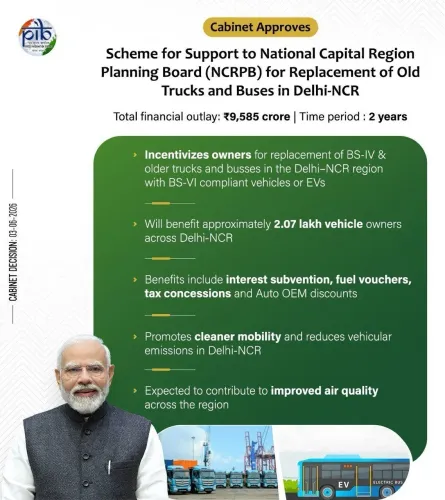
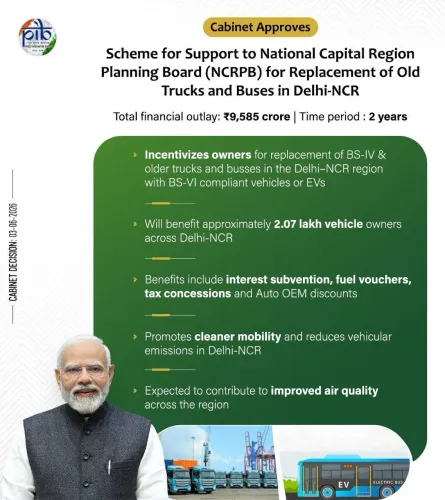
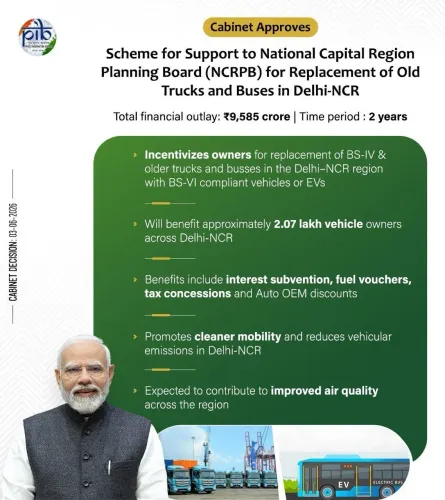
With DICV (BharatBenz) now on board, manufacturers covering 85 per cent of India's truck and bus market have signed up for the Centre's Delhi-NCR fleet replacement scheme. The incentive stack — OEM discounts, interest subvention, fuel vouchers, and a decade-long tax holiday — is designed to make scrapping old commercial vehicles a financial no-brainer, not just a regulatory obligation.
Key Takeaways
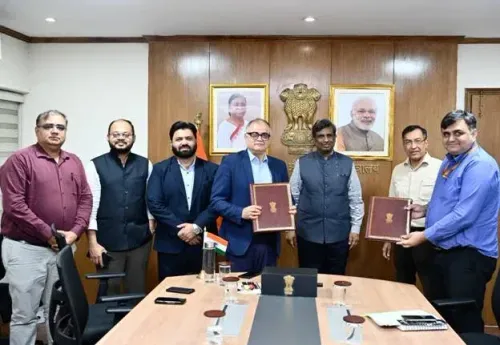
The Centre signed an MoU with Daimler India Commercial Vehicles (DICV) on 23 June for the Delhi-NCR old truck and bus replacement scheme.
DICV will offer an 8 per cent discount on ex-showroom prices of eligible commercial vehicles; EV discounts capped at ICE-equivalent levels.
The Central government will provide 5 per cent interest subvention and monthly fuel vouchers for five years .
State governments will offer up to 100 per cent motor vehicle tax concession for ten years and waiver of registration fees.
Earlier signatories — Ashok Leyland, Switch Mobility, Tata Motors, Mahindra and Mahindra, SML Isuzu — together with DICV now represent 85 per cent of the trucks and buses market.
Minister Nitin Gadkari has projected India's logistics cost will fall to 9 per cent of GDP on the back of ongoing road infrastructure development.
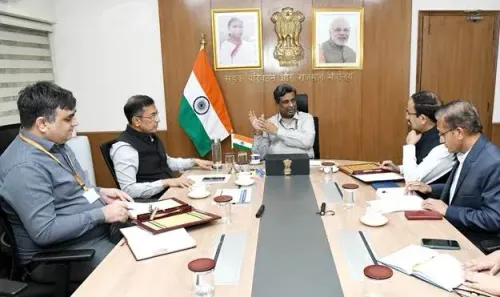
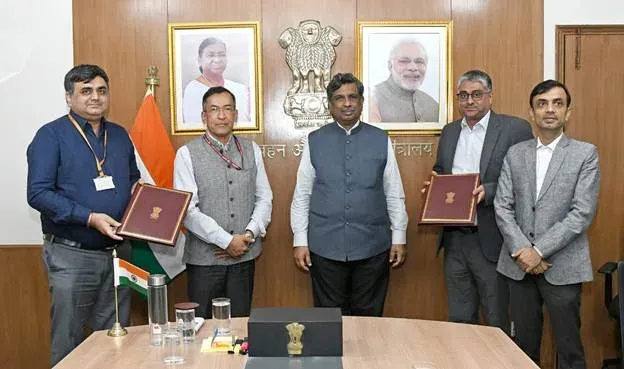
The Centre on Tuesday, 23 June signed a Memorandum of Understanding (MoU) with Daimler India Commercial Vehicles (DICV), the maker of BharatBenz trucks and buses, to implement its scheme for replacing ageing commercial vehicles in the Delhi-NCR region, according to an official statement from the Ministry of Road Transport and Highways.
Key Terms of the Agreement
Under the MoU, DICV will offer an 8 per cent discount on the ex-showroom price of eligible trucks and buses purchased under the scheme. For electric vehicles (EVs), the discount will be capped at the level applicable to an equivalent Internal Combustion Engine (ICE) vehicle of the same Gross Vehicle Weight (GVW) category, the ministry said.
Beyond the OEM discount, the Central government will provide a 5 per cent interest subvention and fixed monthly fuel vouchers for a period of five years. Participating state governments, in turn, will offer up to 100 per cent concession on motor vehicle tax for ten years and a full waiver of registration fees for eligible beneficiaries.
Growing Industry Participation
The addition of DICV follows earlier MoU signings by Ashok Leyland, Switch Mobility, Tata Motors, Mahindra and Mahindra, and SML Isuzu. Together, these manufacturers hold a combined market share of approximately 85 per cent in the trucks and buses segment, giving the scheme substantial reach across the commercial vehicle ecosystem.
Policy Context and Push for Cleaner Logistics
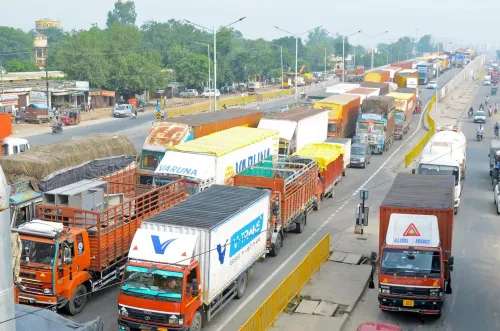
The scheme sits within a broader government push to modernise India's ageing commercial vehicle fleet and cut urban pollution, particularly in Delhi-NCR, one of the country's most congested and polluted corridors. Union Minister of Road Transport and Highways Nitin Gadkari had in April projected that India's logistics cost would fall to 9 per cent of GDP at the current pace of road infrastructure development.
Minister Gadkari has also consistently urged industry to adopt electric trucks for freight movement between factories and ports, underscoring the government's intent to use fleet renewal as a lever for both decarbonisation and logistics efficiency.
What This Means for Fleet Owners
For truck and bus operators in Delhi-NCR, the combined incentive package — OEM discounts, interest subvention, fuel vouchers, and tax concessions — significantly lowers the effective cost of switching to a newer or cleaner vehicle. The scheme is designed to make voluntary scrapping economically attractive rather than purely regulatory. With manufacturers covering 85 per cent of the market now on board, access to eligible models is expected to be wide. Further OEM additions are possible as the programme scales.
Point of View
But its real test will be uptake among small fleet operators — the backbone of India's road freight sector — who face capital constraints that discounts and subventions alone may not fully offset. With 85 per cent of the market now signed up, supply-side access is no longer the bottleneck; demand-side financing and awareness are. The push toward electric trucks is also notable: capping EV discounts at ICE-equivalent levels avoids distorting the market, but it does little to accelerate the EV transition in a segment where total cost of ownership remains a hard sell. The logistics cost target of 9 per cent of GDP is ambitious — India currently sits closer to 13-14 per cent — and fleet modernisation alone will not close that gap without parallel improvements in multimodal infrastructure.
NationPress
23 Jun 2026
Frequently Asked Questions
What is the Delhi-NCR old truck and bus replacement scheme?
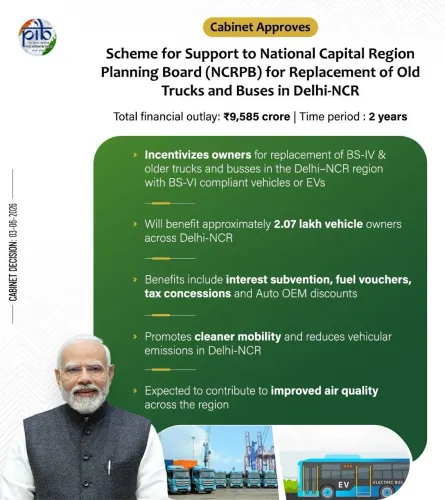
It is a Central government initiative to phase out ageing commercial vehicles in the Delhi-NCR region by offering a package of financial incentives — including OEM discounts, interest subvention, fuel vouchers, and state-level tax concessions — to encourage fleet owners to replace old trucks and buses with newer or cleaner models.
What discount will DICV (BharatBenz) offer under the scheme?
DICV will provide an 8 per cent discount on the ex-showroom price of eligible trucks and buses. For electric vehicles, the discount is capped at the level applicable to an equivalent ICE vehicle of the same Gross Vehicle Weight category.
What other incentives does the scheme offer beyond the OEM discount?
The Central government will provide a 5 per cent interest subvention and fixed monthly fuel vouchers for five years. Participating state governments will offer up to 100 per cent concession on motor vehicle tax for ten years and a full waiver of registration fees for eligible beneficiaries.
Which manufacturers have signed MoUs for the scheme so far?
As of 23 June, the signatories include DICV (BharatBenz), Ashok Leyland, Switch Mobility, Tata Motors, Mahindra and Mahindra, and SML Isuzu. Together they hold approximately 85 per cent of the trucks and buses market in India.
Why is the government pushing for replacement of old trucks in Delhi-NCR?
Old commercial vehicles are a significant source of air pollution and logistics inefficiency in Delhi-NCR. The scheme aims to modernise the fleet, reduce emissions, and support the government's broader goal of cutting India's logistics cost to 9 per cent of GDP, as projected by Minister Nitin Gadkari.