Amit Shah unveils e-Forensics 2.0 to link labs, courts
Synopsis
Union Home Minister Amit Shah announced e-Forensics 2.0 on 21 June 2026, a digital platform connecting forensic laboratories, investigating agencies, and courts for real-time evidence sharing. It enables secure inter-lab transfers and digital case tracking, advancing the forensic mandate embedded in the Bharatiya Nagarik Suraksha Sanhita, 2023.
Key Takeaways
e-Forensics 2.0 will function as a digital bridge connecting forensic laboratories, investigating agencies, and courts in real time.
The platform enables secure inter-lab case transfers , digital tracking, and live case monitoring to cut prosecution delays.
It builds on the Bharatiya Nagarik Suraksha Sanhita, 2023 , which made forensic investigation mandatory for serious offences from July 2024 .
The Ministry of Home Affairs is integrating the platform within the broader CCTNS and National Crime Records Bureau digital ecosystem.
Successful state-level integration and staff training will be key to reducing India's chronic forensic-report backlog and trial pendency.
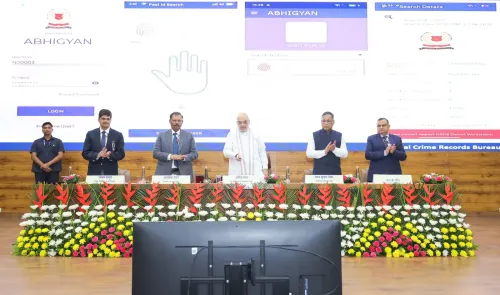
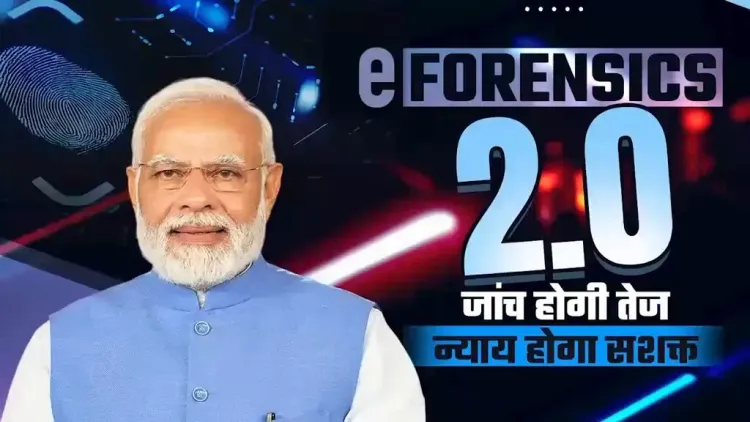
Union Home Minister Amit Shah on Sunday, 21 June 2026 announced e-Forensics 2.0, a digital platform designed to connect forensic laboratories, investigating agencies, and courts in real time, promising faster and more reliable delivery of justice across India.
Context
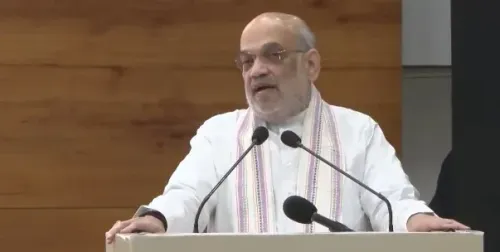
Describing the platform in his post, Shah said e-Forensics 2.0 'will serve as a robust digital bridge between forensic laboratories, investigating agencies, and courts.' He added that it 'will facilitate the real-time use of scientific evidence in investigations by ensuring real-time flow of information.' The announcement underlines the Ministry of Home Affairs (MHA) drive to reduce delays at every link of the prosecution chain.
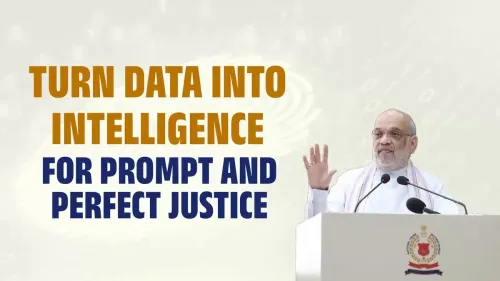
The platform is designed to enable 'secure inter-lab case transfers, digital tracking, and case monitoring,' according to Shah, with the stated aim of achieving 'prompt and perfect delivery of justice.' A video accompanying the post elaborated on the application's features.
Policy Backdrop
The launch builds directly on the Bharatiya Nagarik Suraksha Sanhita, 2023, which came into effect in July 2024 and introduced mandatory forensic investigation provisions for serious offences — a first in India's criminal justice framework. The legislative change created an urgent operational need: forensic laboratories, police agencies, and courts required a unified digital channel to exchange scientific evidence without paper-based delays.
The Ministry of Home Affairs has been progressively linking criminal justice infrastructure through platforms connected to the National Crime Records Bureau and state police networks under the Crime and Criminal Tracking Network and Systems (CCTNS) initiative. e-Forensics 2.0 is positioned as the next layer in that architecture, focused specifically on the evidentiary pipeline from crime scene to courtroom.
Stakeholders and Impact
Forensic Science Laboratories at both the central and state levels stand to benefit from the inter-lab case-transfer feature, which is expected to reduce the bottleneck that occurs when samples must move between specialised units. Investigating officers will gain digital tracking tools that provide live visibility into the status of forensic reports, addressing a longstanding complaint from police agencies about opaque timelines.
For the judiciary, real-time availability of forensically verified evidence could shorten the gap between charge-sheet filing and trial commencement. Legal experts and prosecutors have long identified delayed forensic reports as a primary driver of case pendency in India's courts, making the platform's success consequential for the broader criminal justice backlog.
What's Next
The critical test will be state-level integration: whether e-Forensics 2.0 can be seamlessly linked to existing CCTNS networks across all states and union territories. Training modules for forensic staff, investigating officers, and public prosecutors will be essential to ensure the platform is used to its full potential rather than running parallel to legacy paper processes.
The Ministry of Home Affairs is expected to outline a rollout roadmap, including onboarding timelines for state forensic labs and interoperability standards, as the platform moves from announcement to operational deployment. The pace of adoption will determine whether the Bharatiya Nagarik Suraksha Sanhita's forensic mandate translates into measurable reductions in trial pendency.
Point of View
' Shah is signalling that the MHA views the evidentiary pipeline — not just policing — as central to criminal justice reform. The real political and administrative test, however, lies in state adoption: forensic infrastructure is a concurrent subject, and several states lag significantly in laboratory capacity and digital readiness. Whether e-Forensics 2.0 becomes a transformative tool or a well-designed portal with patchy uptake will depend on how aggressively the Centre ties funding incentives to integration milestones.
NationPress
21 Jun 2026
Frequently Asked Questions
What is e-Forensics 2.0?
e-Forensics 2.0 is a digital platform announced by Union Home Minister Amit Shah on 21 June 2026 that connects forensic laboratories, investigating agencies, and courts to enable real-time sharing of scientific evidence, secure inter-lab case transfers, and digital case monitoring.
Why is e-Forensics 2.0 being launched?
The platform addresses chronic delays in forensic report delivery that slow criminal trials in India . It also fulfils the operational requirement created by the Bharatiya Nagarik Suraksha Sanhita, 2023 , which made forensic investigation mandatory for serious offences from July 2024 .
How does e-Forensics 2.0 help courts?
By making forensically verified evidence available in real time, e-Forensics 2.0 aims to shorten the gap between charge-sheet filing and trial commencement, directly addressing one of the main drivers of case pendency in India's courts.
Which ministry is behind e-Forensics 2.0?
The Ministry of Home Affairs , led by Union Home Minister Amit Shah , is the nodal ministry. The platform is part of the MHA's broader push to digitise criminal justice workflows through networks linked to the National Crime Records Bureau .
What happens next after the e-Forensics 2.0 announcement?
The key next steps are state-level integration with existing CCTNS networks, onboarding of central and state Forensic Science Laboratories , and training programmes for forensic staff, investigators, and prosecutors to ensure effective adoption.