Assam UCC Bill: BJP MLA Bimal Bora backs 'historic' legislation for social justice

Synopsis
Assam's BJP government is pushing its Uniform Civil Code Bill through the state Assembly, with senior legislator Bimal Bora invoking Article 44, judicial rulings on gender equality, and India's civilisational unity to make the case. The move follows Uttarakhand's UCC enactment and signals a broader BJP strategy to advance 'One Nation, One Law' at the state level.
Key Takeaways
BJP MLA Bimal Bora backed the Uniform Civil Code (UCC) Bill in the Assam Assembly on 27 May 2025 .
Bora cited Article 44 of the Directive Principles, arguing the UCC was part of the Constitution's original vision.
He said the Bill is aimed specifically at securing dignity and justice for women across all communities.
Chief Minister Himanta Biswa Sarma was credited with fulfilling a party promise of tabling the legislation.
The Assam move follows Uttarakhand , which enacted India's first state-level UCC in 2024.
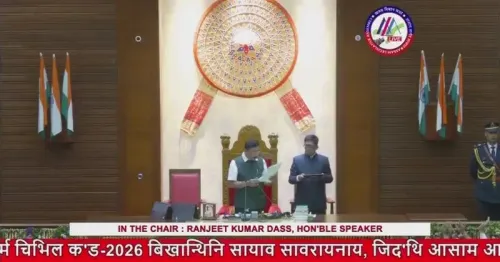
Bharatiya Janata Party (BJP) legislator Bimal Bora on Wednesday, 27 May made a strong case for the proposed Uniform Civil Code (UCC) Bill in the Assam Assembly, calling it a landmark move to advance social justice, gender equality, and constitutional values in the state. Bora's remarks came during the Assembly's ongoing session dedicated to discussions on the Bill.
What Bora Said in the Assembly
Speaking during the legislative debate, Bora argued that the UCC Bill was not simply a legal instrument but a reflection of India's civilisational commitment to unity. 'This Bill is not just a legal framework. It reflects India's cultural unity, social justice, and constitutional consciousness,' he said on the floor of the House.
He invoked the country's diversity — from Kashmir to Kanyakumari and from the North East to other regions — to argue that despite differences in language, customs, and traditions, a shared national spirit makes a uniform civil framework both possible and necessary. 'India is a nation of unity in diversity. Languages, traditions, and customs may differ, but our spirit remains one,' he added.
Constitutional Grounding: Article 44
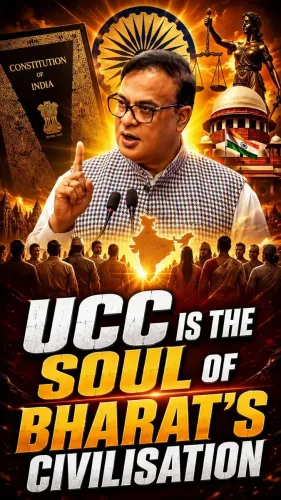
Bora rooted his argument in Article 44 of the Directive Principles of State Policy, which directs the state to endeavour to secure a uniform civil code for citizens. He contended that the UCC was never a sudden or partisan idea but was embedded in the original vision of the Constitution's framers. 'The idea of the Uniform Civil Code is not sudden or arbitrary. It was part of the vision of the framers of the Constitution,' he said.
He also cited judicial observations and court rulings on gender equality and personal laws, arguing that certain existing legal provisions have perpetuated inequality — particularly against women across communities.
Focus on Women's Rights and Family Stability
According to Bora, the proposed legislation is specifically aimed at securing dignity and justice for women belonging to all communities, cutting across religious lines. He highlighted Assam's diverse social fabric and asserted that marriage and family traditions remain central pillars of society, with the UCC designed to reinforce social responsibility and stability within families.
Bora also credited Chief Minister Himanta Biswa Sarma for fulfilling what he described as a long-standing promise of tabling the legislation, framing it as the BJP's ideological commitment to the principle of 'One Nation, One Law'.
Political and Legislative Context
The Assam UCC Bill is part of a broader national conversation that gained momentum after Uttarakhand became the first state to enact a UCC in 2024. The Assam Assembly debate signals the BJP's intent to push the legislation through at the state level, building political and social consensus before a formal vote. Critics and opposition legislators are expected to raise concerns over the Bill's implications for tribal communities and religious minorities, though those arguments were not detailed in Wednesday's proceedings. The outcome of the Assam debate could influence how other BJP-governed states approach the UCC question in the months ahead.
Point of View
The BJP is attempting to shift the UCC from a communally charged proposal to a women's rights and constitutional reform narrative — a reframing that is strategically significant. What the debate has not yet addressed is the Bill's specific provisions for Assam's scheduled tribes and indigenous communities, who have historically been exempted from such codes. That gap is where the real legislative and constitutional contest will play out. The broader pattern is clear: after Uttarakhand's enactment, BJP-governed states are building a piecemeal UCC architecture ahead of any central legislation.
NationPress
10 Oct 2026
Frequently Asked Questions
What is the Assam Uniform Civil Code Bill?
The Assam Uniform Civil Code Bill is a proposed state legislation aimed at establishing a common set of civil laws — covering marriage, divorce, inheritance, and adoption — for all citizens of Assam, irrespective of religion. It is being debated in the Assam Assembly and is backed by the BJP government under Chief Minister Himanta Biswa Sarma.
Why is BJP MLA Bimal Bora supporting the UCC Bill?
Bora argues that the UCC upholds constitutional values enshrined in Article 44, promotes gender equality, and ensures equal rights for women across all communities. He also frames it as part of the BJP's 'One Nation, One Law' ideological commitment.
What is Article 44 and why is it relevant to the UCC?
Article 44 is a Directive Principle of State Policy that directs the state to endeavour to secure a uniform civil code for all citizens across India. It is the primary constitutional basis cited by UCC proponents, though Directive Principles are not enforceable in court unlike Fundamental Rights.
Which state enacted India's first UCC?
Uttarakhand became the first state in India to enact a Uniform Civil Code, doing so in 2024. Assam's current legislative debate is seen as part of a broader BJP effort to replicate that move in other states.
Who could be affected by the Assam UCC Bill?
The Bill, if passed, would apply to all residents of Assam across religious communities. However, its application to scheduled tribes and indigenous communities — who have distinct customary laws — remains a key point of contention that is expected to be debated further in the Assembly.