Assam CM Office flags JJM 2.0 upgrade for smarter water governance
Synopsis
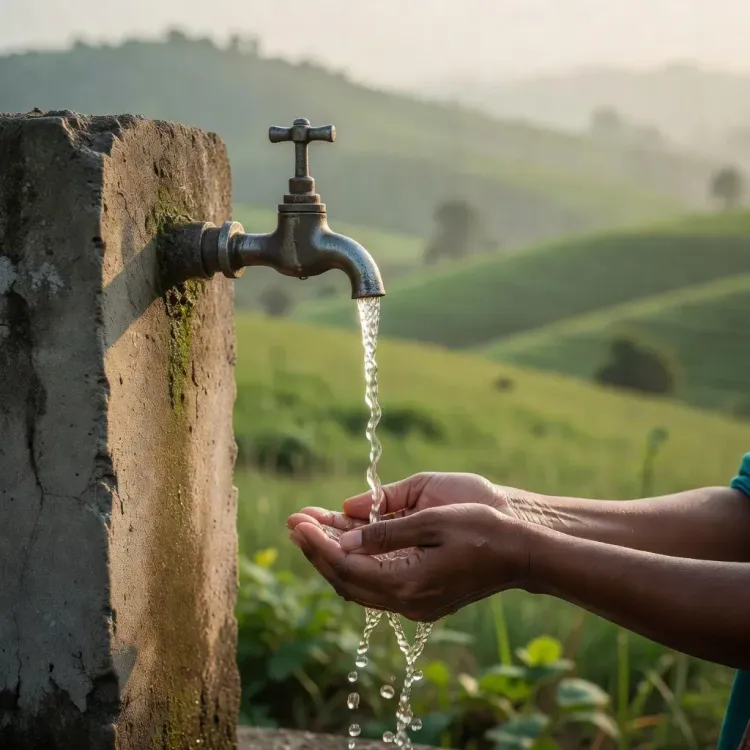
The Chief Minister's Office of Assam announced JJM 2.0 on October 13, 2026, highlighting real-time monitoring and faster grievance redressal as the state upgrades its Jal Jeevan Mission water delivery framework for rural households.
Key Takeaways
The Chief Minister's Office of Assam announced JJM 2.0 on October 13, 2026 , framing it as a smarter, more efficient water governance upgrade.
Real-time monitoring and quicker grievance redressal are the two headline features of the upgraded mission.
The original Jal Jeevan Mission was launched by the Central government in 2019 to provide tap water to all rural households, with a 2024 completion target.
Assam's dispersed and flood-prone rural geography makes it one of the more complex states to achieve universal rural tap coverage. @JJM_Assam is the state implementation unit responsible for district-level execution of the mission.
The rollout's credibility will depend on verifiable metrics: dashboard coverage, grievance closure timelines, and functional connection rates.
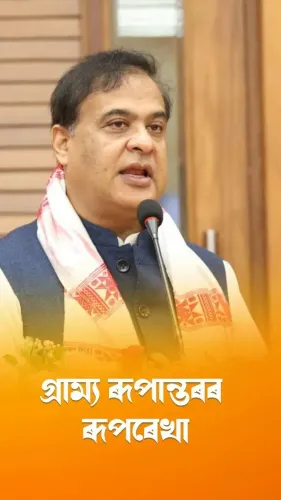
Real-time monitoring dashboards and faster grievance redressal — Assam is pushing its rural water delivery system into a new technological gear. The Chief Minister's Office of Assam announced on Tuesday, October 13, 2026, that JJM 2.0 is now shaping a 'connected, accountable and future-ready' water management framework across the state.
What JJM 2.0 promises Assam's rural households
The post from @CMOfficeAssam frames the upgrade in three concrete terms: real-time monitoring, quicker grievance redressal, and a system built for accountability. The phrase 'smarter, more efficient water governance' signals a deliberate pivot from the original mission's infrastructure-first approach toward a technology-enabled delivery model. Jal Jeevan Mission, launched by the Central government in 2019, set out to provide functional household tap connections to every rural home in India — a target originally pegged for 2024. Assam, with its large and dispersed rural population across plains, hills, and flood-prone zones, has been among the more complex states to cover under the scheme.The digital layer being added to water delivery
The 'JJM 2.0' framing aligns with a visible national trend: large welfare schemes progressively acquiring digital monitoring layers to close the gap between infrastructure built and services actually delivered. Real-time dashboards can flag broken pipelines, dry taps, or billing anomalies the moment they surface — rather than weeks later when a written complaint winds through district offices. Grievance redressal has historically been the weakest link in rural utility schemes. A faster, digitally tracked redressal loop means a household in a remote Assam district can log a complaint and hold the system accountable — on paper at least — to a measurable response time. @JJM_Assam, the state implementation unit, is the operational arm translating these commitments into district-level action.What the rollout data will need to show
The announcement is directionally clear, but the proof will sit in the metrics: how many villages are live on real-time dashboards, what the average grievance closure time falls to, and whether last-mile connections in flood-affected districts stay functional year-round. Those numbers — when they arrive — will tell the real story of whether JJM 2.0 is a meaningful upgrade or a rebranding exercise. For the millions of rural families in Assam who have waited years for a reliable tap, the technology behind the pipe matters less than the water actually flowing through it.Point of View
A state where seasonal flooding routinely damages rural infrastructure, a real-time monitoring layer is not merely a tech flourish but a potential operational necessity. The emphasis on accountability and grievance redressal also reflects pressure from the ground: rural beneficiaries who have tap connections on paper but no water in practice represent a growing credibility risk for the scheme. Whether JJM 2.0 delivers a measurable service improvement or remains a communications upgrade will hinge entirely on the district-level rollout data that follows.
NationPress
13 Oct 2026
Frequently Asked Questions
What is JJM 2.0 in Assam?
JJM 2.0 is the upgraded phase of the Jal Jeevan Mission being implemented in Assam, focused on real-time water supply monitoring, faster grievance redressal, and building a more accountable and technology-enabled water governance system for rural households.
What is the Jal Jeevan Mission and when was it launched?
The Jal Jeevan Mission was launched by the Central government in 2019 with the goal of providing functional household tap connections for potable water to every rural household in India, with an original completion target of 2024.
What does real-time monitoring mean for rural water supply in Assam?
Real-time monitoring means digital dashboards can instantly track whether water supply infrastructure is functioning, flag outages or failures as they happen, and allow officials to respond faster — reducing the time rural households go without water.
Who is responsible for implementing JJM in Assam?
JJM Assam, operating under the handle @JJM_Assam, is the state-level implementation unit responsible for executing the Jal Jeevan Mission across Assam's districts.
How does JJM 2.0 help with water grievance redressal in Assam?
JJM 2.0 aims to make the grievance redressal process quicker and more accountable, allowing rural households to log complaints through a digitally tracked system so that response times can be measured and monitored.