CM Assam Office Flags NFHS-6 Social Gains in State

Synopsis
The Chief Minister's Office of Assam amplified NFHS-6 findings on 31 May 2026, signalling social gains for the state in India's flagship demographic health survey. The data covers key indicators including maternal health, child nutrition, and immunisation, offering third-party validation of Assam's post-2021 health-sector push.
Key Takeaways
The Chief Minister's Office of Assam shared coverage of NFHS-6 findings on 31 May 2026 , highlighting social gains for the state.
NFHS-6 is the sixth round of India's National Family Health Survey , run by the Ministry of Health and Family Welfare .
The survey tracks indicators including child nutrition, maternal health, immunisation, and anaemia prevalence.
NFHS-5 (2019–21) had already recorded improvements in institutional deliveries and immunisation across northeastern states including Assam.
Primary beneficiaries of improved NFHS indicators are women and children in the state.
Complete NFHS-6 state fact sheets and district-level data are awaited for deeper policy analysis.
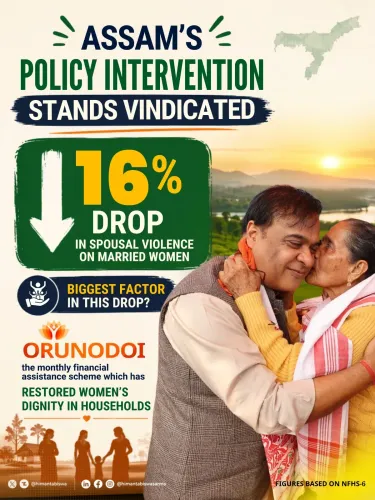
The Chief Minister's Office of Assam on Sunday, 31 May 2026 shared coverage highlighting social gains recorded for Assam in the Sixth National Family Health Survey (NFHS-6), drawing attention to the state's improving human-development indicators as measured by the latest round of India's flagship demographic health survey.
Context
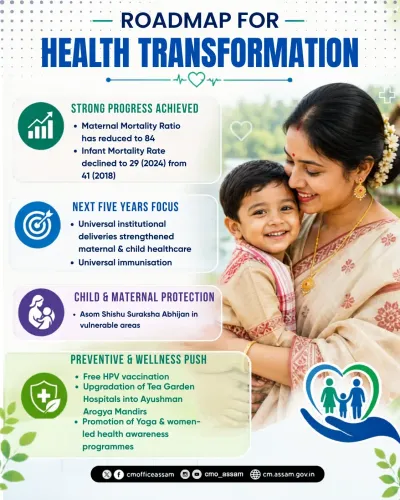
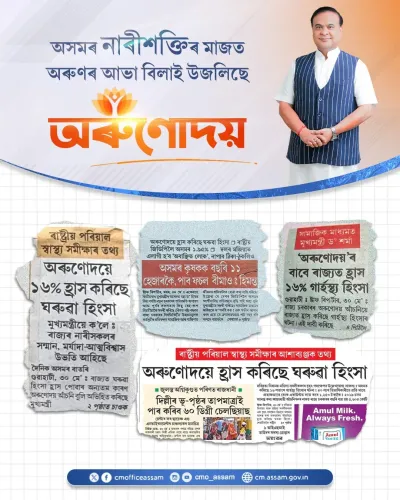
The National Family Health Survey is India's most comprehensive periodic health and demographic assessment, commissioned by the Ministry of Health and Family Welfare. It tracks a wide range of indicators including child nutrition, maternal health, immunisation coverage, anaemia prevalence, and institutional delivery rates. The Chief Minister's Office shared the report under the headline 'NFHS-6 signals social gains in Assam', framing the data as evidence of measurable progress in the state's social sector.
Assam, a northeastern state that has historically lagged on several human-development metrics, has in recent years positioned health-survey outcomes as a barometer of governance performance. The CMO's decision to amplify the NFHS-6 findings reflects a broader state-level communication strategy of anchoring policy claims in nationally credible data.
Policy Backdrop
The previous round, NFHS-5 (2019–21), had already recorded notable improvements for several northeastern states, including gains in institutional deliveries, child immunisation, and reductions in anaemia among women and children. Those findings had been cited by the Assam government to support its post-2021 push on health infrastructure and women's welfare programmes.
NFHS-6 represents the next data point in that trajectory. State governments across India routinely issue statements on NFHS releases to highlight improvements in human-development metrics, and Assam's CMO following that pattern signals confidence that the new round continues or extends the gains recorded in NFHS-5. The survey is the primary instrument through which the Ministry of Health and Family Welfare monitors progress toward national health goals, including targets linked to Poshan Abhiyaan and the National Health Mission.
Stakeholders and Impact
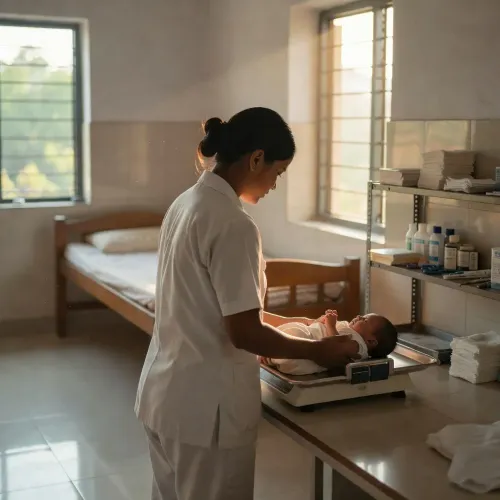
The primary beneficiaries reflected in NFHS data are women and children — the two groups whose health, nutrition, and welfare outcomes the survey most closely tracks. Improvements in indicators such as anaemia rates, stunting, wasting, and institutional delivery rates translate directly into assessments of the state's public health delivery system.
For Assam's administration, favourable NFHS-6 findings carry both policy and political weight. They serve as independent, third-party validation of government programmes targeting maternal and child health, lending credibility to claims of social-sector progress that would otherwise rest on state-generated data alone. Civil society organisations and health advocates in the Northeast are also likely to scrutinise the full state fact sheets once officially published, looking for district-level disaggregation that can inform targeted interventions.
What's Next
The immediate next step is the publication of complete NFHS-6 state fact sheets by the Ministry of Health and Family Welfare, which will allow researchers, policymakers, and civil society to examine district-level data and sub-group breakdowns beyond the headline figures. Any follow-up state action plans on nutrition or maternal health — informed by the new survey round — will be closely watched as a test of whether Assam translates survey gains into programmatic commitments.
If the NFHS-6 data confirms sustained or accelerated improvement across key indicators, Assam could emerge as a reference case for health-sector progress among India's northeastern states, with implications for how central and state resources are allocated in the region going forward.
Point of View
Nationally credible data rather than state-generated metrics — a pattern increasingly common among state governments seeking to demonstrate social-sector performance. For Assam specifically, health-survey outcomes have become a key narrative pillar since 2021, as the administration has sought to reframe the state's image from one defined by ethnic tensions and economic lag to one of measurable human-development progress. The timing also matters: with NFHS-6 representing a fresh data cycle, early positive signals allow the state to shape the initial public discourse around the findings before detailed district-level scrutiny begins. If the complete fact sheets confirm broad-based gains, Assam could leverage the data in budget negotiations and central-scheme allocations for the Northeast.
NationPress
14 Oct 2026
Frequently Asked Questions
What is NFHS-6 and what does it measure?
NFHS-6 is the sixth round of India's National Family Health Survey, commissioned by the Ministry of Health and Family Welfare. It measures indicators such as child nutrition, maternal health, immunisation coverage, anaemia prevalence, and institutional delivery rates across all Indian states and union territories.
What social gains has Assam shown in NFHS-6?
The Chief Minister's Office of Assam shared coverage on 31 May 2026 indicating that NFHS-6 signals social gains for the state. Complete details of specific indicators will be available once the full NFHS-6 state fact sheets are officially published by the Ministry of Health and Family Welfare.
How did Assam perform in NFHS-5?
NFHS-5 (2019–21) recorded notable improvements for Assam and other northeastern states, including gains in institutional deliveries, child immunisation rates, and reductions in anaemia among women and children.
Who conducts the National Family Health Survey in India?
The National Family Health Survey is commissioned and released by the Ministry of Health and Family Welfare, Government of India. It is one of the country's most comprehensive periodic health and demographic assessments.
When will the full NFHS-6 Assam data be available?
The complete NFHS-6 state fact sheets, including district-level breakdowns for Assam, are expected to be published by the Ministry of Health and Family Welfare. No official release date has been confirmed in the available information.