Atal Bhujal Yojana, National Water Mission boost rural water security
Synopsis
India's rural water governance push is showing measurable results: 180 of 229 pilot blocks under the Atal Bhujal Yojana have recorded groundwater improvement, over 81,700 conservation structures have been built or restored, and a new tech tool is enabling block-level water budgeting. The data signals a quiet but consequential shift from supply-side water management to demand-based planning.
Key Takeaways
The Atal Bhujal Yojana , launched in 2019 , operates across 229 blocks in seven groundwater-stressed states.
180 out of 229 blocks showed measurable groundwater improvement in assessments covering 2023-24 and 2024-25 .
Approximately 81,700 water conservation and recharge structures have been created or restored as of March 2026 .
8,203 water budgets have been completed across participating Gram Panchayats .
The Varuni web application , developed under the Indo-German WASCA project, enables data-driven block-level water budgeting.
The Nari Shakti se Jal Shakti initiative under NWM places women-led SHGs and WUAs at the centre of water management.
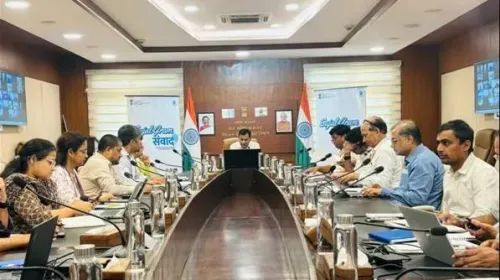
Government-led water governance programmes, including the Atal Bhujal Yojana and the National Water Mission (NWM), are strengthening groundwater management and climate resilience across rural India, according to an official factsheet released on Wednesday, 27 May 2026. The factsheet highlights how participatory planning, technology tools, and community involvement are collectively addressing India's deepening water stress.
Atal Bhujal Yojana: Key Developments
Launched in 2019, the Atal Bhujal Yojana promotes decentralised water governance at the Gram Panchayat (GP) level, with water budgeting as its central instrument. The programme operates on a pilot basis across 229 blocks in seven groundwater-stressed states.
Assessments conducted during 2023-24 and 2024-25 found that 180 out of 229 blocks recorded measurable improvement in groundwater levels — a significant indicator of on-ground impact. As of March 2026, approximately 81,700 water conservation and recharge structures have been created or restored under the scheme.
The programme also mandates annual preparation and updating of water budgets, with 8,203 budgets completed across participating Gram Panchayats to date. It additionally promotes the revival of traditional water conservation systems — including Gokatte, Bawdi, Johad, Tanka, Kalyani, and Diggi — adapted to local contexts.
National Water Mission and Integrated Planning
The National Water Mission recognises water budgeting as a foundational element of Integrated Water Resources Management (IWRM), aligning it with national priorities of conservation, sustainability, and long-term water security. State-level initiatives in Rajasthan and Maharashtra have been cited as examples of effective participatory approaches within this broader framework.
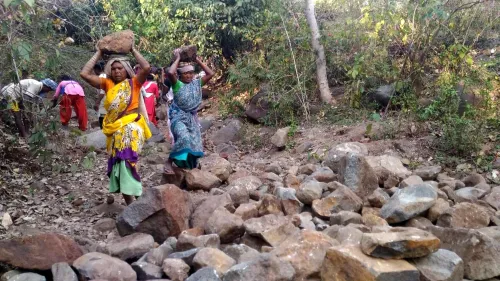
A notable component under NWM is Nari Shakti se Jal Shakti, which emphasises women-led institutions — including Self-Help Groups (SHGs), Water Users' Associations (WUAs), and community groups — in water conservation and management efforts.
Technology: The Varuni Web Application
The Varuni web application, developed under the Indo-German bilateral project 'Water Security and Climate Adaptation in Rural India (WASCA)', supports data-driven planning at the block level. The platform integrates automatically sourced data from authoritative government portals — covering rainfall, land use, cropping patterns, population, and water resources — and processes it through an in-built computational framework to generate structured water budget assessments.
Officials describe the methodology as scientifically robust yet user-friendly, enabling local administrators to make evidence-based decisions on water allocation and conservation.
Why Water Budgeting Matters Now
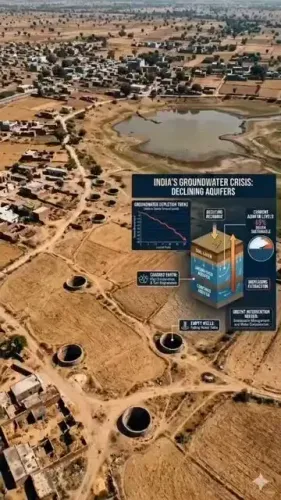
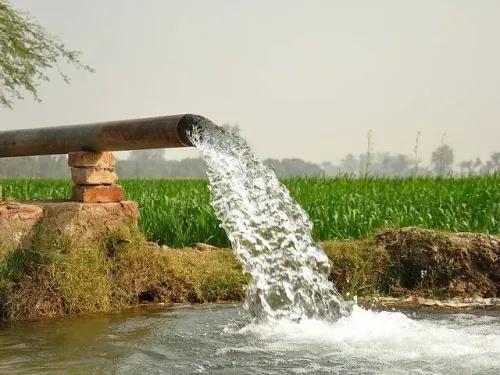
Rising demand, uneven distribution, and climate variability have resulted in declining groundwater levels, seasonal shortages, and growing conflicts over water allocation across rural India. The official factsheet argues that these pressures make a shift from supply-driven approaches to demand-based, planned water management systems not just desirable but necessary.
Water budgeting, the document states, has emerged as a critical tool for sustainable development in water-stressed regions where scarcity threatens economic stability, food security, and climate resilience. With both the Centre and state governments deepening their commitment to these frameworks, the next phase will test whether local implementation can match the scale of the challenge.
Point of View
But the real test lies in durability — groundwater recovery in a good monsoon year looks different from recovery under consecutive deficit seasons. The scheme's reliance on Gram Panchayat-level water budgets is structurally sound, but 8,203 budgets across 229 blocks still leaves significant coverage gaps. The integration of the Varuni tool is a step toward evidence-based governance, yet technology adoption at the panchayat level remains uneven across states. The inclusion of women-led institutions under Nari Shakti se Jal Shakti addresses a long-standing blind spot in water governance — but SHG capacity and legal authority over water allocation vary sharply by state, and that gap rarely makes it into official factsheets.
NationPress
26 Sept 2026
Frequently Asked Questions
What is the Atal Bhujal Yojana and what has it achieved so far?
The Atal Bhujal Yojana is a centrally sponsored scheme launched in 2019 to promote decentralised groundwater governance through water budgeting at the Gram Panchayat level. It covers 229 pilot blocks across seven groundwater-stressed states, and assessments for 2023-24 and 2024-25 found that 180 of those blocks have shown measurable groundwater improvement.
How many water conservation structures have been built under the scheme?
As of March 2026, approximately 81,700 water conservation and recharge structures have been created or restored under the Atal Bhujal Yojana. These include traditional systems such as Johad, Bawdi, Tanka, and Diggi, adapted to local conditions.
What is the Varuni web application and who developed it?
Varuni is a web application that generates block-level water budgets by integrating data on rainfall, land use, cropping patterns, population, and water resources from government portals. It was developed under the Indo-German bilateral project 'Water Security and Climate Adaptation in Rural India (WASCA)' and is designed to support data-driven planning at the local level.
How does the National Water Mission support water budgeting?
The National Water Mission incorporates water budgeting as a core element of Integrated Water Resources Management, aligning it with national goals of conservation and long-term water security. It also runs the Nari Shakti se Jal Shakti initiative, which places Self-Help Groups, Water Users' Associations, and community groups — particularly women-led bodies — at the heart of local water management.
Why is water budgeting considered critical for rural India?
Declining groundwater levels, seasonal shortages, and conflicts over water allocation have made supply-driven water management inadequate for rural India. Water budgeting shifts the approach to demand-based, planned management, helping communities in water-stressed regions protect food security, economic stability, and climate resilience.