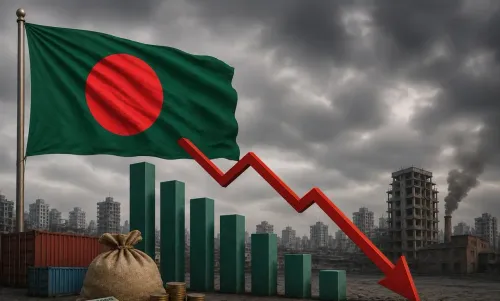
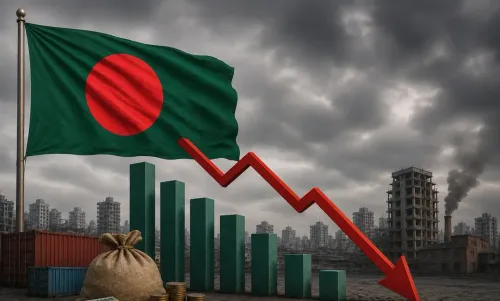
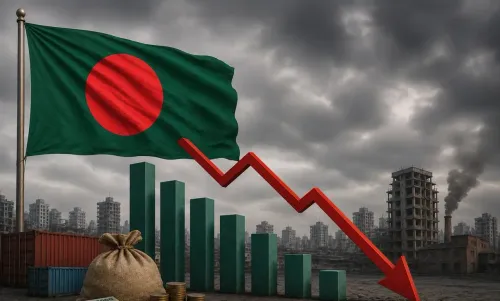
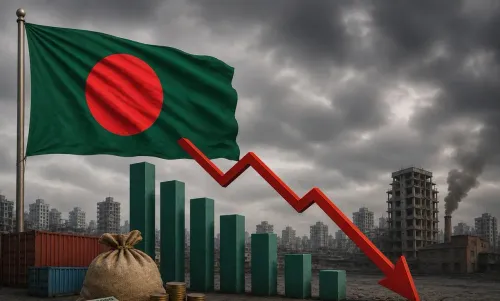
Bangladesh trade deficit surges 31% to $7.48 billion in Q1 FY27 on fuel import spike

Synopsis
Bangladesh's trade deficit has ballooned 31% in a single quarter, with petroleum imports more than doubling due to the West Asia conflict. With capital goods imports slumping and export growth at just 7%, the country is simultaneously losing investment momentum and burning through forex reserves — a rare and dangerous combination.
Key Takeaways
Bangladesh's trade deficit rose 31 per cent year-on-year to $7.48 billion in July–September 2026 .
Petroleum product imports surged 105 per cent to $4.2 billion , more than doubling due to the West Asia conflict .
Total imports rose 15 per cent to $19.33 billion ; export earnings grew only 7 per cent to $11.86 billion .
Capital machinery imports slumped 22.5 per cent to roughly $770 million , signalling weaker business investment.
Remittances rose 13 per cent to $8.59 billion , led by Saudi Arabia , the UK , and the US .
The overall external account deficit stood at $1.16 billion , reversing from a $853 million surplus a year earlier.
Bangladesh's trade deficit widened by 31 per cent year-on-year to $7.48 billion in the July–September 2026 quarter, as a sharp surge in fuel import costs — triggered by soaring oil prices linked to the West Asia conflict — overwhelmed modest export growth. The latest data released by the Bangladesh Bank reveals the country's external account is under its most acute stress in recent quarters.
Import Bill Surges, Exports Lag Behind
Total imports in the first quarter of FY 2026-27 rose 15 per cent year-on-year to $19.33 billion, while export earnings grew a comparatively modest 7 per cent to $11.86 billion, according to a report in Dhaka's The Daily Star. The gap between the two — the trade deficit — reflects how Bangladesh's import dependence is outpacing its export engine.
Fuel Imports More Than Double, Food Bills Also Climb
The primary driver behind the widening deficit was petroleum. Imports of petroleum products more than doubled, rising 105 per cent to $4.2 billion from $2.0 billion in the same period a year earlier — accounting for the bulk of the overall import increase. Food imports also climbed significantly: edible oil purchases jumped 54 per cent and wheat imports surged 66 per cent year-on-year. Bangladesh is heavily dependent on imports for both energy and essential food commodities, leaving it structurally exposed to international commodity price shocks.
Capital Goods Imports Slump, Signalling Weaker Investment
In a concerning counter-trend, imports of capital goods fell 13.6 per cent during the July–September period. Of these, capital machinery imports declined 22.5 per cent year-on-year to roughly $770 million. Analysts say the fall points to weakening business investment amid an economic slowdown, persistent inflation, and declining investor confidence — a combination that could dampen Bangladesh's medium-term industrial growth prospects.
Current Account Deficit Widens Despite Remittance Growth
The current account deficit — which covers trade, services, income, and transfers — widened to $1.33 billion from $821 million a year earlier, according to Bangladesh Bank data. Remittance inflows provided a partial buffer, rising 13 per cent to $8.59 billion, led by flows from Saudi Arabia, the United Kingdom, and the United States. Despite that boost, the country's overall external account deficit stood at $1.16 billion in the first quarter, reversing from a surplus of $853 million in the same period a year earlier. Bangladesh Bank reportedly drew on its foreign exchange reserves to cover the shortfall.
What Lies Ahead
The data underscores the precarious position Bangladesh finds itself in: rising import costs driven by external shocks, subdued export growth, and falling capital investment — all at the same time. Unless oil prices moderate or export earnings accelerate significantly, further pressure on the country's reserves and currency remains a credible risk in the quarters ahead.
Point of View
It is consuming its way deeper into it. The 13% remittance growth looks reassuring on the surface, but it was not enough to prevent a swing from an $853 million external surplus to a $1.16 billion deficit in a single year. With Bangladesh Bank drawing on reserves to plug the gap, the forex cushion is thinning — and if the West Asia conflict prolongs elevated oil prices into the second quarter, the pressure on the taka and on import-dependent industries will intensify considerably.
NationPress
8 Nov 2026
Frequently Asked Questions
Why did Bangladesh's trade deficit widen so sharply in July–September 2026?
Bangladesh's trade deficit surged 31 per cent to $7.48 billion primarily because petroleum product imports more than doubled — rising 105 per cent to $4.2 billion — as oil prices soared due to the West Asia conflict. At the same time, export earnings grew by only 7 per cent, insufficient to offset a 15 per cent jump in total imports.
How much did Bangladesh's fuel import bill rise?
Petroleum product imports rose 105 per cent year-on-year to $4.2 billion in the July–September 2026 quarter, up from $2.0 billion in the same period a year earlier. This single category accounted for most of the overall increase in Bangladesh's import bill.
Did remittances help offset the trade deficit?
Remittance inflows rose 13 per cent to $8.59 billion, led by Saudi Arabia, the United Kingdom, and the United States. However, the increase was insufficient to prevent the overall external account from swinging to a deficit of $1.16 billion from a surplus of $853 million a year earlier.
What does the fall in capital goods imports indicate?
Capital goods imports fell 13.6 per cent, with capital machinery imports slumping 22.5 per cent to roughly $770 million. Analysts say this points to weaker business investment amid an economic slowdown, persistent inflation, and declining investor confidence in Bangladesh.
What is Bangladesh Bank's role in managing the external deficit?
Bangladesh Bank, the country's central bank, has reportedly been drawing on its foreign exchange reserves to cover the gap between total foreign currency inflows and external payments. This reserve drawdown is a key concern as the external account deficit widened to $1.16 billion in Q1 FY 2026-27.