Taslima Nasrin revives Communist book-ban debate amid Bengal vandalism row
Synopsis
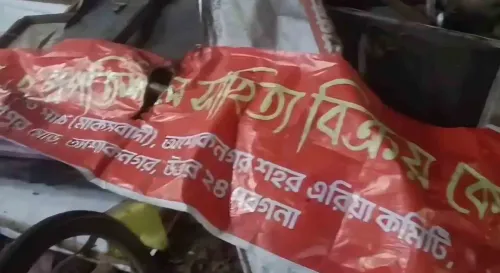
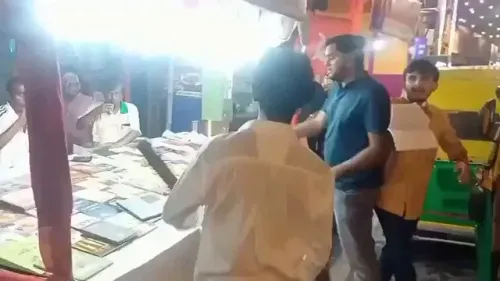
Taslima Nasrin's viral Facebook post — cataloguing Communist-era book bans from Stalin's gulags to Mao's Cultural Revolution — was sparked not by history alone but by footage of Left Front book stalls being vandalised in West Bengal during Durga Puja. Her decision to include her own 2003 West Bengal book ban in the same list as Solzhenitsyn and Liu Xiaobo makes this a pointed, personal indictment of ideological censorship across the political spectrum.
Key Takeaways
Taslima Nasrin posted a documented list of Communist-era book bans and writer repression on Facebook on Friday , in response to footage of Left Front book stalls being vandalised in West Bengal during Durga Puja .
She included her own work on the list, alleging the Left Front government under Buddhadeb Bhattacharjee banned her book via notifications dated 27 November 2003 and 30 April 2004 ; the Calcutta High Court lifted the ban on 22 September 2005 .
She alleged CPI-M State Secretary Biman Basu called for her to leave West Bengal on 21 November 2007 ; she was expelled on 22 November 2007 .
Her list spans repression in the former Soviet Union , Czechoslovakia , China , Vietnam , and Cuba , citing figures including Aleksandr Solzhenitsyn , Liu Xiaobo , Milan Kundera , and Václav Havel .
The BJP has been held responsible for the West Bengal vandalism by the Opposition; sections of the ruling party's state leadership have also condemned the act.
Taslima argued that defending free expression must be consistent across ideologies: 'You don't defend freedom of speech by demanding freedom for the books you like and censorship for the ones you don't.'
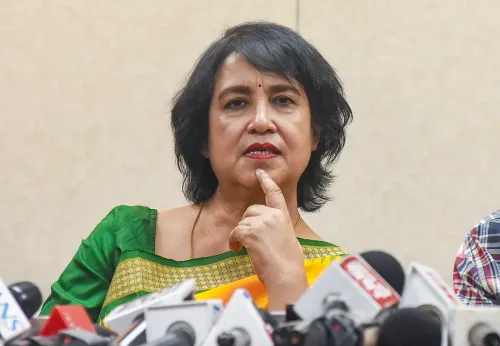
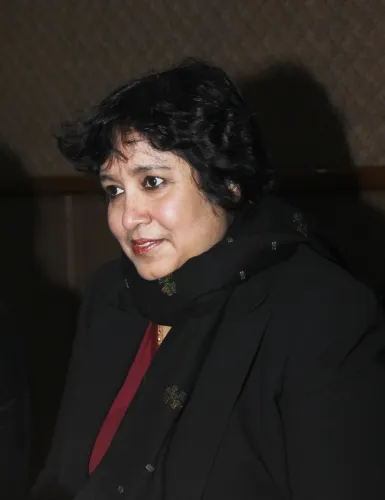
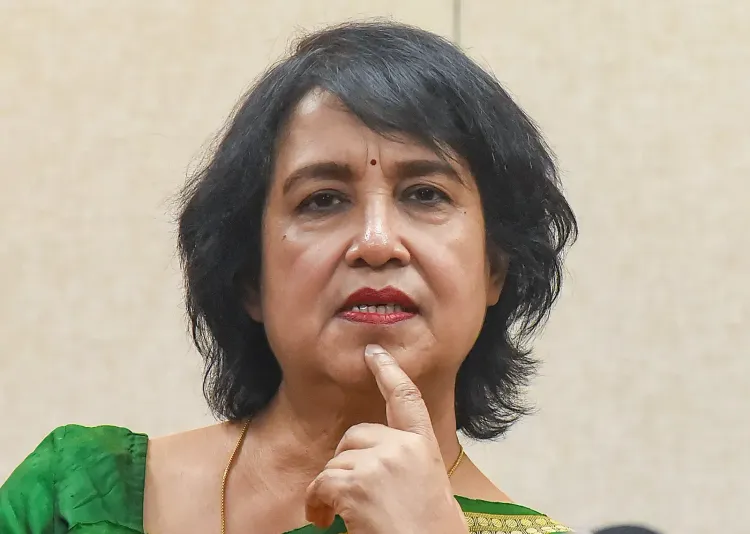
Bangladesh-origin, Sweden-based author and activist Taslima Nasrin has reignited a debate on writer repression and book bans under Communist regimes worldwide, after clips of Left Front book stalls being vandalised in West Bengal during the recently concluded Durga Puja celebrations began circulating widely. Her remarks, posted in Bengali on Facebook on Friday, have drawn mixed reactions across party lines.
What Taslima Said
'Banning books, burning books, silencing writers — isn't that in the history of Communists? It is,' she wrote, before compiling a documented list of incidents spanning the former Soviet Union, Czechoslovakia, China, Vietnam, and Cuba. She added: 'Sometimes it's a party attack, sometimes a government ban, sometimes sending writers to labour camps, sometimes forcing them into exile. We need to keep track of that with the names of the country, party, rulers, and time.'
Notably, she included her own work at sixth place on the list, alleging that the Left Front government led by then Chief Minister Buddhadeb Bhattacharjee in West Bengal banned and confiscated her book, citing offence to religious sentiments. According to court records she cited, the first government notification was dated 27 November 2003, a second notification followed on 30 April 2004, and the Calcutta High Court lifted the ban on 22 September 2005. She further alleged that on 21 November 2007, CPI-M State Secretary Biman Basu stated that if her presence created peace issues, she should leave the state — and that she was expelled from West Bengal on 22 November 2007.
A Global Catalogue of Repression
Taslima anchored her list with Russian Nobel laureate Aleksandr Solzhenitsyn, who, she noted, spent eight years in prisons and labour camps and three further years in enforced exile for criticising Joseph Stalin. Others she named as victims of Soviet-era persecution included Varlam Shalamov, Osip Mandelstam, and Yevgenia Ginzburg.
She cited suppressed works such as Yevgeny Zamyatin's 'We' and Boris Pasternak's 'Doctor Zhivago', and alleged that Andrei Sinyavsky and Yuli Daniel were tried for 'anti-Soviet' activities over satirical literature and sentenced to years of forced labour — well after Stalin's death. 'The State's oppression of writers did not stop just because Stalin was gone,' she stressed.
Czech writer Milan Kundera featured in the list for losing his job, having his books banned, and being placed under police surveillance following the Soviet-led military invasion of Czechoslovakia in 1968, before moving to France in 1975. Playwright Václav Havel's works were reportedly banned in schools and government libraries in 1971 under Communist rule in Czechoslovakia.
In China, she referenced Jung Chang's 'Wild Swans' — a family memoir documenting the horrors of Mao's rule and the Cultural Revolution — which remains banned in mainland China. She also cited Liu Xiaobo, who she described as playing a key role in drafting Charter 08, a manifesto for human rights and political reform, and who was sentenced to eleven years in prison in 2009.
In Vietnam, Duong Thu Huong's novels, including 'Paradise of the Blind', were reportedly effectively banned under Communist rule; Huong was expelled from the party and imprisoned without trial in 1991. In Cuba, poet Heberto Padilla's poetry collection, awarded in 1968, was subsequently labelled 'counter-revolutionary' by the organisation's leadership.
Taslima also referenced book burning during China's Cultural Revolution, where, from 1966, Mao-backed Red Guards reportedly destroyed books and libraries to eradicate 'old culture'. She drew a parallel with alleged book burning by a section of Maoists in West Bengal around 1970–71.
The Bengal Vandalism Context
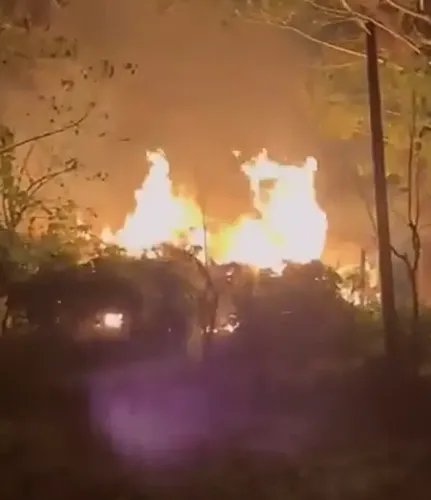
The immediate trigger for Taslima's post was the circulation of footage showing Left Front book stalls vandalised in West Bengal during Durga Puja. The Opposition in the state has held the Bharatiya Janata Party (BJP) responsible for the attacks. Notably, several members of the ruling party's state leadership have also publicly condemned the act, reflecting an unusual cross-party consensus on the vandalism itself, even as the political blame game continues.
A Call for Consistent Principles
Taslima concluded her post with a pointed challenge to ideological selectivity: 'Protesting book burning, bans, or imprisoning or exiling writers shouldn't depend on party colours. You don't defend freedom of speech by demanding freedom for the books you like and censorship for the ones you don't.' She also referenced the post-Soviet-era 'Orders to cut pages from the Great Soviet Encyclopedia' after Lavrentiy Beria was executed — describing it as 'an instance of erasing history from books published under state orders.'
As the vandalism controversy in West Bengal continues to unfold, Taslima's post has ensured that the debate now extends well beyond the immediate incident, placing it within a broader global conversation about state power, ideological censorship, and the freedom of literary expression.
Point of View
She forces a reckoning that is uncomfortable for the Indian left specifically. The Bengal vandalism row was heading toward a routine BJP-versus-TMC blame exchange; her intervention reframes it as a question about whether the Left's own record on literary freedom is morally coherent ground from which to protest. What mainstream coverage is missing is that the cross-party condemnation of the vandalism — including from within the ruling camp — suggests the political cost of being seen as anti-books is now real. Whether that translates into accountability or remains performative is the more important question.
NationPress
24 Oct 2026
Frequently Asked Questions
Why did Taslima Nasrin post about Communist book bans?
Taslima Nasrin posted her documented list on Facebook after footage of Left Front book stalls being vandalised in West Bengal during Durga Puja began circulating widely. She used the incident to draw a broader historical parallel between the current vandalism and a global pattern of Communist-era book bans and writer repression.
What was the West Bengal book ban on Taslima Nasrin's work?
According to court records cited by Taslima, the Left Front government under Chief Minister Buddhadeb Bhattacharjee issued a notification banning and confiscating her book on 27 November 2003, citing offence to religious sentiments. A second notification followed on 30 April 2004, and the Calcutta High Court lifted the ban on 22 September 2005.
Who has been blamed for the Left Front book stall vandalism in West Bengal?
The Opposition in West Bengal has held the BJP responsible for the attacks on Left Front book stalls during Durga Puja. Notably, several members of the ruling party's own state leadership have also condemned the vandalism.
Which writers and works did Taslima Nasrin mention in her list?
Her list included Soviet-era writers Aleksandr Solzhenitsyn, Varlam Shalamov, Osip Mandelstam, and Yevgenia Ginzburg; Czech writers Milan Kundera and Václav Havel; Chinese dissident Liu Xiaobo; Vietnamese author Duong Thu Huong; Cuban poet Heberto Padilla; and works such as Yevgeny Zamyatin's 'We', Boris Pasternak's 'Doctor Zhivago', and Jung Chang's 'Wild Swans'.
What was Taslima Nasrin's central argument in her post?
Taslima argued that opposition to book bans, book burning, and the imprisonment or exile of writers must be ideologically consistent and cannot be selective. 'You don't defend freedom of speech by demanding freedom for the books you like and censorship for the ones you don't,' she wrote.