PDS rice quality upgraded for 80 crore PMGKAY beneficiaries, broken grain cap cut
Synopsis
For the first time in nearly 30 years, India has overhauled the rice quality standards for its massive PDS network — cutting the broken grain allowance by more than half for 80 crore beneficiaries. With ₹2,161 crore in projected annual savings and QR-code traceability on the way, this is less a welfare tweak and more a systemic reset of how subsidised grain reaches India's poorest.
Key Takeaways
The CCEA approved the first revision of PDS rice quality norms in nearly three decades , announced on 2 July .
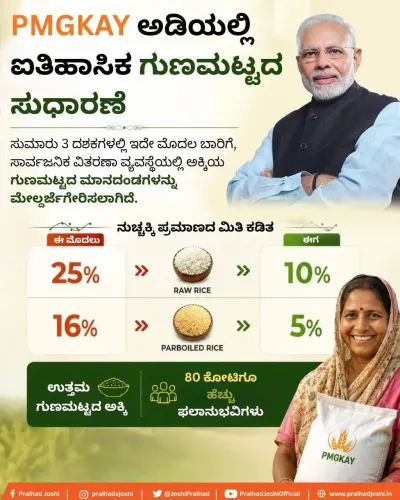
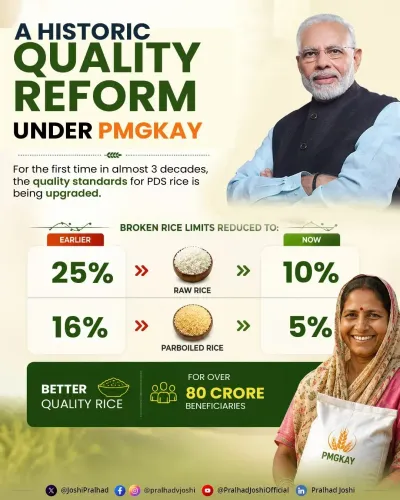
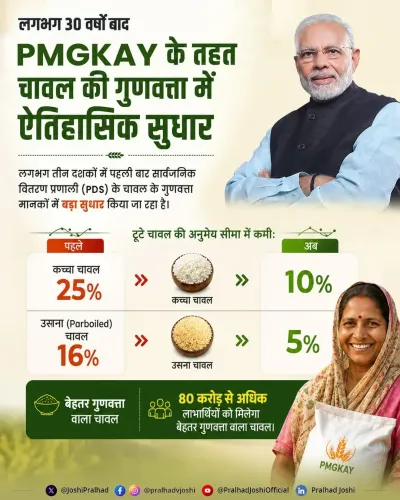
Broken grain limit for raw rice cut from 25% to 10% ; for parboiled rice, from 16% to 5% .
Close to 80 crore beneficiaries under PMGKAY and other welfare schemes will benefit, with no change in entitlement quantities.
Full rollout targeted across all procuring states by Kharif Marketing Season 2027-28 .
Annual cost rationalisation of ₹2,161 crore expected through reduced logistics, storage, and packaging costs.
QR-code tagging of rice bags introduced for end-to-end supply chain traceability to curb leakages.
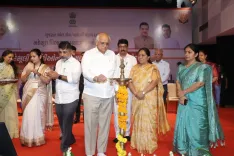
The Cabinet Committee on Economic Affairs (CCEA) has approved the first revision of rice quality specifications under the Public Distribution System (PDS) in nearly three decades, ensuring that close to 80 crore beneficiaries of schemes including the Pradhan Mantri Garib Kalyan Anna Yojana (PMGKAY) receive rice with significantly lower broken grain content. The decision was announced by Prahlad Joshi, Union Minister of Consumer Affairs, Food and Public Distribution, on 2 July.
New Quality Specifications
Under the revised norms, raw rice supplied through PMGKAY and other welfare schemes will now contain a maximum of 10 per cent broken grains, down sharply from the earlier permissible limit of 25 per cent. For parboiled rice, the broken grain ceiling has been reduced from 16 per cent to just 5 per cent. Crucially, beneficiaries' existing entitlements remain unchanged — only the quality of the grain improves.
Rollout and Phased Transition
Procurement of the improved-quality rice will begin immediately, with full rollout across all procuring states targeted by the Kharif Marketing Season (KMS) 2027-28. Distribution under PMGKAY and allied welfare schemes will also follow a phased approach to ensure a smooth transition across all states. The proposal has already been validated through pilot programmes in Haryana, Andhra Pradesh, Punjab, Odisha, Telangana, and Chhattisgarh, which demonstrated the operational feasibility of producing improved-quality rice at scale.
Cost Rationalisation and Revenue Gains
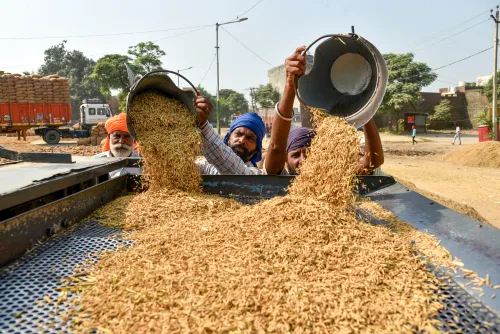
The reform is expected to generate annual cost savings of ₹2,161 crore through reduced logistics, storage, and packaging expenses. Broken rice separated during milling will be auctioned directly from millers' premises, eliminating the need for additional transportation and storage. The shift will also reduce the requirement for jute bags, as broken rice will instead be stored in HDPE bags. Revenue from the sale of separated broken rice is expected to further ease the food subsidy burden on the exchequer.
Traceability and Anti-Leakage Measures
The reform also envisages QR-code tagging of rice bags to enable end-to-end traceability across the supply chain. This is intended to strengthen transparency, accountability, and inventory management within the PDS, effectively plugging potential leakages. This comes amid longstanding concerns about diversion of subsidised grain away from intended beneficiaries.
What This Means for Beneficiaries
According to the government, beneficiaries will receive rice with better grain integrity, improved appearance, and higher consumer acceptability — without any reduction in their allotted quantities. The revision marks a policy shift from merely ensuring food security in terms of volume to also addressing the quality of food grains reaching the country's most vulnerable households. Full nationwide implementation is expected to be in place by KMS 2027-28.
Point of View
Even as procurement and milling technology improved substantially. The ₹2,161 crore in projected savings is credible on paper, but its realisation depends on how rigorously millers are monitored during the phased transition. The QR-code traceability push is the more consequential piece: if implemented at scale, it could address the chronic leakage problem that has long undermined the PDS's reach. The real test will come in KMS 2027-28, when the reform moves from pilot states to the full national network.
NationPress
2 Jul 2026
Frequently Asked Questions
What is the PDS rice quality upgrade approved by the government?
The Cabinet Committee on Economic Affairs has revised the broken grain limits for rice supplied under the Public Distribution System for the first time in nearly three decades. Raw rice will now contain a maximum of 10 per cent broken grains, down from 25 per cent, while parboiled rice is capped at 5 per cent, down from 16 per cent.
Who benefits from the revised PDS rice quality norms?
Close to 80 crore beneficiaries of the Pradhan Mantri Garib Kalyan Anna Yojana and other welfare schemes will receive better-quality rice. Their existing grain entitlements remain unchanged — only the quality of the rice improves.
When will the improved-quality rice reach all states?
Procurement of improved-quality rice begins immediately, with full rollout across all procuring states targeted by the Kharif Marketing Season 2027-28. Distribution will be phased to ensure a smooth transition.
How much money will the government save from this reform?
The reform is projected to generate annual cost savings of ₹2,161 crore through reduced logistics, storage, and packaging costs. Additional revenue from the sale of separated broken rice is expected to further reduce the food subsidy burden.
What is the QR-code tagging system being introduced under the PDS reform?
QR-code tagging on rice bags will enable end-to-end traceability across the PDS supply chain. It is designed to strengthen accountability and inventory management while plugging potential diversion or leakage of subsidised grain.