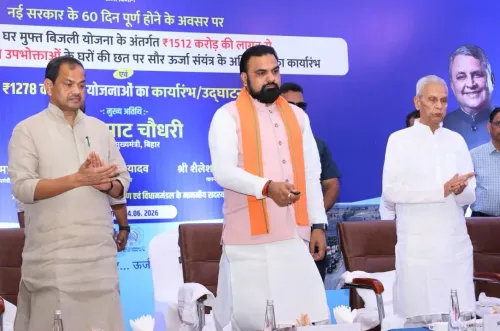
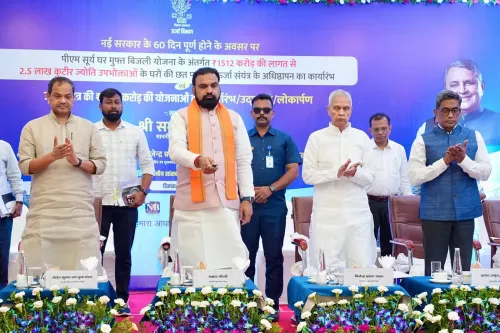
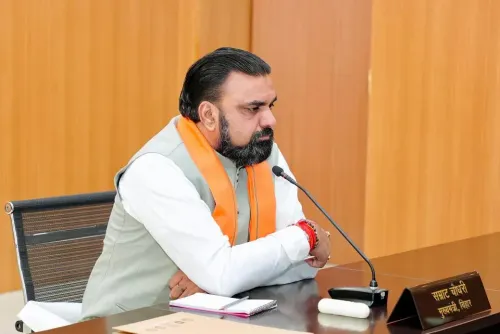
CM Samrat Choudhary clears ₹482 cr solar push for Bihar panchayat offices
Synopsis
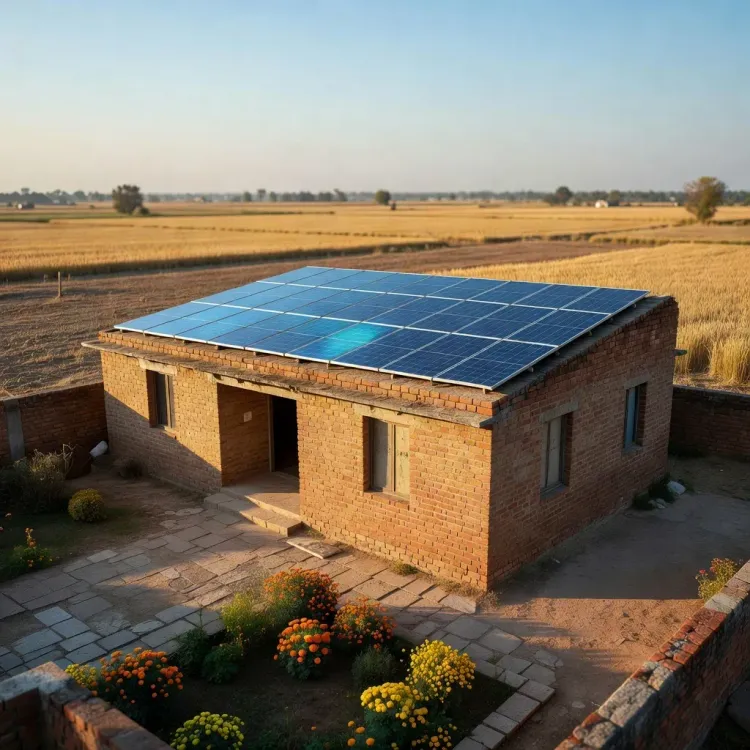
Bihar CM Samrat Choudhary has approved ₹482.82 crore to fit 10 kW on-grid solar panels on Panchayat Sarkar Bhawans statewide, aiming to cut grid dependence and ensure uninterrupted delivery of rural public services.
Key Takeaways
₹482.82 crore approved by the Bihar cabinet for solar panel installation on Panchayat Sarkar Bhawans.
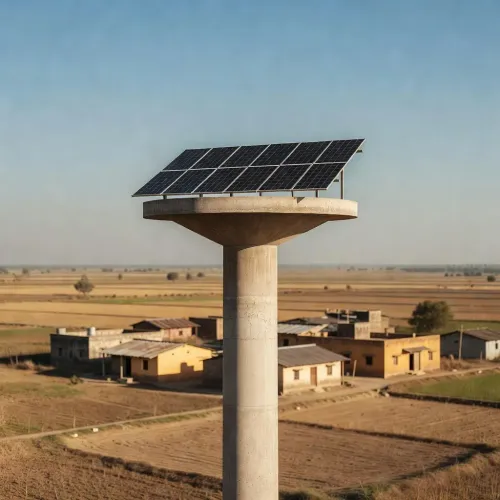
Each building will receive a 10-kilowatt on-grid solar panel system, covering both completed and under-construction structures.
The Panchayati Raj Department will execute the programme across its network of gram panchayat offices.
The goal is to reduce grid dependence and ensure uninterrupted rural public services — from land records to welfare scheme processing.
The move aligns with Bihar's Solar Power Policy 2017 and national targets under the National Solar Mission .
Similar programmes have been implemented in Rajasthan, Gujarat and Maharashtra , placing Bihar in a broader national pattern of solarising public buildings.
Bihar's villages are about to get a power upgrade — literally. Bihar Chief Minister Samrat Choudhary announced on Wednesday, 18 November 2026 that his government has approved ₹482.82 crore to install 10-kilowatt on-grid solar panels on Panchayat Sarkar Bhawans — the dedicated administrative buildings that serve as the front door of government for rural Bihar.
Posting on X, CM Choudhary framed the decision as a cornerstone of uninterrupted rural governance: 'बिजली पर निर्भरता कम होगी... ग्रामीण क्षेत्रों में जनसेवाओं का संचालन अधिक सुगम एवं निर्बाध होगा' — 'dependence on electricity [grid] will reduce... delivery of public services in rural areas will become smoother and uninterrupted.' The approval covers both completed and under-construction Panchayat Sarkar Bhawans built by the Panchayati Raj Department.
What a Panchayat Sarkar Bhawan actually does — and why power cuts matter
Panchayat Sarkar Bhawans are purpose-built gram panchayat offices scattered across Bihar's villages, designed to consolidate everything from land records and birth certificates to welfare scheme applications under one roof. A power outage doesn't just dim the lights — it stalls digital services, freezes biometric authentication, and sends residents home empty-handed. That's the precise problem 10 kW on-grid solar panels are designed to solve: enough capacity to run computers, fans, and essential equipment through daylight hours, with the grid acting as backup rather than the primary source.
Bihar's solar policy lineage and the national push behind this decision
This approval sits inside a longer arc. Bihar's Solar Power Policy 2017 first pushed grid-connected solar installations onto government and rural sites, and the state has since paired that energy agenda with a broader panchayati raj strengthening drive. Nationally, the National Solar Mission has set renewable targets that incentivise states to put rooftop and on-grid panels on public buildings — cutting electricity bills while edging state portfolios greener. Rajasthan, Gujarat and Maharashtra have run comparable programmes; Bihar's ₹482.82 crore cabinet clearance follows that playbook but with a sharper rural-governance rationale.
Who gains — and what to watch next
The direct beneficiaries are panchayat bodies — which currently carry electricity costs that eat into administrative budgets — and the rural residents who queue at these offices for services. Cheaper, more reliable energy at the panchayat level has a compounding effect: more consistent service hours, faster processing, and potentially lower panchayat operational expenditure that can be redirected to development works.
The real test, however, is execution. The critical variables to track are the pace at which panels are commissioned on both standing and still-under-construction buildings, and whether panchayat electricity bills actually fall in audited accounts. CM Choudhary's hashtag #CabinetDecisions signals this is a formal cabinet approval — not a proposal — but the gap between approval and working panels on rooftops in Bihar's villages is where implementation stories are written.
A ₹482 crore bet on solar power and rural governance is a signal worth watching — and the villages waiting for uninterrupted service are keeping score.
Point of View
The government is effectively monetising reliability — turning energy self-sufficiency into a governance dividend. It also signals that Bihar's ruling coalition views visible rural infrastructure spending as an electoral and administrative priority ahead of local body cycles. Whether the programme delivers on its service-continuity promise will depend on procurement timelines and maintenance governance — the classic last-mile challenge that has tripped up similar state-level schemes before.
NationPress
18 Nov 2026
Frequently Asked Questions
What is the Bihar government's ₹482.82 crore solar panel scheme?
The Bihar government has approved ₹482.82 crore to install 10-kilowatt on-grid solar panels on Panchayat Sarkar Bhawans — gram panchayat office buildings constructed by the Panchayati Raj Department — to reduce grid dependence and ensure uninterrupted rural services.
What is a Panchayat Sarkar Bhawan in Bihar?
A Panchayat Sarkar Bhawan is a purpose-built administrative building for gram panchayats in Bihar's villages, serving as the local government office where residents access services such as land records, certificates, and welfare scheme applications.
How will solar panels help rural public services in Bihar?
10 kW on-grid solar panels will provide reliable daytime electricity for computers, biometric systems, and essential equipment at panchayat offices, reducing power-cut-related service disruptions and lowering panchayat electricity bills.
What is Bihar's Solar Power Policy?
Bihar introduced its Solar Power Policy in 2017 to promote grid-connected solar installations across government and rural sites, laying the policy foundation for subsequent programmes like this ₹482.82 crore panchayat solar scheme.
Which other Indian states have run similar solar programmes for public buildings?
Rajasthan, Gujarat and Maharashtra have implemented comparable on-grid solar programmes on public buildings, and Bihar's latest cabinet decision follows the same national pattern of solarising government infrastructure to cut costs and meet renewable energy targets.