Bihar CM Office Backs Deregulation to Boost Investment, Jobs
Synopsis
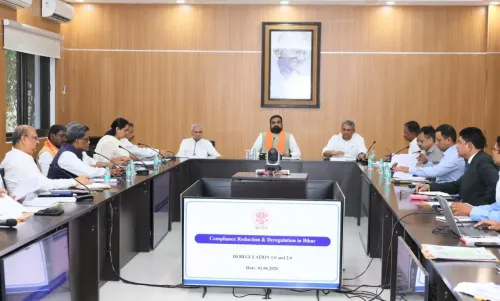
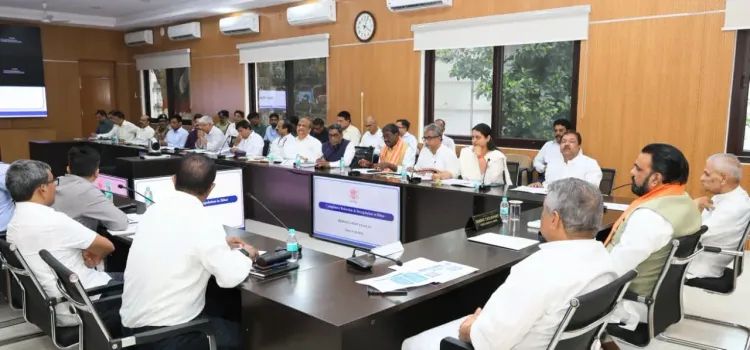
The Chief Minister's Office of Bihar on 1 June 2026 shared remarks calling deregulation and procedural reforms essential to attract investment, promote entrepreneurship, and speed up job creation — reinforcing the state's ongoing effort to improve its business environment.
Key Takeaways
The Chief Minister's Office of Bihar on 1 June 2026 publicly backed deregulation and procedural reforms to draw investment to the state.
The statement identifies three goals: attracting investment, encouraging entrepreneurship, and accelerating job creation.
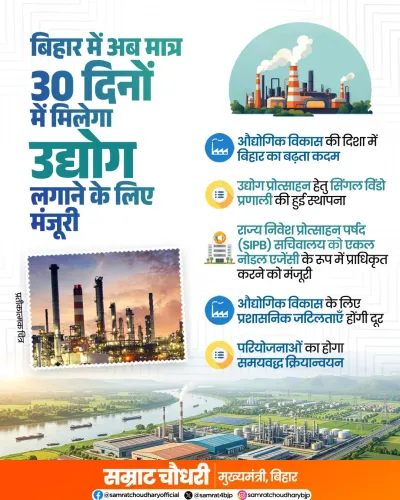
Bihar introduced its Industrial Investment Promotion Policy in 2016 , which included a single-window clearance mechanism for businesses.
The push mirrors a nationwide trend of Indian states competing under the central Business Reforms Action Plan to simplify approvals and cut compliance burdens.
Key stakeholders include private investors, local entrepreneurs, and job seekers in a state with historically high outward labour migration.
Concrete follow-through — such as portal upgrades or sector-specific packages — is expected to be announced at an upcoming budget or investment summit.
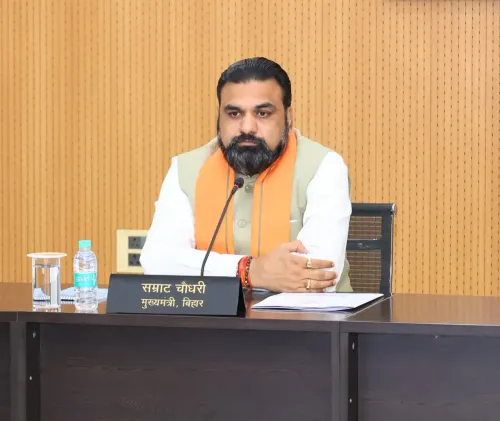
The Chief Minister's Office of Bihar on Monday, 1 June 2026 shared remarks emphasising that deregulation and procedural reforms are essential to attract investment, promote entrepreneurship, and accelerate job creation in the state.
Context
The post quotes a senior official stating that "डीरेगुलेशन एवं प्रक्रियागत सुधार अत्यंत आवश्यक हैं" — meaning 'deregulation and procedural reforms are absolutely essential' — to draw private capital into Bihar and generate employment at pace. The statement signals a renewed push by the state government to reduce regulatory friction for businesses looking to set up operations in the state.
While the research notes that the identity of the specific speaker cannot be independently verified, the remarks were shared through the official handle of the Chief Minister's Office, lending them institutional authority.
Policy Backdrop
Bihar has historically trailed more industrialised states on investment and manufacturing metrics. In 2016, the state government notified the Industrial Investment Promotion Policy, which introduced incentive structures and a single-window clearance mechanism to streamline approvals for incoming projects.
The current emphasis on deregulation fits into a broader national pattern. Since 2014, Indian states have competed to improve their rankings under the central government's Business Reforms Action Plan, which scores states on how effectively they simplify approvals and reduce compliance burdens for businesses. Bihar has used successive policy iterations to signal openness to private capital.
Stakeholders and Impact
Private investors and local entrepreneurs stand to benefit most directly if procedural reforms translate into faster approvals and lower compliance costs. For job seekers in Bihar — a state with a large working-age population and significant outward labour migration — accelerated employment creation is a long-standing priority.
Reducing regulatory layers is particularly significant for small and medium enterprises, which are often disproportionately burdened by multi-step licensing and clearance processes. A lighter compliance environment could encourage more entrepreneurs to formalise and scale their operations within the state rather than migrating to industrial hubs elsewhere.
What's Next
Policy watchers will look for concrete announcements — such as upgrades to the state's single-window portal, sector-specific deregulation packages, or fresh investment targets — likely to surface in the next Bihar state budget or at an upcoming investment summit. The framing of deregulation as a jobs-creation tool suggests the government may be building a political case ahead of such an announcement.
How swiftly procedural changes move from stated intent to ground-level implementation will determine whether the push translates into measurable gains in investment inflows and employment numbers for Bihar.
Point of View
Young workforce and its reputation as a labour-exporting state make job creation a perennial electoral pressure point. By anchoring the deregulation agenda to entrepreneurship and employment rather than just investor returns, the state government is broadening the coalition of stakeholders who have a stake in reform success. The real test will be whether this stated intent is backed by measurable changes in approval timelines and compliance costs that investors and entrepreneurs can verify on the ground.
NationPress
16 Oct 2026
Frequently Asked Questions
What did the Bihar Chief Minister's Office say about deregulation?
The Chief Minister's Office of Bihar stated on 1 June 2026 that deregulation and procedural reforms are essential to attract investment, promote entrepreneurship, and accelerate job creation in the state.
What is Bihar's Industrial Investment Promotion Policy?
Bihar notified the Industrial Investment Promotion Policy in 2016, which offers incentives and a single-window clearance mechanism to attract manufacturing and other investment projects to the state.
Why is deregulation important for Bihar's economy?
Bihar has historically ranked lower on industrial and investment metrics compared to more developed states. Reducing regulatory and procedural burdens is seen as a way to attract private capital and generate local employment, reducing outward labour migration.
What is the Business Reforms Action Plan and how does Bihar fit in?
The Business Reforms Action Plan is a central government framework that ranks Indian states on how well they simplify business approvals and reduce compliance requirements. Bihar has used successive policy changes to improve its standing and signal openness to investors.
What should investors and entrepreneurs watch for next in Bihar?
Analysts expect details of any new single-window portal upgrades, sector-specific deregulation measures, or fresh investment targets to emerge in Bihar's next state budget or at an upcoming investment summit.