Cabinet clears ₹1,789 cr AI traffic system for Delhi
Synopsis
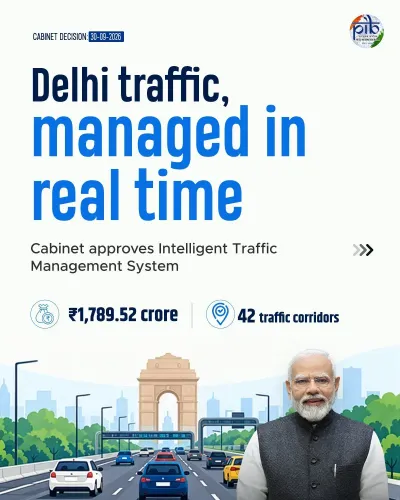
The Union Cabinet has approved ₹1,789.52 crore for an AI-powered Intelligent Traffic Management System in Delhi, covering 42 major corridors in three phases with adaptive signals, real-time commuter information, and ambulance priority movement.
Key Takeaways
₹1,789.52 crore approved by the Union Cabinet for Delhi's Intelligent Traffic Management System (ITMS).
The system will deploy AI-powered adaptive traffic signals that adjust in real time based on live traffic density.
Coverage spans 42 major traffic corridors across the national capital, rolled out in three phases .
A dedicated ambulance priority movement feature aims to cut emergency response times in congested areas.
Technology-driven enforcement mechanisms will reduce reliance on physical police presence at junctions.
The project extends India's urban mobility push, building on the Smart Cities Mission launched in 2015 and the Digital India framework.
Delhi's gridlocked arteries are about to meet their match. The Union Cabinet, chaired by Prime Minister Narendra Modi, has approved an outlay of ₹1,789.52 crore for an Intelligent Traffic Management System (ITMS) in the national capital — a sweeping AI-powered overhaul that Union Road Transport and Highways Minister Nitin Gadkari announced on Wednesday, 30 September 2026.
Adaptive signals, AI enforcement, and ambulance corridors
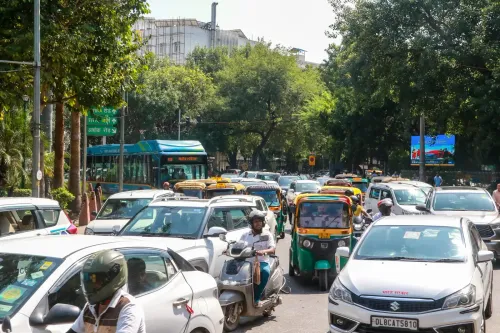
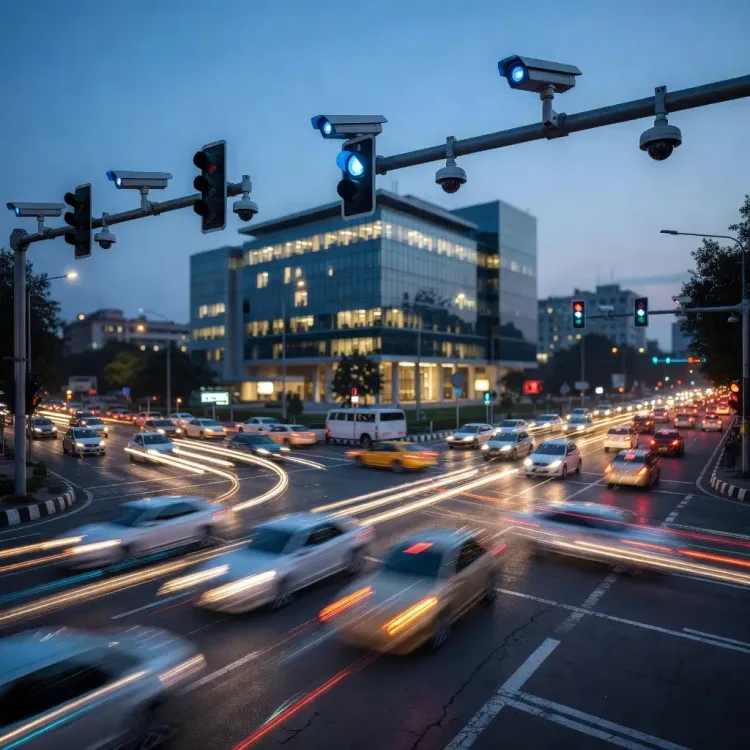
At the heart of the project are adaptive traffic signals — systems that read live traffic density and adjust signal timing in real time rather than running on fixed cycles. This alone addresses one of Delhi's most persistent frustrations: signals that stay red while one side of an intersection sits empty. Alongside that, the ITMS will deploy technology-driven enforcement mechanisms, using AI cameras and sensors to detect violations without requiring a physical police presence at every junction.
Perhaps the most consequential feature is priority movement for ambulances. In a city where emergency response times are routinely stretched by congestion, the system's ability to clear a corridor for an ambulance in real time could translate directly into lives saved. Commuters will also gain access to real-time traffic information, allowing them to reroute before they hit a bottleneck rather than after.
42 corridors, three phases — the rollout map
The project will unfold across 42 major traffic corridors in three phases, giving Delhi's traffic authorities a structured timeline to integrate hardware, software, and command infrastructure without disrupting the city all at once. The phased approach also creates natural checkpoints for assessing what is working — congestion reduction metrics, enforcement hit rates, ambulance response improvements — before the next tranche is deployed.
The scale is significant. Delhi's road network handles millions of trips daily, and the corridors selected as entry points will likely cover the city's highest-density movement arteries — ring roads, flyover approaches, and inter-district connectors where bottlenecks compound fastest.
Where this fits in India's urban mobility push
The ITMS approval does not arrive in a vacuum. Since the Smart Cities Mission launched in 2015, intelligent traffic management has been a recurring component of India's urban infrastructure agenda, with pilots and partial deployments in multiple metropolitan areas. What distinguishes the Delhi announcement is its budget scale and its explicit AI framing — adaptive signals and AI-driven enforcement represent a generational step beyond the camera-and-fine systems that earlier projects relied on.
The initiative also sits squarely within the broader Digital India and urban mobility frameworks that the central government has used to push technology integration into city governance. For Delhi specifically — the national capital, a showcase for every visiting dignitary and a city that has long struggled to square its role with its road reality — a functional, AI-driven traffic backbone carries both practical and symbolic weight.
If the phased rollout delivers even a fraction of its promise, Delhi's 42 corridors could become the template every other Indian metro points to when it makes its own case for smart infrastructure funding. That is the bet the Cabinet just placed.
Point of View
789.52 crore commitment to Delhi's ITMS represents the central government's most explicit bet yet that AI infrastructure — not just road construction — is the next frontier of its urban mobility agenda. By anchoring the project in the national capital, the Modi government is also making a political statement: Delhi, long a contested governance space between the Centre and the city administration, will carry the flag for smart-city technology under a centrally funded, Ministry-driven mandate. The phased, corridor-by-corridor rollout is a pragmatic hedge — it allows the government to demonstrate early wins before full deployment — but it also means the true test of the ITMS will come years down the line, when the political calculus around the project may look very different.
NationPress
30 Sept 2026
Frequently Asked Questions
What is the Delhi Intelligent Traffic Management System (ITMS)?
The Delhi ITMS is an AI-powered traffic overhaul approved by the Union Cabinet with an outlay of ₹1,789.52 crore. It will introduce adaptive traffic signals, technology-driven enforcement, real-time commuter information, and ambulance priority movement across 42 major corridors in three phases.
How much money has been approved for the Delhi ITMS project?
The Union Cabinet has approved ₹1,789.52 crore for the implementation of the Intelligent Traffic Management System in Delhi.
How many corridors will the Delhi ITMS cover?
The project will cover 42 major traffic corridors in Delhi, deployed across three phases.
How will the Delhi ITMS help ambulances?
The system includes a dedicated ambulance priority movement feature that uses AI to clear traffic signals along an emergency vehicle's route in real time, reducing response times in congested areas.
Is the Delhi ITMS connected to the Smart Cities Mission?
The project aligns with the broader urban technology agenda that includes the Smart Cities Mission, launched in 2015, which incorporated intelligent traffic management in multiple Indian cities. The Delhi ITMS is centrally funded and forms part of the Digital India and urban mobility frameworks.