Jaishankar: Cabinet Clears GOBARdhan Scheme, Assam Highway

Synopsis
The Union Cabinet on 7 August 2026 approved a Rs. 23,731 crore GOBARdhan bioenergy scheme targeting ten-fold CBG growth over a decade, and a Rs. 8,970 crore, 135.8 km Guwahati-Tezpur access-controlled highway in Assam, as announced by External Affairs Minister Dr. S. Jaishankar.
Key Takeaways
The Union Cabinet, chaired by PM Narendra Modi , approved two major decisions on 7 August 2026 .
The GOBARdhan National Circular Bioenergy Scheme carries an outlay of Rs.
23,731 crore and runs from FY 2026-27 to FY 2035-36 .
GOBARdhan targets nearly a ten-fold increase in domestic Compressed Biogas production and aims to mobilise large-scale private investment.
The Guwahati-Tezpur Corridor on NH-15 spans 135.8 km as a 4-lane access-controlled highway at a cost of Rs.
The corridor will improve logistics connectivity across Assam and into Arunachal Pradesh .
GOBARdhan was originally launched in 2018 under the Swachh Bharat Mission; the new scheme is a decade-long structural expansion of that initiative.
Two decisions from Friday's Union Cabinet meeting — chaired by Prime Minister Narendra Modi — signal a dual thrust on clean energy and northeastern connectivity that Union External Affairs Minister Dr. S. Jaishankar flagged as 'far-reaching' in a post on 7 August 2026.
GOBARdhan's second life: from cattle dung to circular bioeconomy
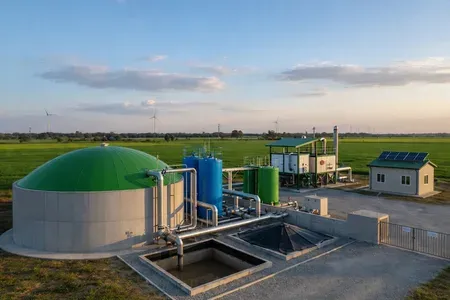
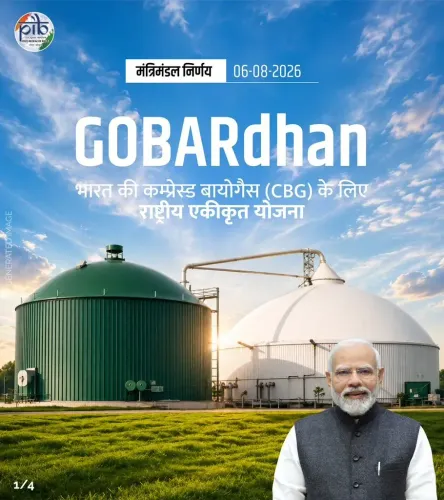
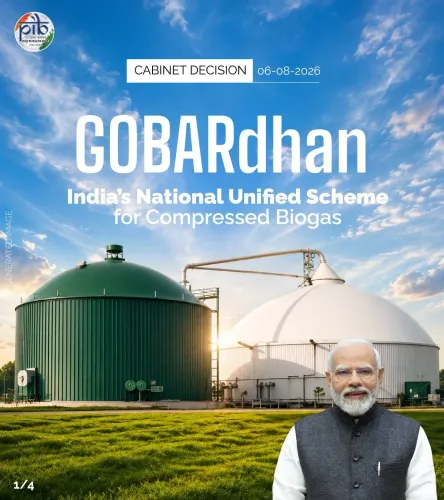
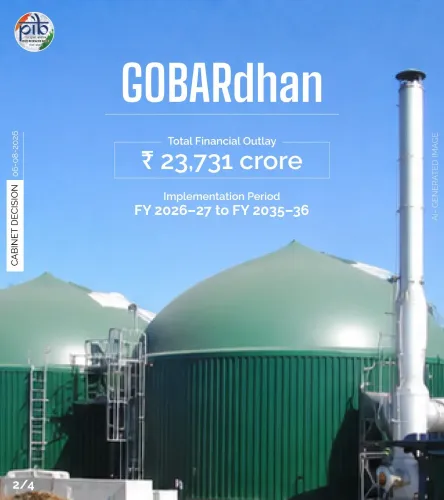
The Cabinet has approved the National Circular Bioenergy Scheme — GOBARdhan, with a total outlay of Rs. 23,731 crore, to run from FY 2026-27 through FY 2035-36. The target is stark: nearly ten-fold growth in domestic Compressed Biogas (CBG) production, financed in large part by private capital the scheme is designed to mobilise at scale.
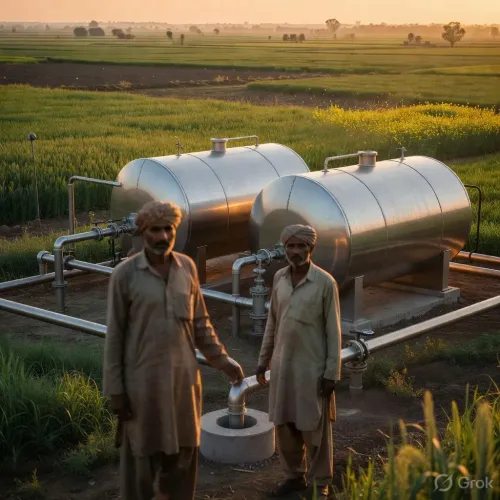
GOBARdhan — an acronym that doubles as the Hindi word for cattle — was first launched in 2018 under the Swachh Bharat Mission, converting cattle dung and agricultural waste into biogas and compost. The new scheme is a structural expansion of that idea into a full circular bioeconomy framework: organic waste goes in, energy and soil nutrients come out, and import dependence on fossil fuels edges down. A decade-long horizon and a five-figure rupee commitment signal this is no pilot programme.
The 135.8 km corridor that links Assam to Arunachal
The second decision is firmly on the map. The Cabinet has cleared the development of a 135.8 km, 4-lane access-controlled Guwahati-Tezpur Corridor on NH-15 in Assam, at a capital cost of Rs. 8,970.20 crore. Access-controlled design means uninterrupted traffic flow — no level crossings, no random entry points — which translates directly into faster freight movement between Guwahati, Assam's commercial capital, and Tezpur, a key town in the Brahmaputra valley.
The corridor's significance stretches beyond Assam's borders. It feeds into the logistics spine connecting the state to Arunachal Pradesh, a frontier state where road quality has long been both an economic constraint and a strategic concern. Successive governments have pushed highway expansion in the Northeast under the Bharatmala programme; this corridor is the latest, and among the costlier, additions to that effort.
What investors and planners will be watching
Two pressure points will determine whether these approvals translate into outcomes. On the bioenergy side, the GOBARdhan scheme's success hinges on whether private investors — biogas plant operators, agri-waste aggregators, city gas distribution companies — actually mobilise at the scale the government is counting on. On the highway side, land acquisition and tendering timelines for the Assam corridor will be the early stress test; northeastern projects have historically faced delays on both fronts.
Together, the two decisions fit a pattern the current government has pursued consistently: pairing hard infrastructure in the Northeast with economy-wide clean-energy mandates, betting that both can reinforce each other's momentum.
A ten-fold leap in biogas and a four-lane gateway to Arunachal — the Cabinet has set the ambition; execution is where the real story begins.
Point of View
Five-figure outlay signals the government is moving bioenergy from a flagship pilot into a structural pillar of energy policy, with private capital mobilisation as the real test of credibility. The Guwahati-Tezpur corridor, meanwhile, continues the Bharatmala logic of treating the Northeast not as a peripheral afterthought but as a logistics frontier with both commercial and strategic value. Whether execution matches the scale of ambition — particularly on land acquisition and private investment — will define the legacy of both decisions.
NationPress
21 Sept 2026
Frequently Asked Questions
What is the GOBARdhan National Circular Bioenergy Scheme?
GOBARdhan is a central government scheme that converts organic waste — cattle dung, agricultural residue, and municipal bio-waste — into Compressed Biogas and compost. The Cabinet approved a new ten-year phase with an outlay of Rs. 23,731 crore from FY 2026-27 to FY 2035-36, targeting nearly ten-fold growth in domestic CBG production.
What is the Guwahati-Tezpur Corridor approved by the Cabinet?
It is a 135.8 km, 4-lane access-controlled section of National Highway 15 in Assam, approved at a capital cost of Rs. 8,970.20 crore. It will provide seamless connectivity between Guwahati and Tezpur and improve logistics links to Arunachal Pradesh.
When was GOBARdhan first launched in India?
GOBARdhan was originally launched in 2018 under the Swachh Bharat Mission to promote biogas generation from cattle dung and agricultural waste. The 2026 Cabinet decision expands it into a full National Circular Bioenergy Scheme with a decade-long horizon.
How will the Assam highway benefit Arunachal Pradesh?
The Guwahati-Tezpur Corridor on NH-15 forms part of the logistics spine connecting Assam to Arunachal Pradesh, reducing travel time and freight costs to a frontier state where road infrastructure has historically been a bottleneck for both economic activity and strategic access.
What is Compressed Biogas and why does India want to scale it up?
Compressed Biogas (CBG) is purified biogas compressed for use as a vehicular or industrial fuel, equivalent in properties to Compressed Natural Gas. Scaling CBG production domestically reduces India's dependence on imported fossil fuels and turns agricultural and municipal waste into an energy asset.