Rijiju: Cabinet Clears Rs 25,530 Cr PDS Scheme
Synopsis
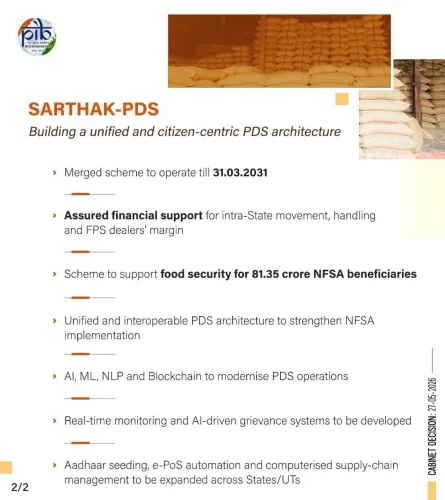
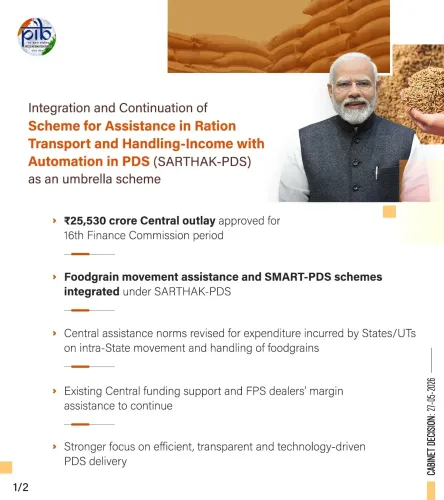
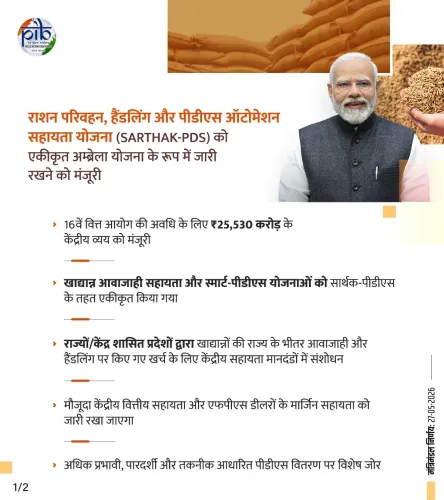
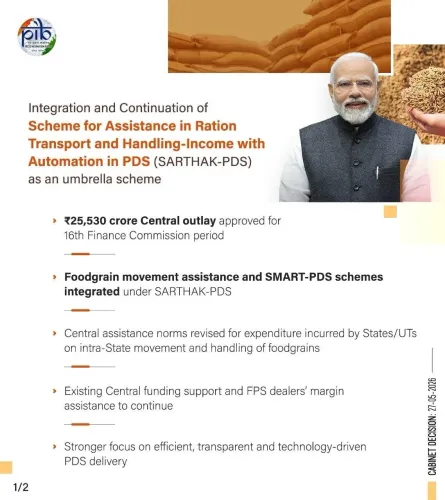
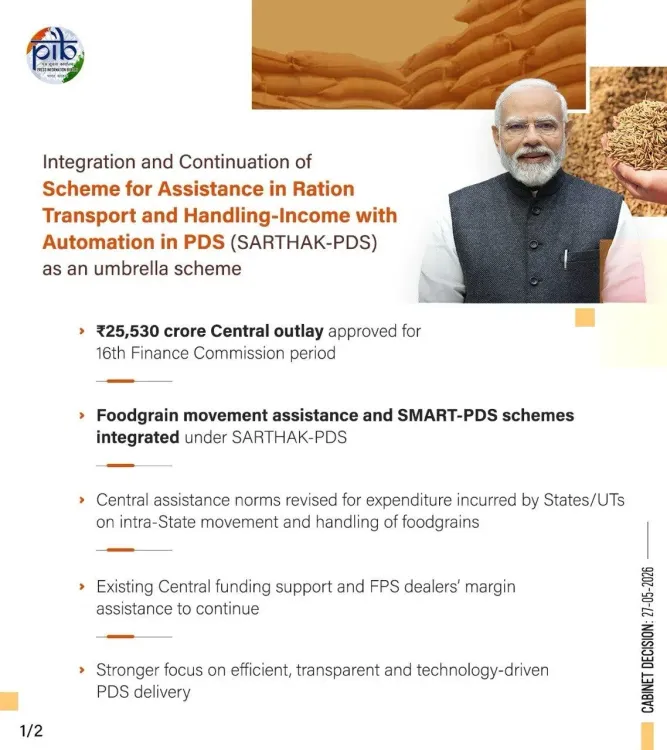
The Union Cabinet chaired by PM Narendra Modi has approved the continuation of the umbrella PDS ration transport, handling, and automation scheme with a Central outlay of Rs 25,530 crore for the 16th Finance Commission award cycle, Union Minister Kiren Rijiju announced on 27 May 2026.
Key Takeaways
The Union Cabinet approved continuation of the 'Scheme for Assistance in Ration Transport and Handling-Income with Automation in PDS' on 27 May 2026 .
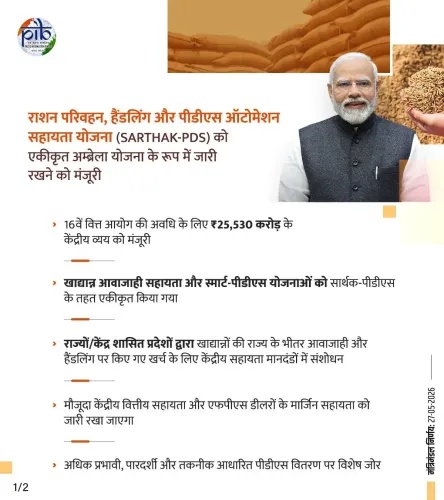
The Central share outlay is Rs 25,530 crore , covering the full 16th Finance Commission award cycle.
The scheme is structured as an umbrella Central sector scheme covering transport costs, handling charges, and IT automation for PDS operations.
It builds on the End-to-End Computerisation of Targeted PDS initiative launched in 2012-13 and successive Finance Commission renewals.
Beneficiaries include crores of households entitled to subsidised food grains under the National Food Security Act, 2013 .
State food and civil supplies departments are the implementing agencies and will receive Central funds under the renewed scheme.
Union Parliamentary Affairs Minister Kiren Rijiju announced on Wednesday, 27 May 2026 that the Union Cabinet, chaired by Prime Minister Narendra Modi, has approved the continuation of the central scheme for ration transport, handling, and automation in the Public Distribution System, with a Central share outlay of Rs 25,530 crore for the 16th Finance Commission award cycle.
Context
The approved scheme — formally titled the 'Scheme for Assistance in Ration Transport and Handling-Income with Automation in PDS' — is an umbrella Central sector scheme. It provides financial support to states and union territories for the cost of transporting subsidised food grains from central depots to fair price shops, handling charges, and information-technology-driven automation of PDS operations. The Cabinet decision marks its continuation into the next Finance Commission cycle, which begins from 2026.
Rijiju, sharing the Cabinet decision on X, noted that the approval was made 'under the leadership of Hon'ble PM Shri Narendra Modi ji,' framing it as part of the government's ongoing commitment to food-security infrastructure.
Policy Backdrop
India's Public Distribution System operates under the National Food Security Act (NFSA), 2013, which entitles up to 75 per cent of the rural population and 50 per cent of the urban population to subsidised food grains. The sheer scale of this entitlement — covering hundreds of millions of beneficiaries — makes logistics and supply-chain integrity a persistent administrative challenge.
Central support for PDS computerisation dates to the End-to-End Computerisation of Targeted PDS initiative launched in 2012-13, which digitised ration cards, supply-chain tracking, and fair price shop operations. The current umbrella scheme consolidates transport-and-handling assistance with automation support, continuing a policy lineage that successive Finance Commission cycles have renewed to curb diversion and improve last-mile delivery.
The 16th Finance Commission is the constitutional body whose award period now governs the devolution and central assistance framework within which this scheme will operate. The Rs 25,530 crore figure represents the Central government's committed share for the full award period.
Stakeholders and Impact
The primary beneficiaries of the scheme are the crores of NFSA-entitled households across rural and urban India who depend on fair price shops for subsidised food grains. State food and civil supplies departments, which manage day-to-day PDS logistics, stand to receive continued Central funding to cover transport and handling costs that would otherwise strain state budgets.
The automation component is significant for supply-chain transparency. IT-enabled systems — including electronic point-of-sale devices at fair price shops and digitised beneficiary databases — have been central to reducing ghost beneficiaries and ensuring targeted delivery. Continued Central funding sustains the infrastructure underpinning these reforms.
What's Next
Attention will now turn to the release of revised scheme guidelines, state-wise allocation norms, and the integration roadmap with existing digitised PDS platforms. State governments will need to align their food-department plans with the new cycle's disbursement conditions. The scale of the outlay — Rs 25,530 crore as the Central share alone — signals that logistics and automation will remain core pillars of food-security administration through the 16th Finance Commission period, with the government signalling continuity rather than restructuring in its approach to PDS reform.
Point of View
530 crore outlay for the 16th Finance Commission cycle reflects a deliberate policy of institutional continuity over restructuring in food-security delivery. By embedding automation funding within the same umbrella as logistics support, the government signals that digitisation is now treated as a permanent operational cost of PDS — not a one-time reform push. The timing, coinciding with the new Finance Commission cycle, also sets a baseline that states will negotiate against when seeking enhanced central shares. For the BJP, sustaining visible welfare infrastructure ahead of state election cycles carries clear political logic alongside the administrative rationale.
NationPress
11 Oct 2026
Frequently Asked Questions
What is the PDS ration transport and automation scheme approved by the Cabinet?
It is the 'Scheme for Assistance in Ration Transport and Handling-Income with Automation in PDS,' a Central umbrella scheme that funds states for the cost of transporting subsidised food grains to fair price shops, handling charges, and IT automation of PDS operations.
How much money has been approved for the PDS scheme in the 16th Finance Commission cycle?
The Union Cabinet approved a Central share outlay of Rs 25,530 crore for the scheme covering the full 16th Finance Commission award period beginning 2026.
What is the 16th Finance Commission and why does it matter for this scheme?
The 16th Finance Commission is the constitutional body that determines the framework for central transfers and assistance to states for a set award period from 2026 onwards; the scheme's continuation and funding are tied to this cycle.
Who benefits from the PDS automation and transport scheme?
Crores of households entitled to subsidised food grains under the National Food Security Act 2013 — covering up to 75 per cent of the rural population and 50 per cent of the urban population — are the ultimate beneficiaries, while state food departments receive the Central funds directly.
What is the history of PDS computerisation in India?
Central support for PDS digitisation began with the End-to-End Computerisation of Targeted PDS initiative in 2012-13, which digitised ration cards and supply chains; successive Finance Commission cycles have renewed and expanded this support, with the current scheme consolidating transport and automation assistance under one umbrella.