CM Chhattisgarh pushes nano fertilisers for farm growth
Synopsis
The Chhattisgarh Chief Minister's Office on 8 June 2026 promoted Nano Urea and Nano DAP as affordable, science-backed alternatives to conventional fertilisers, saying the state's 'Good Governance Government' is expanding their availability to raise farm output and cut input costs for small farmers.
Key Takeaways
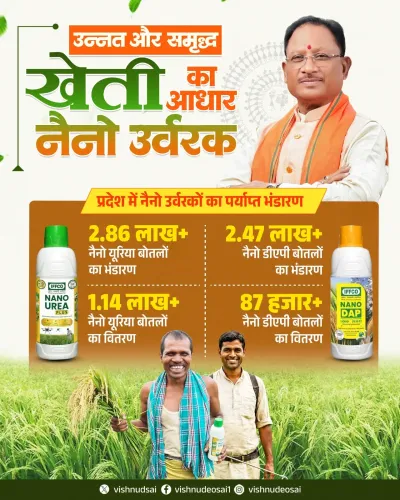
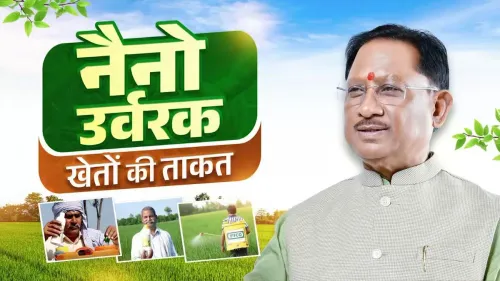
The Chhattisgarh CMO on 8 June 2026 publicly backed Nano Urea and Nano DAP as the foundation of modern agriculture in the state.
The state government framed nano fertilisers as a 'good alternative for better production at lower cost' for farmers.
Nano fertilisers reduce expenditure on transportation, storage, and labour compared to conventional granular fertilisers.
IFFCO commercially launched Nano Urea in 2021 ; Nano DAP followed as a nanotechnology-based liquid alternative to conventional DAP.
The promotion aligns with the national Atmanirbhar Bharat framework aimed at cutting India's dependence on imported fertilisers.
Small and marginal farmers in Chhattisgarh are the primary target group for this initiative.
The Chief Minister's Office of Chhattisgarh on Monday, 8 June 2026 highlighted the state government's sustained drive to promote nano fertilisers — specifically Nano Urea and Nano DAP — as cost-effective tools for raising agricultural productivity and farmer incomes across the state.
Context
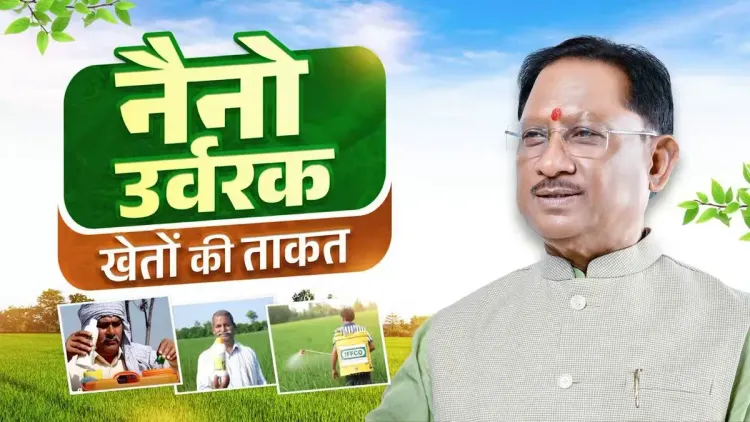
The post, shared in Hindi, states: 'Nano urvarak ban rahe unnat krishi ka aadhar' ('Nano fertilisers are becoming the foundation of advanced agriculture'). The CMO described the state's 'Sushasan Sarkar' (Good Governance Government) as actively connecting farmers to scientific and modern farming by expanding the availability and use of nano fertilisers, with the twin goals of better output and higher incomes.
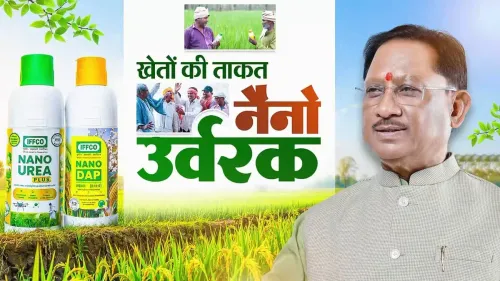
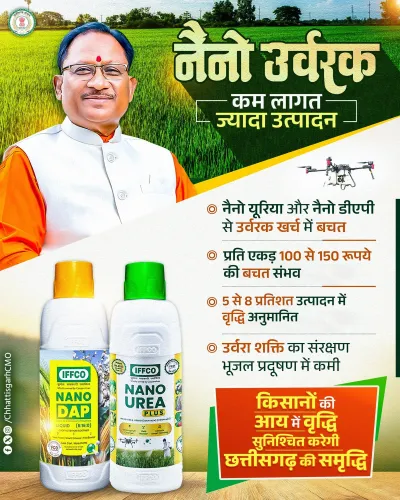
The post specifically names Nano Urea and Nano DAP as 'a good alternative for better production at lower cost', noting that their adoption reduces expenditure on transportation, storage, and labour.
Policy Backdrop
IFFCO (Indian Farmers Fertiliser Cooperative Limited) commercially launched Nano Urea liquid in 2021, followed by Nano DAP, as nanotechnology-based alternatives to conventional granular fertilisers. The products were designed to raise nutrient-use efficiency and reduce India's dependence on imported urea and DAP.
The push aligns with the broader Atmanirbhar Bharat framework, under which central and state governments have promoted nano fertilisers to lower subsidy expenditure on conventional fertilisers and support sustainable agriculture. Several states have integrated these products into extension demonstrations, subsidised distribution, and farmer-training programmes run by their agriculture departments.
Chhattisgarh, a central Indian state with a large proportion of small and marginal farmers, has incorporated nano-fertiliser promotion into its agricultural extension work as part of this national pattern.
Stakeholder Impact
The primary beneficiaries are small and marginal farmers who face the highest relative burden from input costs. Nano Urea, applied as a liquid spray, can reduce conventional urea consumption by up to half, directly cutting procurement costs per crop cycle.
Reduced transport and storage requirements also ease the logistical burden on both the government distribution chain and individual farmers — a meaningful advantage in Chhattisgarh's rural and tribal hinterland, where last-mile supply chains for bulky conventional fertiliser bags remain a persistent challenge.
For the state exchequer, wider nano-fertiliser adoption could reduce the fiscal pressure associated with fertiliser subsidies over the medium term, freeing resources for other agricultural investments.
What's Next
The effectiveness of this push will be measured by state-level data on nano-fertiliser distribution volumes and yield impact assessments in the coming agricultural seasons. Any revisions to fertiliser subsidy norms at the central level could also shape how aggressively states like Chhattisgarh are able to subsidise or incentivise adoption.
With the kharif 2026 sowing season underway, the timing of this communication suggests the state government is actively encouraging farmers to consider nano fertilisers as a primary input for the current crop cycle.
Point of View
Particularly as the kharif season opens. By branding the initiative under the 'Sushasan Sarkar' identity, the ruling dispensation is clearly seeking to claim political ownership of a productivity-and-income narrative ahead of what is always an electorally sensitive farm-input season. The emphasis on cost reduction — transport, storage, and labour — is a shrewd framing that speaks directly to the concerns of small and marginal farmers who form the bulk of Chhattisgarh's agrarian base. Whether the on-ground distribution infrastructure can match the communication ambition remains the key variable to watch.
NationPress
23 Oct 2026
Frequently Asked Questions
What are Nano Urea and Nano DAP?
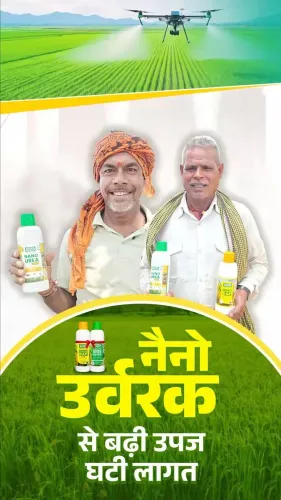
Nano Urea and Nano DAP are liquid, nanotechnology-based fertilisers developed by IFFCO as alternatives to conventional granular urea and DAP. They are applied as a foliar spray and are designed to improve nutrient-use efficiency while reducing the quantity of fertiliser needed per crop.
Why is the Chhattisgarh government promoting nano fertilisers?
The state government is promoting nano fertilisers to help farmers lower input costs — including spending on transport, storage, and labour — while maintaining or improving yields, with the broader goal of raising farm incomes.
How do nano fertilisers reduce costs for farmers?
Because nano fertilisers are liquid and used in small quantities, farmers save on the cost of purchasing, transporting, and storing large bags of conventional fertiliser. Labour costs for application can also be lower.
When were nano fertilisers launched in India?
IFFCO commercially launched Nano Urea liquid in 2021, followed by Nano DAP, as part of India's efforts to reduce dependence on imported fertilisers and support sustainable agriculture.
Which farmers benefit most from nano fertilisers in Chhattisgarh?
Small and marginal farmers stand to benefit the most, as they face the highest relative burden from input costs and logistics challenges, particularly in Chhattisgarh's rural and tribal regions where supply chains for bulky conventional fertilisers are difficult.