China's loss-making firms hit 30% of industry as demand slump deepens
Synopsis
China is simultaneously flooding world markets with cheap goods and watching nearly a third of its industrial firms bleed money. Capital Economics puts the share of loss-making Chinese factories at 30% — double the 2018 level — exposing a state-subsidised model that prioritises output and jobs over profit, with consequences that ripple far beyond China's borders.
Key Takeaways
30% of Chinese industrial firms are estimated to be loss-making in 2025 , double the share recorded in 2018 , according to Capital Economics .
Total net profit at 5,400 listed Chinese companies fell for the third consecutive year in 2025, per Nikkei Asia data.
Chinese state subsidies to industry were up to eight times larger than government support in comparable economies between 2005 and 2024 , according to the OECD .
State-controlled banks routinely roll over loans for insolvent firms, while local governments offer tax breaks and direct subsidies to preserve jobs.
Excess capacity and weak domestic demand have triggered price wars that are compressing profit margins even as export volumes rise.
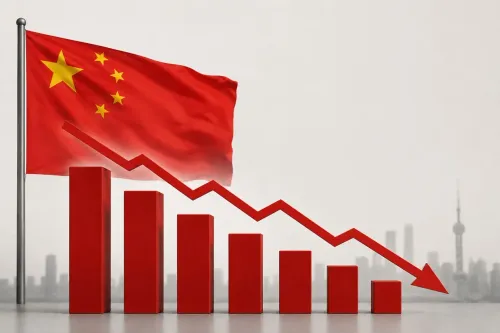
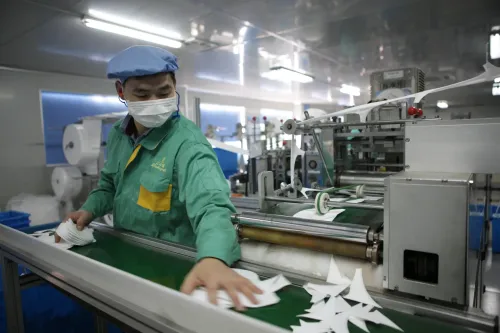
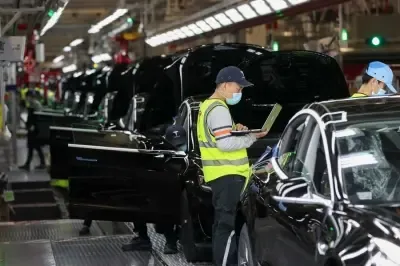
The share of Chinese industrial firms running at a loss has doubled since 2018 to 30% in 2025, according to estimates by London-based Capital Economics, even as China continues to flood global markets with cheap exports. The finding underscores a deepening structural contradiction at the heart of the world's second-largest economy: surging production volumes masking widespread financial deterioration.
Scale of the Losses
Total net profit at 5,400 Chinese companies listed on domestic stock exchanges fell for the third consecutive year in 2025, according to data cited by Nikkei Asia. Excess factory capacity and persistently weak domestic demand have triggered price wars across sectors, squeezing profit margins to the point where output is expanding even as earnings shrink. Critics argue this model is structurally unsustainable without continuous state intervention.
The 'Zombie Company' Problem
The phenomenon is not entirely new. As analyst Michael Schuman noted in an article on The Atlantic, China's economy has long harboured 'zombie companies' — enterprises that are effectively bankrupt yet remain operational because creditors keep rolling over loans. Local governments routinely prop up unprofitable factories to preserve employment and meet economic growth targets, prioritising political stability over financial returns.
Profitability, the article noted, has never been the top priority of the Chinese Communist Party. Economic planners have historically viewed a large manufacturing base as essential to national security, technological advancement, and global influence — objectives that outweigh conventional return-on-investment calculations.
State Subsidies Far Exceed Global Norms
The scale of government support keeping these firms alive is substantial. An analysis by the Organisation for Economic Cooperation and Development (OECD) covering subsidies to industrial firms in major economies from 2005 to 2024 found that Chinese state support was as much as eight times larger than government assistance in comparable economies. State-controlled banks roll over loans for troubled enterprises, while government officials provide tax breaks and direct subsidies to reduce operating costs.
Global Trade Implications
The paradox of rising exports alongside rising losses points to a deliberate strategy of volume over value — one that has drawn criticism from trading partners who argue it amounts to state-sponsored dumping. This comes amid already elevated trade tensions, with the United States, European Union, and India among those that have imposed or are considering additional tariffs on Chinese goods. Notably, the OECD data suggests the subsidy gap between China and the rest of the world has widened over the past two decades, not narrowed.
What Comes Next
Economists warn that unless domestic demand recovers meaningfully, the deflationary pressure generated by China's oversupplied factories will continue to export disinflation globally while deepening financial stress at home. With local government finances also under strain, the capacity to indefinitely sustain loss-making enterprises is reportedly being tested as never before.
Point of View
' a disorderly shakeout in Chinese industry would send deflationary shockwaves through global supply chains that no tariff wall fully absorbs.
NationPress
23 Oct 2026
Frequently Asked Questions
What share of Chinese industrial firms are currently loss-making?
According to estimates by London-based Capital Economics, approximately 30% of Chinese industrial firms are loss-making in 2025, double the share recorded in 2018. The figure reflects the combined impact of weak domestic demand, excess factory capacity, and intensifying price competition.
Why do unprofitable Chinese firms continue to operate?
Loss-making Chinese firms are largely kept alive by state intervention. State-controlled banks roll over loans for enterprises that cannot repay them, while local governments provide tax breaks and subsidies to preserve employment and meet economic growth targets — a model critics describe as producing 'zombie companies.'
How do Chinese state subsidies compare with those in other major economies?
An OECD analysis of subsidies to industrial firms from 2005 to 2024 found that Chinese state support was as much as eight times larger than government assistance in comparable economies. This scale of support is central to China's ability to sustain unprofitable production.
What impact is this having on global trade?
China's combination of high export volumes and subsidised, loss-making production has intensified trade tensions with partners including the United States, the European Union, and India, who argue the model amounts to state-sponsored dumping. It also exports deflationary pressure globally, depressing prices in sectors where Chinese goods compete.
How has overall corporate profitability in China trended?
Total net profit at 5,400 Chinese companies listed on domestic stock exchanges fell for the third consecutive year in 2025, according to Nikkei Asia data. Analysts attribute the sustained decline to price wars driven by overcapacity and a prolonged slump in domestic consumer demand.