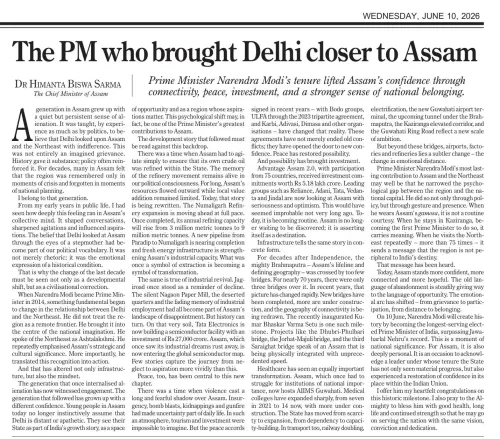
CM Assam Office Marks 12 Years of Northeast Development Under Modi

Synopsis
The Chief Minister's Office of Assam marked 12 years of Northeast India's development under PM Narendra Modi on 20 June 2026, asserting the region has moved from the margins to the mainstream through stronger investment, connectivity and cultural recognition since 2014.
Key Takeaways
The Chief Minister's Office of Assam posted on 20 June 2026 marking 12 years of Northeast development under PM Narendra Modi .
The post claims the region has shifted 'from the margins to the mainstream' of India's development journey since 2014 .
The Look East Policy was rebranded as the Act East Policy in 2014 , using the Northeast as a strategic gateway to ASEAN nations.
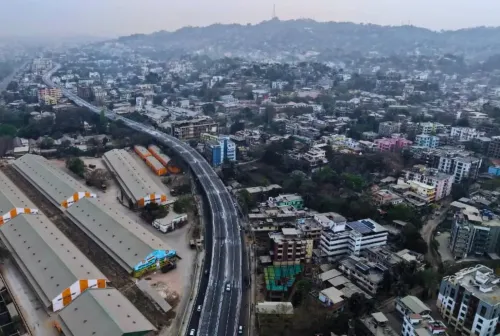
Successive Union Budgets have increased allocations for roads, railways, airports and digital connectivity across the eight Northeastern states .
New institutional frameworks such as the NITI Forum for North East and expanded DoNER mandates have supported the policy push.
The next Union Budget and the Rising North East summit are the key near-term indicators of continued central commitment to the region.
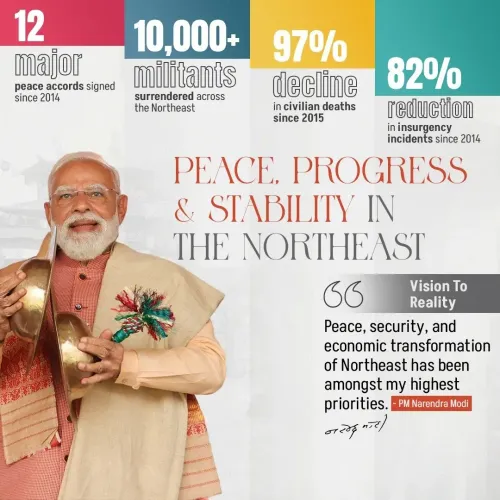
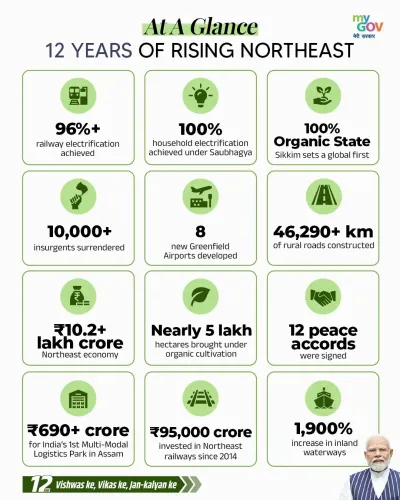
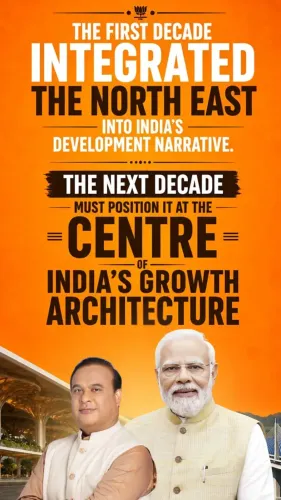
The Chief Minister's Office of Assam on Saturday, 20 June 2026 posted on X to mark what it described as 12 years of transformative development in Northeast India under the leadership of Prime Minister Narendra Modi, asserting that the region has moved 'from the margins to the mainstream' of India's national development journey.
Context
The post, shared under the hashtag #12YearsOfRisingNorthEast, credits the Prime Minister's vision for bringing 'stronger recognition, deeper investment and renewed focus' on the people, culture and potential of the Northeast. The eight-state region — which includes Assam, Arunachal Pradesh, Manipur, Meghalaya, Mizoram, Nagaland, Sikkim and Tripura — has historically received comparatively lower central investment and infrastructure attention than other parts of India.
The statement arrives as the ruling establishment marks a dozen years since Narendra Modi first assumed office as Prime Minister in May 2014, a milestone that has prompted a wave of retrospective assessments from state governments aligned with the Bharatiya Janata Party.
Policy Backdrop
One of the early signals of the central government's intent toward the Northeast came in 2014, when the Look East Policy — a diplomatic and economic framework dating to the early 1990s — was rebranded as the Act East Policy. The shift was designed to deepen economic and security linkages with ASEAN nations by using the Northeast as a gateway, and it gave fresh urgency to infrastructure projects in the region.
Successive Union Budgets since then have raised allocations for roads, railways, airports and digital connectivity across the Northeast. New institutional frameworks, including the NITI Forum for North East, were established to provide policy coordination, while the Ministry of Development of North Eastern Region (DoNER) received expanded mandates. Border-area development programmes were also scaled up during this period.
Stakeholders and Impact
The beneficiaries of this policy pivot are the 55 million-plus residents of the eight Northeastern states, communities that have long sought parity in infrastructure, economic opportunity and cultural recognition with the rest of India. Improved road and rail connectivity has reduced travel times, while airport expansions have opened new air routes to the region.
Local communities, entrepreneurs and state governments have also benefited from schemes targeting tourism, bamboo industry development and organic farming — sectors where the Northeast holds a natural competitive advantage. The region's strategic border location means that enhanced connectivity carries security and diplomatic dimensions alongside economic ones.
What's Next
Attention will now turn to the next Union Budget and the allocations earmarked for the Ministry of DoNER, which serve as the clearest annual indicator of the centre's continued commitment to the region. The annual Rising North East summit, which brings together investors and policymakers, is also closely watched for fresh connectivity and investment announcements.
As the BJP-led government at both the centre and in several Northeastern states continues to frame the region's development as a signature achievement, the political stakes around delivering measurable progress — on infrastructure timelines, employment and per-capita income — will only intensify heading into future election cycles.
Point of View
Deploying the Northeast's development arc as a political proof point. The framing — 'margins to mainstream' — is deliberate: it acknowledges the region's historical neglect while attributing the corrective to the current dispensation. The Act East Policy rebranding and rising infrastructure budgets do represent a genuine structural shift in central attention, though the gap between allocation and ground-level delivery remains a subject of ongoing scrutiny. As Northeast states head into future electoral cycles, the government's ability to translate narrative momentum into verifiable per-capita outcomes will determine whether this messaging holds.
NationPress
20 Jun 2026
Frequently Asked Questions
What is the 12 Years of Rising North East campaign about?
The '12 Years of Rising North East' campaign, promoted under the hashtag #12YearsOfRisingNorthEast , marks 12 years since PM Narendra Modi took office in 2014 and highlights the central government's increased investment, infrastructure development and policy focus on the eight Northeastern states during this period.
What is the Act East Policy and how does it affect Northeast India?
The Act East Policy , launched in 2014 as a successor to the Look East Policy, aims to deepen India's economic and security ties with ASEAN nations by developing the Northeast as a connectivity hub, driving investment in roads, railways and airports across the region.
Which states are included in Northeast India?
Northeast India comprises eight states : Assam, Arunachal Pradesh, Manipur, Meghalaya, Mizoram, Nagaland, Sikkim and Tripura , a region that shares borders with China, Bhutan, Bangladesh, Nepal and Myanmar .
What is the Ministry of DoNER and what does it do?
The Ministry of Development of North Eastern Region (DoNER) is the nodal central ministry responsible for coordinating and funding development projects across the eight Northeastern states, covering infrastructure, economic development and connectivity initiatives.
What is the NITI Forum for North East?
The NITI Forum for North East is a policy coordination body established to bring together central and state government stakeholders to plan and monitor development strategies specifically for the Northeastern region of India.